Crime & Safety
Jury Hears Emotional Testimony On First Day Of Luther Watkins Sentencing Hearing
Here's the latest on the sentencing phase in the capital murder trial of Luther Bernard Watkins Jr.


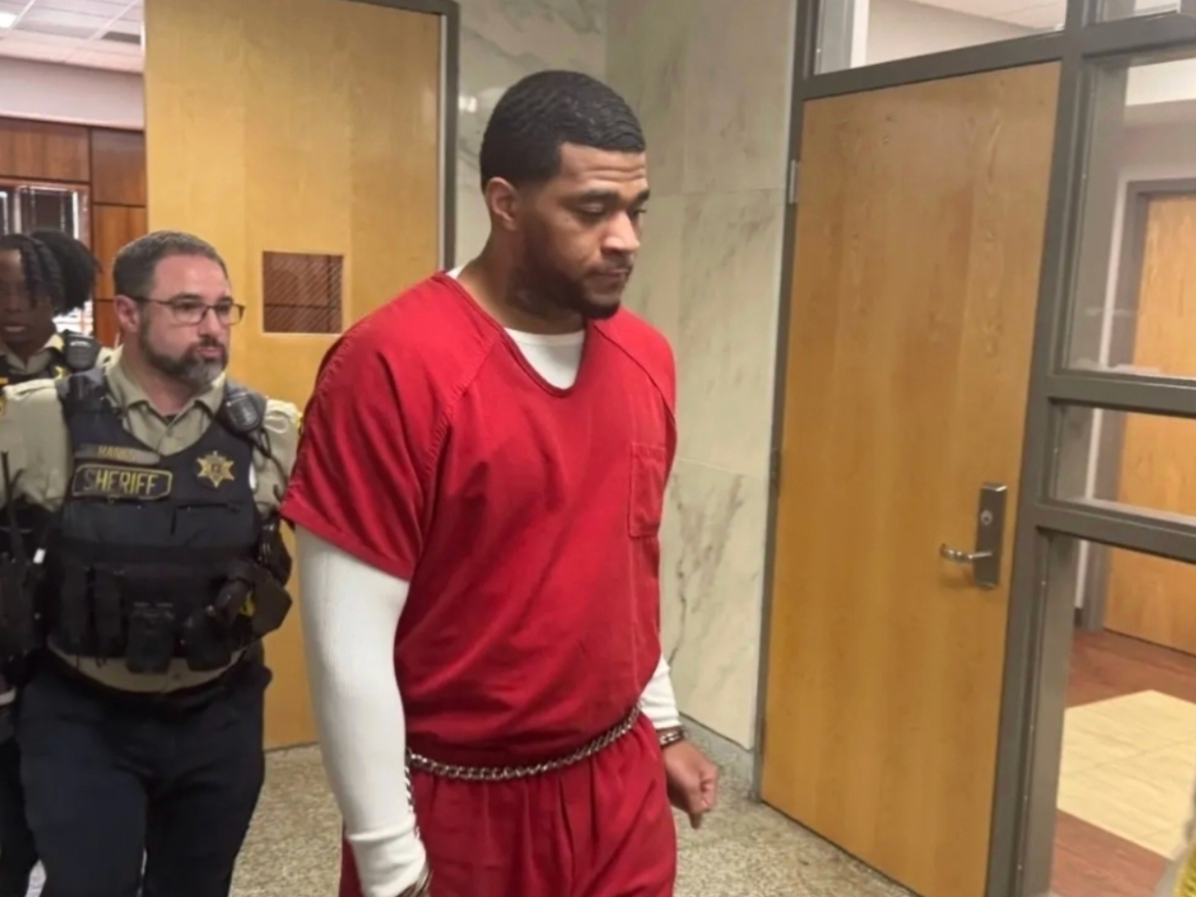
TUSCALOOSA, AL — The Tuscaloosa County jury that convicted Luther Bernard Watkins Jr. of capital murder last week in the killing of Tuscaloosa Police Investigator Dornell Cousette heard from 10 different witnesses Tuesday in the first day of his sentencing hearing.
Click here to subscribe to our free daily newsletter and breaking news alerts.
As Patch previously reported, the 12-person jury is tasked with deciding between the death penalty and life without the possibility for parole for Watkins after finding him guilty following his trial last week.
Find out what's happening in Tuscaloosafor free with the latest updates from Patch.
The jury consists of four White women, three White men, two Black women and one Black man after three alternates were excused before deliberations began last Friday.
Following opening arguments where many of the high points from trial were raised, prosecutors and the defense for Watkins called five witnesses each Tuesday, with the state primarily focusing on witnesses who spoke to Cousette's commitment to his job and his love for serving the community, especially as it related to his work with local youth.
Find out what's happening in Tuscaloosafor free with the latest updates from Patch.
Chief Assistant District Attorney Paula Whitley Abernathy praised the sacrifices made by law enforcement in her opening remarks, pointing out how police officers are often the only thing standing between danger and a vulnerable public.
"When they are killed protecting us, they have paid the ultimate sacrifice," she told the jury. "That's what makes this the worst of the worst and that is why this case deserves the death penalty."
Defense attorney Justin Forrester reminded the jury that its decision would be the most impactful ever made for his client and encouraged them to consider sentencing him to life in prison without the possibility of parole.
"The law allows two options and you must consider both," he said. "Life without the possibility of parole is not some kind of lenient option."
State Witnesses
Tuscaloosa Police Department Investigator Jason McKee was the first witness called to the stand and was asked about a Be On The Lookout (BOLO) email sent to all of the department's sworn officers and supervisors on Sept. 6, 2019 — less than two weeks before the fatal shooting on 33rd Avenue that claimed Cousette's life and left Watkins with two gunshot wounds.
ALSO READ: Community Leaders React To Guilty Verdict For Man Convicted Of Murdering Tuscaloosa Police Officer
McKee said the email mentioned Watkins, who was 20 years old at the time, and a co-defendant with outstanding warrants for robbery and assault. He testified that the BOLO also mentioned both individuals were known to carry firearms.
TPD Lt. Henry McCaskill was then called to the stand and testified about his time as Cousette's supervisor when the two both worked in the Youth Aid Division.
Cousette worked as a school resource officer at the Tuscaloosa Career & Technology Academy during the day and then as an investigator for the division after the end of the school day, which McCaskill said underscored his passion for helping children.
McCaskill said he often messed with Cousette about his love for the New York Football Giants, something he said he lovingly never understood about his beloved co-worker from Aliceville.
"I cried like a baby the whole night," he recalled to the jury about the hours after Cousette was shot and killed while attempting to serve an arrest warrant on Watkins. "He went above and beyond. Every day, people called the office and ask for him."
The next witness called by the state was Cathy Wood, the executive director of Freedom Farm and former director of the juvenile detention center who often worked with Cousette.
"He was one of the few [officers] who would ask, 'how are they [the kids] doing?'" she said.
Wood also reflected on the impact and legacy left by Cousette at the facility, testifying students and residents at the juvenile detention center paid homage to his memory through a mural.
"He earned that respect," she said.
In much the same way, longtime Tuscaloosa Children's Center Executive Director Ebony Johnson testified that Cousette was particularly passionate about working with victims of child abuse and briefly touched on how objective he was when it came to his work.
The final witness called by prosecutors was the only relative of Cousette to testify during any of the proceedings.
Cousette's first cousin, Kelly Cousette Mills, told the jury she and her cousins all grew up in single-parent households and regularly spent time together at their grandmother's house as children.
She described her slain cousin as "silly" and someone with a "unique, goofy laugh."
"He was always my protector," Mills said.
"It's been devastating," she added. "I lost a huge part of my support system. I've lost a sense of safety."
Defense Witnesses
Defense attorneys for Watkins first called his mother, Tiffany Collins, to the stand as they attempted to paint a picture of the difficult life they believe produced their client.
Tiffany Collins began to cry early in her testimony when she mentioned that her mother — also a crucial pillar of support for Watkins — died just days before the capital murder trial began.
Tiffany Collins said her family moved around regularly when she was a child, tagging along for her mother's military service, before she returned to Tuscaloosa to raise her first child after giving birth at 14 years old. She also spoke about being sexually abused by a neighbor as a child.
Eventually she said her mother returned to Tuscaloosa and purchased houses on either side of her own home on 16th Street.
These appeared to be happier times for her family as she found work and had a support system living next door in the form of her mother who could help her watch her children.
But bad influences persisted, even from immediate family. This included her brother, Marcus Collins, who was the last to testify Tuesday and has served as a kind of spokesperson for his nephew leading up to and during the trial.
Tiffany Collins was reserved in any sharp or specific criticism of her brother but testified he would often discourage her children from attending school.
"Quite naturally, that's my son," she told the jury about Watkins. "He took two shots but the Lord let him live, though. He is the ultimate decision maker and he allowed Luther to live."
The jury then briefly heard from Watkins' older brother before the defense called on Linda Harper, a retired principal who previously worked at the Tuscaloosa City Schools' alternative school, which has since been rebranded as STARS Academy.
Harper testified that she was familiar with both Cousette and Watkins, saying she first met the troubled youth when he was in the seventh grade.
Harper discussed how she had previously held Bible studies with Watkins at the Tuscaloosa County Jail after he was charged with capital murder and reflected on how he was once the captain of the alternative school's robotics team.
"This young man still has a future and still has potential," she told the jury.
Pastor William McDowell Sr. was also called to the stand and told the jury that he had baptized Watkins as a member of his church at Liberty Missionary Baptist.
He recalled how Watkins was a "cool" kid who would regularly visit with him and mentioned how he also knew Cousette, before saying that he and other pastors often meet with local law enforcement to discuss ways to address violence in the community.
"Luther is a good kid," he said. "Luther made a mistake. He's a good person, a good kid and got a good heart."
The final witness Tuesday was the most emotional of the day as Marcus Collins took the stand and immediately acknowledged that he had a warrant out for his arrest, before fighting through tears to deliver his testimony.
"I've been a criminal my entire life," he told the jury. "A bad seed. My mother did the best she could but I had other plans."
Marcus Collins testified that he was first locked up at 12 years old and had to spend two years in longterm drug rehab when marijuana was found in his system. After saying he was "raised by corrections officers," he mentioned he had to serve prison time until he was 21 following a "bad fight."
"I should be sitting where [Watkins] is sitting," Marcus Collins said. "I taught him to run from the police. I taught him probably every bad thing he knew."
Marcus Collins went on to say that he discouraged his nephew from school, while exposing the young Watkins to guns and drugs. In one such instance, Watkins was in the car with his uncle when Marcus Collins ran from the police.
"He's collateral damage," he said three times on the stand. "He didn't have a fucking chance. ... This kid, without my influence, would have been a robotic engineer, would've been a soldier. He could've been anything."
Marcus Collins ended his emotional testimony by telling jurors that his nephew, if given life without the possibility of parole, would "mature and realize what happened."
"He was just a child and made an impulsive decision on bad grooming," he said.
Circuit Court Judge Brad Almond recessed the hearing until Thursday, when the defense is set to bring at least one other witness to the stand.
Stay tuned for more coverage from the capital murder trial and look for our stories on patch.com/Tuscaloosa or on social media.
Get more local news delivered straight to your inbox. Sign up for free Patch newsletters and alerts.