Sports
OPINION: SEC Programs, College Town Economies Face Uncertainty
Tuscaloosa Patch Community Publisher Ryan Phillips gives his perspective on the looming uncertainty ahead of the fall football season


*The following is an opinion column by Tuscaloosa Patch Community Publisher Ryan Phillips*
I wish I could say I was optimistic for a 2020 college football season. And maybe I’m still selfishly holding out hope in some weird way, but it seems to be just a matter of time before the plug is officially pulled on the SEC as, one by one, conferences begin to fall like dominos cancelling fall sports slates.
It’s similar to how the onset of the pandemic impacted spring sports, where no program, conference or league was publicly willing to be the first to call off a season, while conversely, no one wanted to be the last and risk looking callous toward the safety of the athletes, coaches and fans they depend on. I’ve grown to loathe the term “unprecedented” during this ongoing crisis, but that’s the situation athletic administrators and the powers-that-be have been faced with since the first COVID-19 cases were confirmed for our country in what seems like an eternity ago.
Find out what's happening in Tuscaloosafor free with the latest updates from Patch.
Before I returned home to Tuscaloosa, I spent the last few years as the editor of the daily newspaper in Starkville, Mississippi — home to Mississippi State University. Last spring, I got an early look at the true financial impact of a pandemic on an economy dependent on college sports tourism when SEC baseball was cancelled. The business community of that city, which is substantially smaller than Tuscaloosa, but almost as dependent on a successful baseball season as Tuscaloosa is on a college football season, was rocked with a previously unseen shortfall in sales tax revenue as events centered around a normal baseball season were scrapped out of an abundance of caution. While spring sports aren’t near the economic driver for Tuscaloosa as football is in the fall, it stood as an early warning of what awaits college towns in the Deep South as we head into what was supposed to be a lucrative football season for local cash registers.
When gauging the experiences of those around me during the COVID-19 pandemic, I think it’s fair to compare it to the Sept. 11, 2001 terrorist attacks with respect to remembering where you were when you realized that this protracted crisis would alter the fabric of our everyday lives. For me, the cancellation of sports got my attention.
Find out what's happening in Tuscaloosafor free with the latest updates from Patch.
I was at a bar in Starkville preparing to watch an inconsequential NBA game between the Oklahoma City Thunder and the Utah Jazz. When the cameras kept showing an empty court and arena even after the tipoff time, and announcements rolled in that the NBA was suspending game play, it hit me that we could also be looking at a year without college sports. Roughly a week later, that bar was temporarily closed as social distancing guidelines were handed down and I never again sat on one of its stools. In the months to follow, a nationwide lockdown on non-essential businesses would wreak havoc on an otherwise strong economy as the novel coronavirus resulted in the deaths of more than 150,000 Americans.
Fast-forward to the present and we are seeing a similar dynamic unfold as murmurs and leaked reports persist concerning the cancellation of college sports this fall. For a place like Tuscaloosa, a fall without football would no doubt destroy an already floundering economy that a year ago was otherwise vibrant and growing at a commendable pace. You don’t have to be an economist to see that years of hard work could be unraveled in a matter of months with a loss of revenue on that scale and it should be a reality the public is preparing for.
Yesterday, I spoke with numerous Tuscaloosa store owners, many off the record, and all of them expressed their doubts that college football would be played at the University of Alabama this fall. This comes as a nationwide outcry from players has sparked renewed conversations about the place occupied by the amateur athletes at the center of the sport and I refuse to vocally oppose the players who are central to the entire experience.
While I selfishly want the kids to play — to give us some semblance of normalcy and not negatively impact their careers — I’m not an epidemiologist or public health expert. The health risks posed for players and those around them are obvious, but there are subtle realities facing those outside of the stadium that are less apparent to the untrained eye, which gives me pause when considering my own opinions about how this fall should be handled.
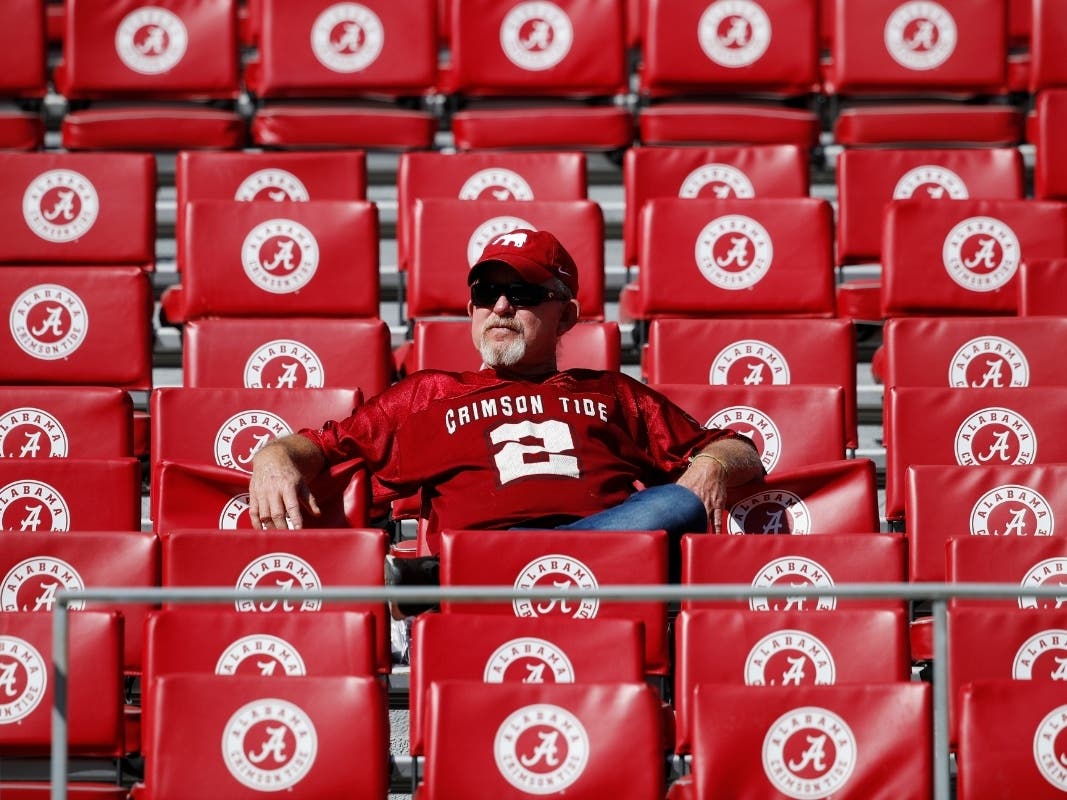
Look along the bustling Strip near the UA campus. Consider places like Midtown Village, the University Mall and the Shoppes at Legacy Park, to name a view. Look at our downtown, which has a diverse economy the likes of which should be the envy of every other SEC town. While it’s a foregone conclusion that fan attendance in stadiums will be either prohibited or vastly limited, the simple lack of tourism with no college football could be detrimental in ways we’ve never seen before and aren’t fully prepared to reckon with. Imagine the UA Quad looking like a ghost town in the shadow of an empty Bryant-Denny Stadium on an October Saturday, then consider the sheer economic impact from an absence of tailgating and patrons going in and out of downtown shops spending their money. Think about the players who have sacrificed so much, with hopes and dreams riding on this season, who may see their careers forever altered as a result of the stoppage in play.
But again, if the trade-off to get football back this year is a dangerous new surge in cases and more people in our community dying, then is it really worth it? I don’t have an answer there and do not envy the positions of those making the final decision or our public officials who will have no choice but to sort out the economic or social aftermath, depending on the direction taken. Either way, Tuscaloosa businesses are sure to hurt like never before with the expected drop in tourism for the area, even if players are allowed on the field.
It is my hope, though, that the spirit of our community will shine through even the toughest of times ahead and we will support one another to boost up what we have left — even if all we have is each other.
Get more local news delivered straight to your inbox. Sign up for free Patch newsletters and alerts.