Politics & Government
Stan Pate, In His Own Words | Part III: The Outsider
Here's Part III of our in-depth profile series on polarizing Tuscaloosa developer Stan Pate, which focuses on his involvement in politics.


EDITOR'S NOTE: This is the third installment of our in-depth four-part profile series on Tuscaloosa developer Stan Pate, which focuses on his involvement in politics. Be on the lookout for the fourth and final part of the series, which will be a retrospective look at his legacy.
Part IV will be published on Sunday, April 22.
TUSCALOOSA, AL — I sat caddy corner from Stan Pate in his conference room talking about ammonium nitrate production during our second sit-down interview for the business-focused part of this series when I noticed his cell phone wouldn't stop ringing.
Find out what's happening in Tuscaloosafor free with the latest updates from Patch.
Click here to subscribe to our free daily newsletter and breaking news alerts.
I scribbled a shorthand "3" in my notebook for the number of ignored calls, thinking I'd use it later to underscore how busy he is.
Find out what's happening in Tuscaloosafor free with the latest updates from Patch.
Fishing the phone out of the right front pocket of his Levi jeans as he leaned way back in an office chair, he tapped the phone, put it to his ear and offered a jovial "Hey coach."
The caller on the other end was Alabama's Republican senior U.S. Senator Tommy Tuberville — the former Auburn football coach and one of the only lawmakers in direct communication with then-President Donald Trump during the insurrection at the U.S. Capitol on Jan. 6, 2021.
Pate was apparently asked if he had seen the news about the criminal charges against Trump that had come down in Manhattan and made it on the news wire within the last hour. It was the biggest news story of the entire cycle and "BREAKING NEWS " flashed on a local television station at home as I walked out the door to interview Pate about his business career.
Pate, Trump and Tuberville each fit the same mold in the "outsider" sense. Each made a name for themselves in their own individual fields outside of politics before making the decision to really start playing the game.
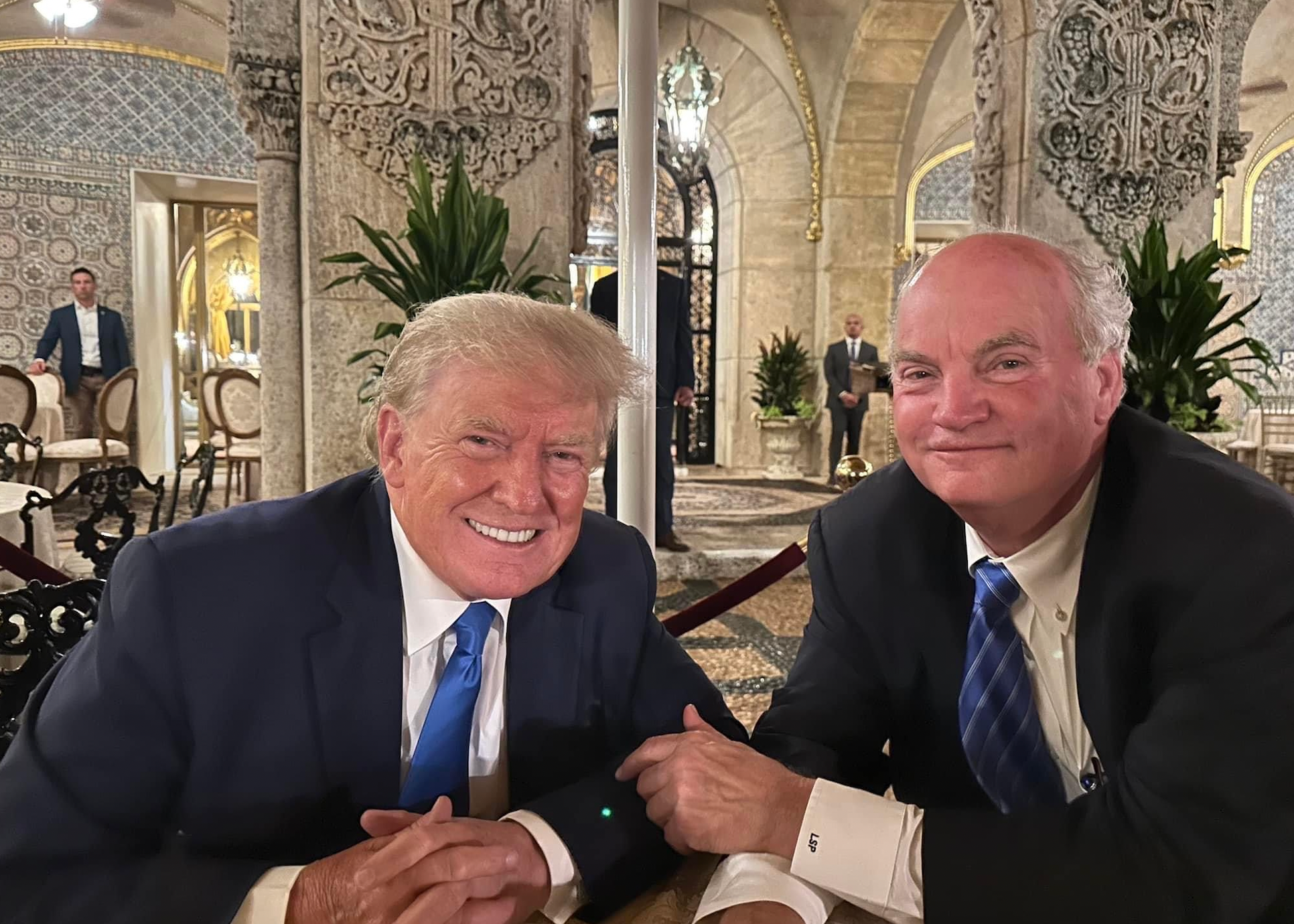
Pate had dinner with the former president at his Mar-a-Lago stronghold on Nov. 4, 2022 — four days before the 2022 midterm election. But, then again, Pate has dinner with lots of important people.
After all, he's twice told me the story of getting to eat a steak with George Jones and hear about how the country music icon once purchased a new Cadillac but was so drunk that he didn't know what color it was until several days later.
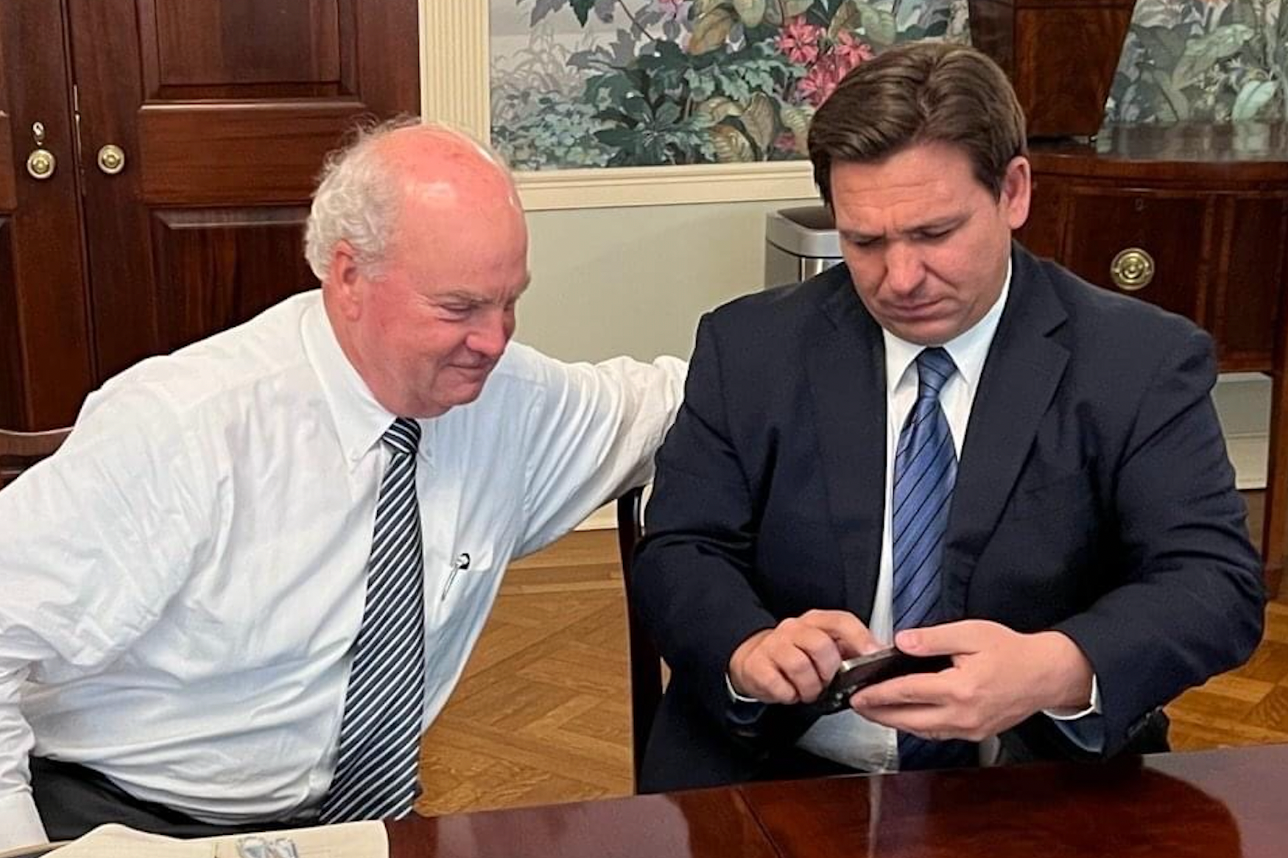
And in August, in the downhill run to the 2022 midterm elections, he had dinner at the Florida Governor's Mansion with conservative firebrand and possible 2024 presidential candidate Ron DeSantis.
In looking back at his dinner with Trump, it's important to remember that Pate is the same enduring force that grabbed national headlines for his "Trump is Disgusting" skywriting at the Rose Bowl in 2016 — six years after similarly flying a banner in Pasadena calling for Republican Gov. Bob Riley to be impeached.
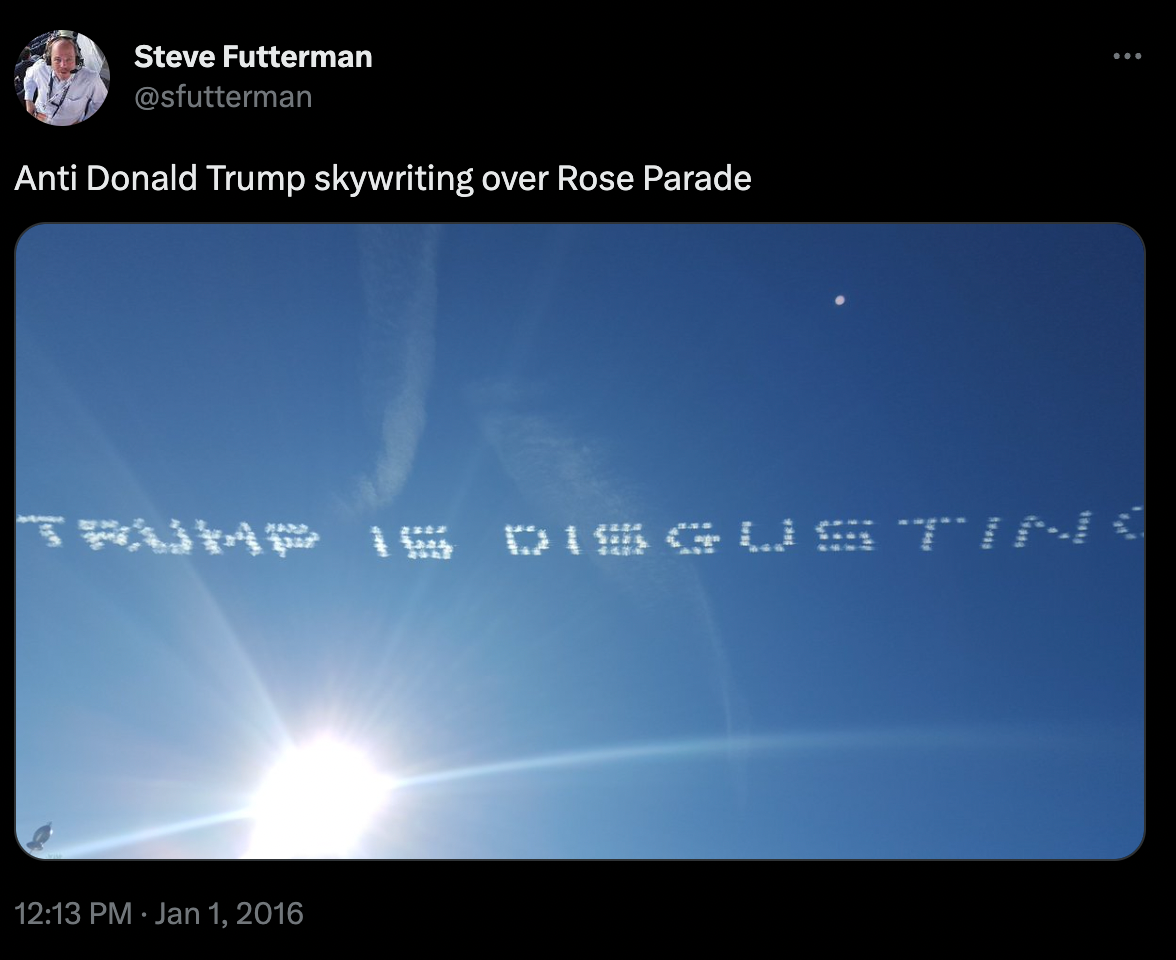
"There's no place for him," Pate told CBS News of Trump in a story published on New Year's Day 2016. "He needs to go back to one of his tall towers and build buildings and whatever else he does. He's a despicable man."
But, as Pate has told me himself, he can be convinced to change his mind and position if he's willing to listen to the message.
"Seven years ago is a lifetime in politics," Pate said this week. "I ask myself if I'm better of now or was better off when he was president, so I'll be supporting him."
Tuberville and Pate talked for well over 15 minutes — mostly inside conversation. But at times, Pate circled back to the big headline from that day about the former president. He made a couple of off-color jokes about porn star Stormy Daniels and inquired as to the number of charges against the former president.
Trying not to be obvious in my lurid curiosity, I mostly stared at the floor and picked at a loose thread in one of my boots. All this while two men with more influence than I'll ever understand chatted like old friends.
Pate eventually told Tuberville he had to get off the phone and wished him luck at a fundraiser that evening, then immediately picked back up telling me about the time he purchased a decommissioned ammonium nitrate plant from a military base in Chattanooga.
This is the Stan Pate of the political world. Important people call him, not the other way around. And nowhere is this more evident than in the myriad stories and widely published anecdotes of the past four decades of his political involvement.
By the numbers
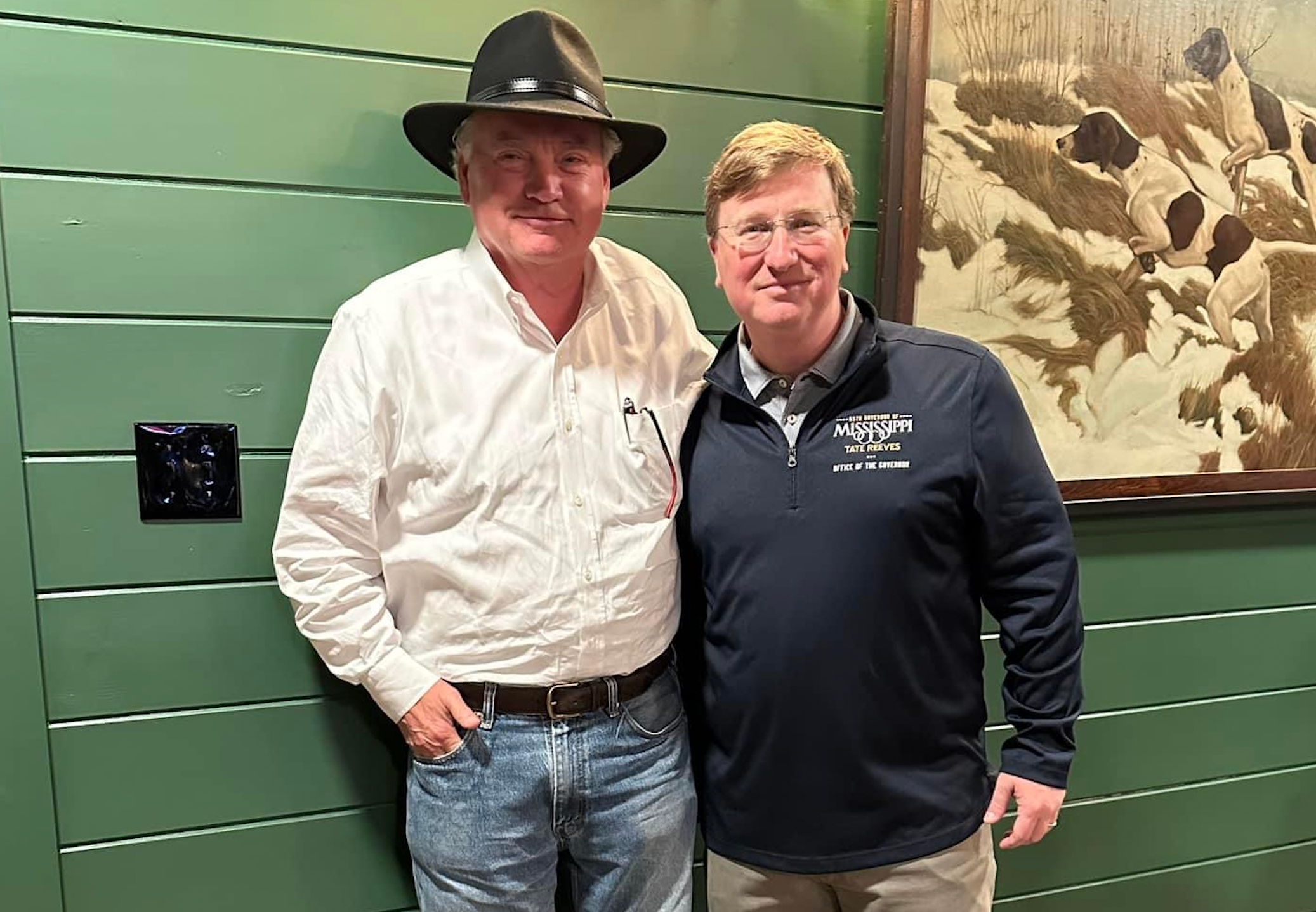
When considering media coverage and urban legends, it's important to begin this story with his financial involvement in politics. As a businessman, it's logical to assume that Pate doesn't spend big money on deals and causes unless he expects some kind of return on investment.
But if you ask him, that's not the case.
"I don't like to say it's a return on investment," Pate told Patch. "After years of doing this, I know what type of leadership and what type of environment I think is needed for communities to be successful and grow — the kind of public policy that encourages growth.
"It's obvious, I'm in the real estate business and growth is important," he added. "But if anybody doesn't admit at some level, you've gotta have something that connects you. If you're in the paving business, you want [a politician] that's pro-paving. Does that mean you bought that candidate? No. It means you're supporting people that have common views."
The real big money in national races often comes from PACs, so the overall extent of Pate's financial involvement in politics is difficult to ascertain without Patch having a team of political strategists and accountants working around the clock to make sense of four decades of dense campaign finance reports at all levels of government and across multiple states.

According to campaign finance records from the Alabama Secretary of State's Office, Pate directly — as an individual donor — has given a total of $1,553,500 to candidates and political action committees in Alabama during races for state and local offices over the last decade.
Patch reported in March that Pate's biggest statewide spending on an individual PAC during the last year could be found in his four contributions to Montgomery-based BIZPAC, to the tune of $170,000. Among the candidates to benefit most from BIZPAC during the last election cycle was current Alabama Secretary of State Wes Allen, who received nearly $100,000 from the political action committee.
Alabama, though, is more of a sandbox than an empire for Pate.
At the federal level, and just looking strictly at his direct donations not funneled through political action committees, Federal Election Commission records obtained by Patch show the reach of Pate's political interests. During the last midterm election cycle, Pate donated just over $40,000 to eight candidates in five different states.
This figure is important not for the dollar amount, but for the geographical scope and the candidates he supported, all of whom could be easily considered Republican outsiders.
Here's a quick look at some of the candidates he supported during the midterm election and how much he gave during the cycle.
*Federal campaign finance guidelines allow an individual donor to contribute up to $3,300 per election to a candidate's committee for election or re-election. This means that an individual donor can contribute up to this amount in a primary election, primary runoff, general election and general election runoff.
- U.S. Sen. Katie Britt, R-Alabama ($8,700)
- Former Alabama Congressman and U.S. Senate candidate Mo Brooks ($8,700)
- Republican U.S. Senate candidate Herschel Walker of Georgia ($5,800)
- Former congressional candidate Esther Joy King of Illinois ($5,800)
- Congressman Robert Aderholt, R-Alabama ($2,900)
- Republican U.S. Senate candidate Blake Masters of Arizona ($2,900)
- Republican candidate and current incumbent U.S. Sen. J.D. Vance of Ohio ($2,900)
- Former New Mexico Republican Congresswoman Yvette Herrell ($2,900)
Fried Chicken With The Governor
Tuscaloosa Patch noted Pate's hard-scrabble youth in the first part of this series and used it as a guidepost in contextualizing his business career in the second installment.
As is the theme with the entire four-part series, Pate's involvement in politics is girded by numerous formative experiences that tell volumes about his approach and worldview. This is no more evident than in the political realm — a pastime he once shooed off because he was, after all, an engineer and successful developer concerned with the math and science that made up his day-to-day work.
The genesis of Pate's interest in politics came sometime in the mid-1980s when he was in a meeting at First National Bank in Tuscaloosa. Pate was in the process of trying to finalize a land deal for the current location of the development anchored by Lowe's on Highway 69 South in Tuscaloosa.
Ironically, it was during that fateful meeting that longtime Tuscaloosa lawyer and then-chair of the local Democratic Executive Committee Martin Ray offered a young, yet successful Pate advice that would set the stage for Republican dominance in Alabama for the next four decades.
"He looked over at me and started asking me about politics and I told him I was more interested in business," he told Patch, referring back to a lifelong passion for numbers and understanding how things work. "He said, 'You know you have to start giving money?' And at the time, Democrats controlled everything in Alabama. So he told me I needed to start making contributions and make them right away if I wanted to be successful. He also said the line I was getting in was a long line, so I should give often."
At first, Pate said he was "pissed off" by the suggestion, which made him set out to "learn about this thing called 'politics' ... And I did."
And as was the case with his first big break in business when he purchased a piece of surplus equipment in Cleveland, Ohio in the early 1980s, Pate just happened to be at the right place at the right time.
Enter H. Guy Hunt — the first Republican since Reconstruction to be elected governor of Alabama.
The pastor of a Primitive Baptist Church, the Cullman County probate judge would go on to serve as the statewide chairman for the election campaign of Ronald Reagan and was even appointed to a position within the administration.
Then, seemingly out of nowhere, Hunt won a 1986 gubernatorial election that remains one of the most controversial in state history due to the precedent-setting spat between his Democratic opponents that ultimately put an end to crossover voting in party primary runoffs in Alabama.
And just whose private plane do you think Hunt flew in as he traversed the state and elsewhere shoring up support?
"Nobody thought he had a chance in hell of winning," Pate told me. "I reached out to him after first getting into politics and he first asked for $25,000."
The young real estate mogul was stunned ... at first. Did this guy really expect him to hand over that kind of dough for something Pate admits he didn't remotely understand?
"But I was motivated [to get involved] and gave the $25,000 and ultimately provided my airplane for him to use while he was out campaigning," Pate said. "And that was the beginning of my involvement with the Republican Party and seeing the party becoming what it is today. [Hunt] got elected a second term and, for me, it was kind of like Jeff Sessions jumping on the Trump campaign early on when nobody else in Alabama was. He got a lot of credit and a big appointment [to U.S. Attorney General], so there are certainly spoils from serving on the right team at the right time."
In a profile series that has closely examined his formative experiences, another can be found when Pate was in the fourth grade. Around the time of his young father's untimely death in a 1968 car accident just before his son's 10th birthday, Pate's elementary school class took the standard trip to Montgomery that Tuscaloosa County fourth graders still take to this day as they learn the basics of state government.
"George Wallace was governor then and I even got to sit in his chair," he said. "But here I am years later [after Hunt was elected] and I'm at the governor's mansion. [Hunt] sat at the head of the table and I sat right beside him and we had some fantastic fried chicken. I then find out there is an open court position for a circuit court judge and my phone started burning up. That was my start in politics."
Hunt won re-election in 1990 in what has been widely cited as the true beginning of Republican dominance in Alabama. Only two Democrats have ascended to the state's highest office since, with only one — Don Siegelman — doing so by winning an election.
Pate spent millions in the years that followed Hunt's election, supporting candidates and initiatives that forwarded his preferred style of populist conservatism not just in Alabama, but across the country.
And he's done this by focusing on people like himself — outsiders.
In 1994, Democrat-turned-Republican Fob James was elected governor in an upset of Democratic incumbent Jim Folsom, Jr., who had become governor after Hunt was forced from office in 1993 upon his conviction on ethics, conspiracy and theft charges.
James' return to the governor's mansion was thanks in no small part to Pate, who had also supported lieutenant governor candidate Don Siegleman and Attorney General candidate Jeff Sessions in campaigns viewed as long shots by many.
Pate loves long shots, though, and backing candidates who many don't believe have a chance.
"I was intent on doing everything I could to build conservative leadership in Alabama," Pate told Patch, underscoring the crucial role he would play in the evolution of the entire Republican Party. "I had the first fundraiser for Sessions before he was even an announced candidate for U.S. Senate [in 1996] and the list goes on and on and on and on."
In those years since, he brought New York City Mayor Rudy Giuliani to Tuscaloosa during his failed bid for the White House, at a time when was considered "America's Mayor" and even hosted famous actor and National Rifle Association spokesperson Charlton Heston for a fundraising event.
Pate has ridden in a car with Karl Rove, undertook fundraising efforts for Dan Quayle and even shook hands with President George W. Bush.
Still, he's never held or even appeared on the ballot for elected office. And yet, his impact on American politics is undeniable due to the very public way he participates — something he will be remembered for in decades to come when talk of Pate turns to politics.
An Endorsement From Santa

If anyone was going to ask St. Nick for a political endorsement, it would be Stan Pate. He admitted as much in the full-page political ad he bought in the Tuscaloosa News that ran on Dec. 16, 2001.
Pate told me the Alabama governor's office is the only elected position he ever truly considered pursuing and the Open Letter To Santa Claus grabbed headlines as he mulled a potential run.
"Santa, all I want for Christmas this year is to be Governor of Alabama."
But after conferring with several former and current governors, the unanimous feedback was for him to continue in his business career and be, as he told me, "the power behind the power."
According to an Associated Press wire story in May 2001, a survey conducted by the Alabama Republican Party saw 3% of respondents support Pate for the nomination amid a crowded field.
For what it's worth, he still polled better than Birmingham contractor Jim Cooper, supported by only 2.8% of the survey's respondents.
The only other instance came in 2012 and when Pate was considered a possible candidate Alabama's Sixth Congressional District, but he ultimately informed party officials that Tuscaloosa was no longer in the House district. He didn't tease a potential candidacy himself, rather he says someone else did so in an effort to make another candidate nervous.
Apart from any ambitions to hold office himself, Pate had already proven savvy when it came to political advertising — ranging from opposition to a proposed property tax increase in the late 1980s to trolling Birmingham officials in their quixotic effort to finance and construct a domed stadium downtown.
Headed up by Mayor Larry Langford, the Metropolitan Area Projects Strategy (MAPS) was the pro-dome group, while Pate had the idea to form his own initiative: Special People After Your Money, or SPAM. He even purchased a billboard next to what is now Legacy Arena that showed a SPAM can shaped like a dome stadium. In an age before YouTube, the advertisement still vent viral.
"The goal is that you make an ad so good the news outlets will run it for free," Pate told Patch. "That billboard would go on to be on the front page, above the fold in the Birmingham News. You can't put a price on that kind of exposure."
In his hometown, Pate's exploits with billboards and radio commercials have become the stuff of legend. Indeed, one of his most notable wins came in 2017, when the developer contributed nearly $40,000 to Tuscaloosa City Council candidate Raevan Howard, who went on to grab nearly 57% of the vote to unseat City Council President Harrison Taylor in the race for District 2.
"Nobody thought she had a chance," Pate recalled. "And who would take on a sitting city council president? I was in Europe when I heard she was running, so I came back and put together a team in less than two weeks and it caught Councilman Taylor flat-footed. There was a mailer of him in a tutu and a lot of people paid attention to that. That was a great campaign and she won."
In Northport, Pate also used his money and resources to help someone who had a major impact on his life in those crucial formative years — the late Donna Aaron, who was one of Pate's math teachers during his time at Tuscaloosa County High School.
Aaron eventually won a crowded race to unseat incumbent Bobby Herndon for the Northport mayor's office, making her the first woman ever elected to the position.
But Pate remembers viewing former Northport Mayor Harvey Fretwell, who was also on the ballot in 2016, as the competition Aaron needed to beat to get elected. Herndon grabbed the most votes in the general election, while Aaron forced a runoff by 948 votes or 27% — compared to Fretwell, who secured only 364 votes or 10%.
"She helped me when I was in school, so I figured I would help her and wanted to bring some of these skills I had learned and the resources I had to the local level," he said. "She beat Harvey Fretwell so bad, Harvey was suggesting the voting machines were counting his votes for her and her votes for him.
"The majority of the money for Fretwell came from Tuscaloosa businessmen and funneled through PACs operated by certain law firms in town," Pate added. "It was interesting, I had some powerful people show up at my office and I told them the door locked from the outside, so they could leave the same way they came."
The aforementioned powers that be responsible for bankrolling Fretwell are just some of the "Good Ol' Boys" that Pate references so often. It's a composite of Tuscaloosa business leaders and old-money political power brokers whom Pate despises for representing all of the things he doesn't stand for.
At one point in our series of interviews, Pate made the comment that there are three castes of people in Tuscaloosa: "The Good Ol' Boys, the Pretty People and the rest of us."
These frustrations can be found in perhaps the only issue directly involving Pate that he has not been buying ads for. Indeed, Pate has gotten emotional every time he has been asked about the recent push to rename the Interstate 20/59 bridge that spans McFarland Boulevard to the Luther Stancel Pate III Memorial Bridge — in honor of his late father.
The resolution sponsored by State Sen. Gerald Allen would rename the overpass that can be seen from the former McFarland Mall property, which is owned by Pate, and features the infamous red ALDOT arches.
Pate has insisted on numerous occasions he did not ask Allen to file the resolution, but this chapter in Pate's political history is another that underscores his outsider status — especially when considering the Chamber of Commerce of West Alabama responded to the measure by urging the local legislative delegation to seek community input before renaming any kind of infrastructure after an individual.
"We haven't had much political interaction, but Senator Allen is someone I've always liked," Pate told Patch when asked about their relationship. "He's a bit of an outsider or that's where he started anyways. I put him in the same category as me — a country boy — so to speak. He relates strongly to blue-collar people and he gives them a voice and I admire that. Gerald has passion. To be honest, I don't talk to him a lot and like all politicians, I don't agree with everything they stand for. But he and I see eye to eye on most things."
On the flip side, nowhere in any of Pate's political history has he committed as much sweat and treasure as can be seen in his longstanding opposition to Tuscaloosa Mayor Walt Maddox. One of the most popular leaders in the state, Maddox's political machine has proven one of the most effective around, even leading to the Democratic nomination for governor in 2018.
During Tuscaloosa's 2021 municipal election, though, Maddox was faced with two challengers and won a fifth term without having to go to a runoff. And he did so despite Pate's widely publicized "Anybody But Walt" campaign.
The shared history of the two powerful men could fill a book by itself, but many forget that Pate was a central force when Maddox first ascended to the office in 2005. In looking back on the strategy of that fateful election, Pate said Maddox capitalized on runoffs in three council districts as the developer pumped valuable campaign dollars to push Maddox to victory.
"I gave money to both candidates in these runoff districts and that was a get-out-the-vote effort," Pate said. "Then I rented every Hummer limousine that I could find across the state ... like other folks had done. We knew more people in those districts would turn out for Walt.
"The strategy I used was, if you have runoffs in those districts, the mother's milk of politics is money," he added. "A good campaign is going to need money. ... I've always tried to approach campaign messages the same way. People get tired of a politician walking out of a church and down the sidewalk and saying the same thing. They tune out to that. My strategy along the way is to do campaign ads that engage the public and delivers the message in a fun way."
When asked about their sometimes-turbulent relationship at present, Pate said he can work with his worst enemies for a common cause if they both believe in it.
However, he has never considered Maddox an enemy.
"There have been pretty rough waves out there, sure," Pate told me. "But he's a politician so he ought to have really tough skin and he knows that campaigning can be tough. I actually called to congratulate him two or three times the night he won after I had put together a pretty serious campaign against him. Again, power is something you take and he won and he deserves all of the respect for being a winner."
Maddox concurred when asked about their relationship, referring to Pate as a "political force of nature at all levels of government."
"Whether he is for you or against you, he never equivocates, which you have to respect," Maddox told Patch. "Clearly, we have had our disagreements; however, we agree on many issues and have always been able to forge ahead because progress always comes first.”
Curtis & Stan
Maxine Newsom Pate was buried at Sunset Memorial Park in Northport on Oct. 26, 2005.
The physical abuse and neglect left emotional scars on her only son, who has lived most of his high-profile life absent of any kind of family — a sentiment he has brought up himself and lamented during just about every on-record interview with Tuscaloosa Patch for this series.
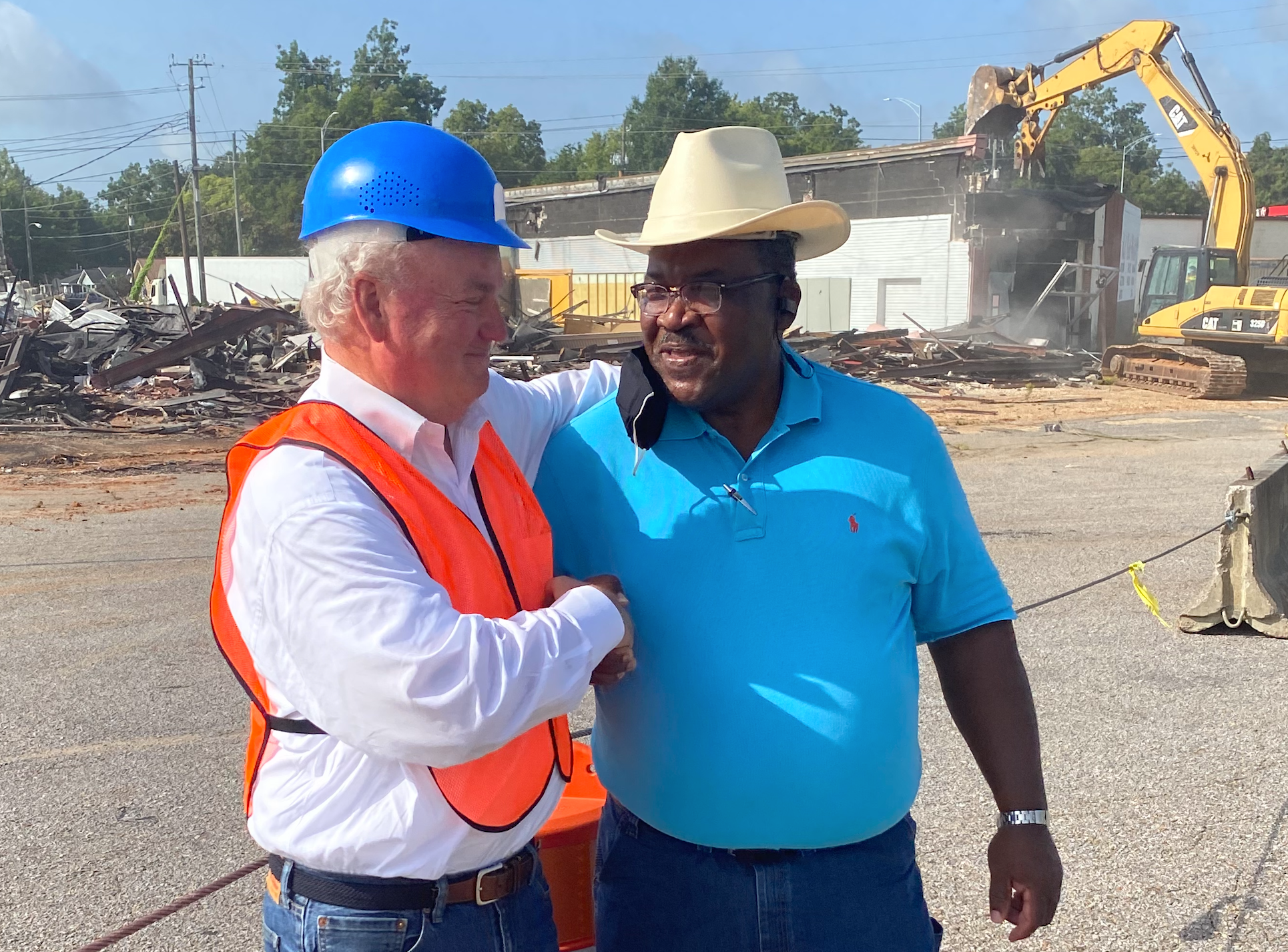
State Rep. Curtis Travis, a Democrat from Sawyerville and longtime friend of Pate's, remembers that day well.
"I rode with him all that day," Travis told me. "He didn't go to the funeral. We rode to Birmingham and were doing other stuff. I wanted him to know I was there for him and not a lot was said. As friends, you don't have to say anything and I know how those issues are."
Indeed.
Dr. Jimmie D. Clark was a brilliant woman who graduated from Brown University Medical School in May 1992. During the second year of her residency at the University of Alabama, she met her future husband Curtis Travis at a fundraiser in Tuscaloosa in the winter of 1994.
After dating for a couple of months, Curtis proposed to Dr. Clark after the couple was invited by Pate to attend the Fob James inaugural ball in Montgomery. They would start a family and have two kids — Ava Michelle and Justin.
It would be Pate named Ava's godfather and it would be Pate who served as one of the pallbearers after Dr. Jimmie Clark-Travis died in 2005 following a yearlong fight with breast cancer.
She was only 39 and her husband was left to raise two small children without a mother.
"I was there with him when the love of his life passed away," Pate told me as he seemed to choke up with emotion. " I watched Curtis as a father step up and all you have to do is look at his two children and look at what a great job he did. Those two children are his life. He is more than my friend. I feel like Curtis would feel the same — we're more like brothers."
Their relationship, however, goes further back than that.
In the late 80s, the two connected as Pate set out to begin developing the Cottondale property that is now the Winn-Dixie shopping center in Five Points.
Around 30 years old at the time, Travis had an engineering background as a student at the University of Alabama and helped Pate on the project. However, Travis had yet to get his undergraduate degree due to tuition owed for a Math 227 course he had passed with a "B."
Travis tried to work out the issue with university officials but was told that even if he had paid back the money owed, he would still have to take the course over again. As Travis remembers it, he was told that he was being made an example of.
When Pate found out, he was livid.
Pate then covered the money owed for tuition and spoke with the university officials who had told Travis he would have to take the class again.
"They wouldn't give him a diploma because he couldn't pay his tuition," Pate told Patch. "That's something that would be a bit embarrassing to people or to share and talk about. We had become close enough and I asked him and said 'You've got to be shitting me.' I ultimately wound up making it clear to Curtis not to worry about it and I told [university officials] you keep that position and see how it works out. They ultimately backed off, Curtis got his diploma and he worked and paid me back and that should tell you all you need to know."
After gaining knowledge and experience through working on Richard Shelby's bid for U.S. Senate in 1986 and Paul Hubbert's 1990 gubernatorial campaign, Travis was eventually encouraged by Pate to seek elected office himself and would go on to a long career in politics.
This, however, was not before becoming the first Black student at the University of Alabama to graduate with a degree in petroleum engineering. He even sent me a picture of his diploma.
"We do love one another and the thing is, we are genuine friends," Travis told Patch. "Stan will look out for a little person, it doesn't matter what color. Stan has always been somebody from an underdog standpoint. There are other folks [in the business community] who have done stuff [for others], but it's about who they are."
The Kingmaker
Despite escaping an abusive mother and never being married, Pate is a vocal financial supporter of women in politics.
Indeed, Pate bankrolled Donna Aaron to become the first woman elected mayor of Northport, financially supported Republican Katie Britt in her recent bid to become the first woman from Alabama elected to the United States Senate, and is arguably the largest individual contributor for Alabama Gov. Kay Ivey.
Since 2021, Pate has donated a total of $350,000 to Ivey, according to campaign finance records, including his most recent donation of $50,000 on March 6.
"She's a lady who has worked and worked and worked to get to where she is," Pate told Patch. "And now, we're going to have a woman governor for 10 years. We've got a long way to go in Alabama, but we've at least come that far."
In a profile series full of formative experiences, Pate traces this approach back to being a student at Tuscaloosa County High School — the alma mater of Lurleen Burns Wallace, the first woman to be elected governor of Alabama.
"Near the front door at the school, there was a huge painting of her in that blue suit," Pate recalled. "I used to walk up there on a regular basis when I felt really challenged and I'd get a big smile, so she provided tremendous motivation for me. To be able to have Gov. Ivey follow in her footsteps, it's great for the state of Alabama."
The support of female candidates over the years and up to the present day tracks with Pate's passion for political outsiders. And as seen with Travis and Howard, this willingness isn't hampered by race, gender or party affiliation.
Still, Pate doesn't like to think of himself as a kingmaker.
"That's not the way I look at myself," Pate told Patch. "I look at myself as a person with the opportunity and resources to participate at a high level in helping determine who serves."
And it's this high level of participation that keeps Pate busy, even as he nears his 70s.
At present, Pate is concerned with mental health and K-12 education in Alabama — both issues that, in order to be addressed, would require a tidal shift in the state's priorities when it comes to spending.
In March, Kyle Whitmire of Al.com reported that Ivey's proposed budget for the state's $2 billion surplus in state education funds includes at least $331 million that would go to projects and expenses unrelated to schools, teachers and classrooms. In the same month, Mike Cason of Al.com also reported that a resolution was approved to construct a new $975 million prison in Elmore County, which will do little in the fight to address a shortfall in the resources needed to effectively address Alabama's pervasive mental health issues.
Instead of providing any criticism regarding the Ivey administration's approach, Pate believes the problems with mental health and education would be best addressed with revenue generated from a state lottery, casino gambling and sports betting.
"The state's got to determine what it's going to do relative to a lottery," Pate said. "I personally support a lottery and I support a lottery as long as it's codified into the law how the profits will be used and where they are going. I think it's a good source of money for education and mental health."
He also mentioned the need for action with respect to electronic gambling — a sector that is exclusively dominated in Alabama by the Poarch Band of Creek Indians, which operates the state's three casinos on its reservations, in addition to its myriad other assets across the southeast.
"They have a complete monopoly," Pate lamented. "[The Poarch Creeks] are extremely smart and they are giving to everybody. They give to every charitable organization and every politician willing to take the money and you can't blame them, they have a goal in mind."
To Pate's point, the Montgomery Advertiser in 2015 reported when the Poarch Creeks offered a proposal to cover the state's $250 million budget shortfall in exchange for giving the tribe exclusive gaming rights in Alabama. The measure ultimately failed to gain traction, but not before underscoring the tribe's influence with respect to the gambling debate in Alabama.
But the problems for this debate can be traced somewhat back to Pate himself, who recalled asking former Republican Gov. Guy Hunt if he would ever consider signing a compact with the Poarch Creeks to allow full-fledged gaming in Alabama. After all, it was Pate who financed the political outsider's rise to the state's highest office, forever altering the political dynamics of the state and likely resulting in the longstanding GOP opposition to gambling in its various forms.
"You have to think, it was a long fight before the Poarch Creek Indians got the right to do electronic bingo in Alabama," Pate recalled. "I was sitting with Gov. Hunt in a hotel suite when I asked him about it and he said he would never support anything to do with gaming and he would spend the state's resources to fight it to the bitter end. Years later I was visiting with him, after he had been convicted and his health had started to fail, and asked him if he would do it the same. way. He said yes."
In looking at national politics and the upcoming 2024 presidential election, Pate explained that he will support whoever's the next Republican nominee. As stated earlier in the story, though, Trump is at the top of Pate's list.
"I don't get to choose who runs, but I can decide if I'm going to participate and what level I'm going to participate," he said. "Right now, I believe our country is in crisis — a bigger crisis than the general public knows and all one has to do is look at what's going on with the world. We have to build the Keystone pipeline and get energy prices under control. Until we get control of energy, we're gonna have a very unstable economy."
He went on to say the country has been sitting on its hands with respect to the growth in Chinese manufacturing and the amount of American debt owned by the communist nation. He also said many would be shocked to learn how much Chinese-owned real estate is in America.
But in an interesting deviation from the vitriolic identity politics of the Post-Truth Era and its culture wars, Pate was surprisingly measured when discussing other hot-button issues.
Putting aside his own personal philosophies, the lifelong conservative said these issues, such as abortion, should be up to the people to decide on.
"Women's voices must be heard and their rights must be protected," Pate said. "We're gonna spend the next two years debating abortion and the solution is to have a national referendum and let the people vote. How else are you going to get a solution? I don't believe you're going to get one in the courts or legislatively. We've got to resolve the issue, it's just divisive. We've got to get focused on getting back to the things we have in common. That's what having a country is about, for God's sake!"
Ryan Phillips is an award-winning journalist, editor and opinion columnist. He is also the founder and field editor of Tuscaloosa Patch. The views expressed in this column are his own and in no way reflective of any views held by our parent company or sponsors.
Get more local news delivered straight to your inbox. Sign up for free Patch newsletters and alerts.