Politics & Government
'Trump Account' Stocks For Kids Launch Saturday: What You Need To Know In AL
Here's what to know before "Trump Accounts" hit the market July 4


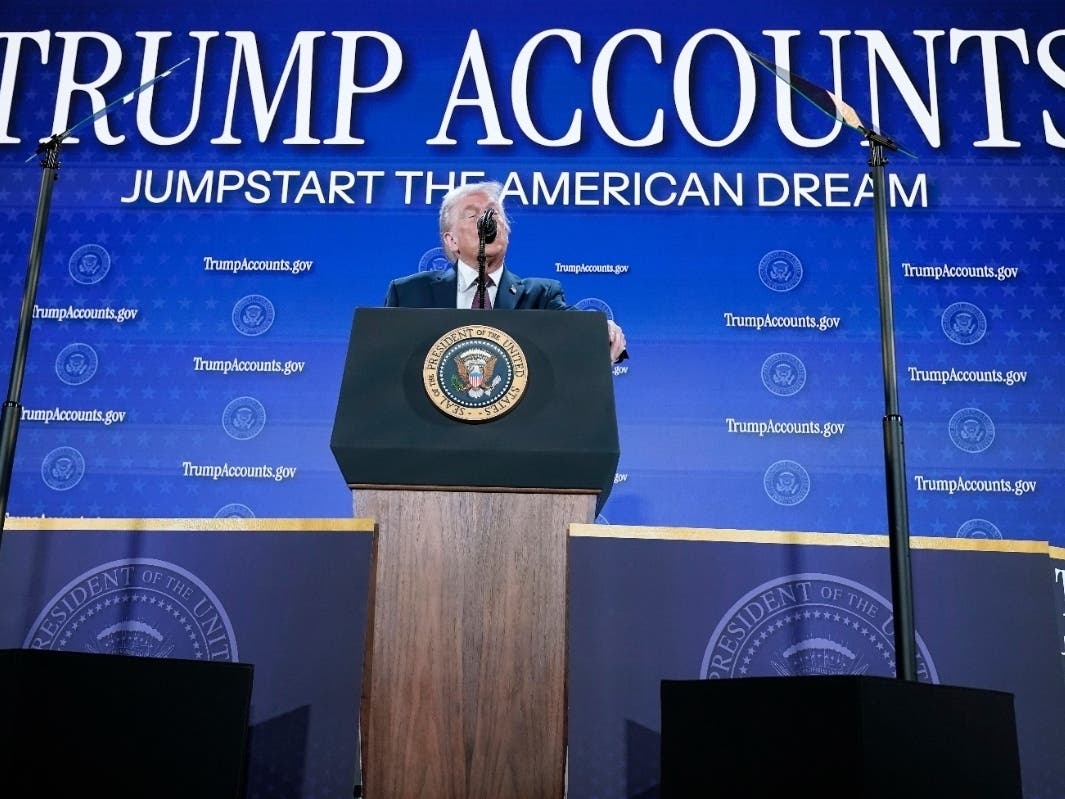
TUSCALOOSA, AL — President Donald Trump’s new, controversial namesake investment accounts that promise to give millions of children a financial head start launch this week.
Click here to subscribe to our free daily newsletter and breaking news alerts.
"Trump Accounts" will hit the market July 4, with the promise that families will have another option to invest in their children's future by giving young Americans an early stake in the stock market.
Find out what's happening in Tuscaloosafor free with the latest updates from Patch.
Trump Accounts are tax-advantaged investment accounts created for minors.
The public-private program gives select newborns a $1,000 federal starter contribution and allows parents, relatives, employers, local governments, charities, and philanthropies to add money over time.
Find out what's happening in Tuscaloosafor free with the latest updates from Patch.
The federal pilot contribution applies to children born from Jan. 1, 2025, through Dec. 31, 2028. Families may also open accounts for older children, as long as the child is a U.S. citizen, has a valid Social Security number, and is under 18.
The money must go into low-cost U.S. equity index funds that follow the broader stock market. Those funds could include funds tied to the S&P 500 or similar broad-market indexes.
Young account holders generally cannot withdraw the money until they turn 18. After that, withdrawals may be limited to approved uses, such as college costs, business startup expenses, or a home down payment.
Supporters say the accounts will give children early exposure to the stock market and help families build wealth over time.
They argue that even a modest starter contribution can grow if markets rise over many years. At a 7% annual return, a $1,000 investment would grow to about $3,570 after 18 years.
However, families who sign up will have to weigh the appeal of free seed money against the risks of putting a child's promised government-backed savings into the stock market before all of the program’s risks, rules, and safeguards are clear.
Is My Child Eligible?
A newborn qualifies for the $1,000 federal contribution if the child is a U.S. citizen, has a valid Social Security number, and was born between Jan. 1, 2025, and Dec. 31, 2028.
A parent with requisite tax forms may open an account for a child who is a legal U.S. citizen even if the parent is undocumented.
The federal payment will not help families with diapers, rent, food, child care, or other immediate costs. The account is built for long-term investing, and the money generally stays locked up until the young beneficiary becomes an adult. Withdrawals may also be taxable.
How Do Parents Open Accounts?
Parents can begin contributing to Trump Accounts in July 2026. Families may start the process by filing IRS Form 4547 or by using the official Trump Accounts website.
Families that sign up are expected to receive follow-up information with instructions for completing the account-opening process. The White House has said a registration website will be available before the program launches. The accounts are scheduled to become available July 4, 2026.
Can I Enroll My Older Children?
Children born before 2025 will not receive the $1,000 federal pilot contribution.
Families can still open accounts for older children who meet the program’s basic eligibility rules, and those accounts may still receive private or philanthropic contributions.
Some older children could qualify for money from Michael and Susan Dell, who announced a $6.25 billion donation connected to the program. Their gift is expected to provide $250 to children age 10 and under who live in ZIP codes with median family incomes of $150,000 or less and who do not receive the $1,000 federal contribution.
Families can use U.S. Census Bureau ZIP code data to check whether their community meets the income threshold.
Who Will Run The Accounts?
The U.S. Treasury Department said BNY Mellon will serve as a financial agent of the federal government.
BNY will manage the first accounts and help build a new Trump Accounts app. Robinhood will serve as the brokerage firm and initial trustee. Robinhood and the National Design Studio, a federal agency, will help design the app’s user interface.
Robinhood CEO Vlad Tenev described the program to CNBC as “an evolution of the American dream,” saying the idea shifts wealth-building from homeownership alone toward ownership in American companies.
BNY CEO Robin Vince said the program would expand access to financial opportunity, strengthen U.S. capital markets, and give more children a foundation for long-term financial security.
What Companies Are Involved?
A group of major companies has pledged support for Trump Accounts, including Dell, Block, Uber, Mastercard, BlackRock, Visa, Charter, Charles Schwab, Chime, SoFi, State Street, Comcast, Chipotle, and Steak ’n Shake. On Wednesday Trump announced U.S. chip company Micron will invest $250 million, The New York Timesreported.
Many of those commitments appear to involve matching contributions for employees’ children, though public announcements do not spell out every company’s dollar amount, eligibility rules, timeline, or method of payment.
The Dell pledge is the most clearly defined. The donation would provide $250 to eligible children age 10 and under in qualifying ZIP codes if their parents open accounts.
What Protections Do Families Have?
The idea resembles “baby bonds” programs that California, Connecticut, and the District of Columbia have tested or launched. Those efforts generally target children growing up in poverty, children in foster care, or children who lost a parent to COVID-19.
Trump Accounts take a broader approach. Wealthier families may participate, private investment firms will help administer the money, and the accounts will tie children’s savings directly to U.S. stock-market performance.
The program blocks several risky investment choices. Families cannot put Trump Account money into individual stocks, cryptocurrency, private companies, speculative products, or high-fee actively managed funds.
Instead, the money must go into low-cost mutual funds or exchange-traded funds that follow broad U.S. equity indexes. That design spreads each account across many publicly traded companies instead of allowing a parent, broker, government official, or political figure to pick a small group of winners and losers.
The rules also limit fees. Public guidance says eligible funds may charge no more than 0.10% in annual fees.
What Are The Risks For Families?
The main risk is market loss. A broad index fund can reduce the damage caused by one company’s collapse, but it cannot shield an account from a stock-market downturn. If the broader market drops 20%, 30%, or more, Trump Account balances can fall too.
Index funds also do not guarantee that the underlying companies are safe, scandal-free, politically neutral, or financially stable. A company can face lawsuits, layoffs, regulatory investigations, or reputational damage and still remain in a major index if it meets the index’s rules.
Families may also have few options for lowering risk as the account holder nears adulthood. Current guidance points to equity index funds during the growth period and does not clearly identify a cash, bond, money-market, or target-date option that would let families move money into safer holdings before the beneficiary turns 18.
Can Parents Switch Funds?
Parents may be able to choose among eligible investments if the program offers more than one fund.
But public guidance does not clearly explain how fund changes will work. It does not say how many fund choices families will see, whether an account will start in a default fund, how often a parent may switch funds, whether the app will handle those changes, or whether any trading limits will apply.
The rules also appear to keep families inside a narrow investment lane. Unless future guidance expands the menu, parents cannot shift the money into individual stocks, cryptocurrency, bonds, cash, international funds, or a custom portfolio.
What Do Critics Say?
Critics say the accounts do not address the needs children face in their earliest years, when poverty, food insecurity, housing instability, and lack of health care can have long-term consequences.
They also say the program does not offset Republican-backed cuts to other programs that serve children and families, including food assistance and Medicaid, which the Congressional Budget Office estimated would reduce household resources from Medicaid, SNAP, and other in-kind transfers by $900 billion from 2026 through 2034.
Opponents warn that the accounts could widen the wealth gap. Higher-income families that can afford to make the maximum yearly contributions would gain the most from tax advantages and long-term market growth. Lower-income families that cannot set aside money would rely mainly on the starter contribution and any outside donations.
Scam Warning
Treasury officials warned families to watch for fraud as the program rolls out. The Treasury Department said legitimate activation emails will come only from no-reply@TrumpAccounts.Treasury.gov.
Officials said families should not respond to phone calls or text messages claiming to activate Trump Accounts. Families should use only the official Trump Accounts portal.
Patch Editor's Corey Washington and Angela Woodall, along with the Associated Press contributed to this report.
Get more local news delivered straight to your inbox. Sign up for free Patch newsletters and alerts.