Health & Fitness
Romaine Lettuce E. Coli Scare Ends, Farmers Try To Restore Trust
Arizona romaine lettuce farmers work to rebuild consumer confidence after CDC says the E. coli outbreak is over.


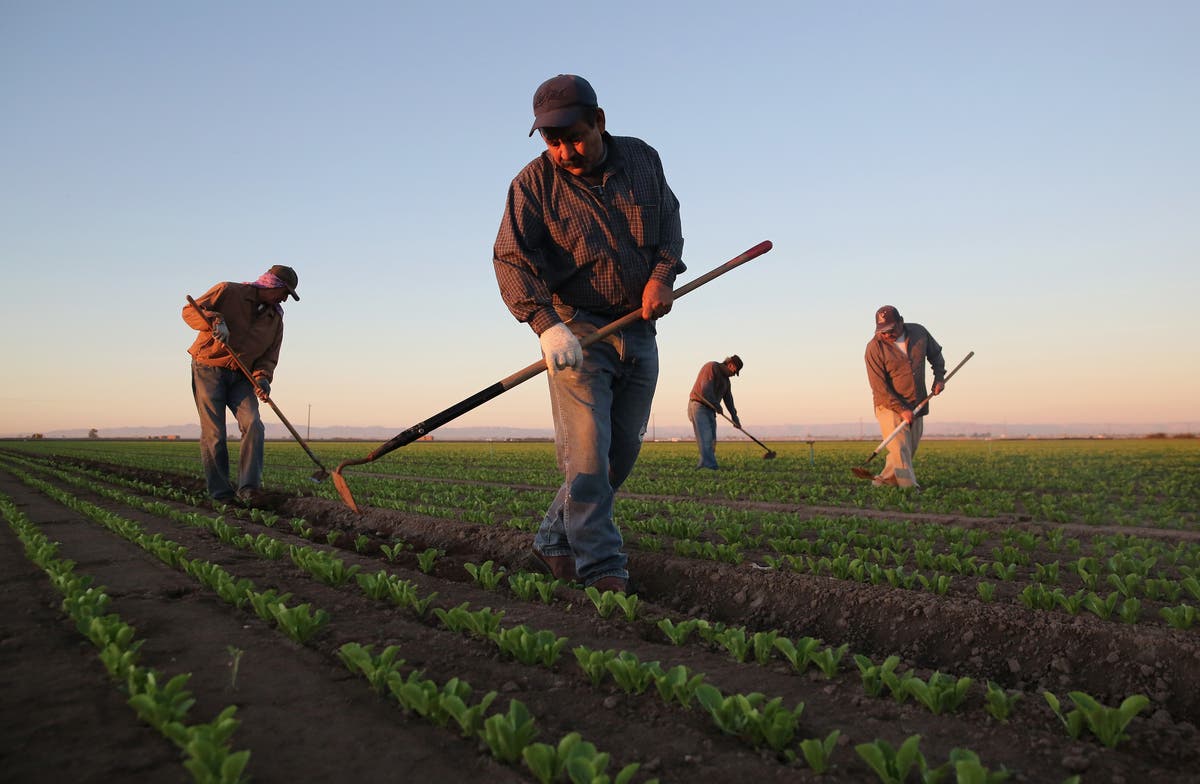
YUMA, AZ — Romaine lettuce growers have a daunting challenge ahead: rebuilding consumer confidence in a product linked to a strain of E. coli bacteria that sickened more than 200 people in 36 states and led to massive recalls. Nearly half of those who became ill required hospitalization and five of them died.
Dr. Scott Gottlieb, commissioner of the Food and Drug Administration, said in a statement last week that the E. coli bacteria had been traced back to a tainted irrigation canal used by farms in the Yuma area. But more research is needed to determine how and why it ended up in the water, Gottlieb said.
At the height of the E. coli outbreak, the U.S. Centers for Disease Control and Prevention encouraged grocery stores to stop selling romaine lettuce, restaurants to stop serving it and consumers to throw out any lettuce they may have purchased.
Find out what's happening in Across Arizonafor free with the latest updates from Patch.
The last time so many people got sick from E. coli was in 2006, when nearly 200 people were sickened by tainted spinach in 26 states. In that outbreak, the E. coli was traced to a single source, but in this case, lettuce grown on multiple farms was contaminated.
“This is a broader contamination event that impacted a lot of farms and ranches, and then went into the supply chain and amplified out,” Bill Marler, a lawyer in Seattle who represents more than 100 people who were sickened, told The New York Times.
Find out what's happening in Across Arizonafor free with the latest updates from Patch.
The CDC said last week the romaine lettuce E. coli outbreak is over, but Marler said many of his clients still haven’t fully recovered and are experiencing a range of health problems, including kidney failure.
Lettuce growers will plant next year’s crop in August, and the Arizona Leafy Greens Food Safety Committee is looking at ways to increase safety, including treating the water source with bacterium-killing chemicals or finding a different water source altogether. The trade group advises farmers on measures they should take to to minimize the risk of crop contamination, including training for workers on how to harvest, building fences around fields to keep out debris, testing water and soil, and keeping crops at least 100 feet away from farm animals.
About 90 percent of the leafy green vegetables consumed in the United States during the winter months are produced in the Yuma area, according to a University of Arizona. Growers also saw a big increase in lettuce exports to Sweden and the United Kingdom last year because of rain in Spain.
The lettuce producing season ended prematurely last year due to the E. coli outbreak,. Matt McGuire, general manager of JV Farms, which operates farms in Arizona, California, Colorado and New Mexico, told the Arizona Daily Star.
“The big downside that happened to us is, you know, we’ve kind of destroyed consumer confidence in our product and what we do,” McGuire said. “We have to get our consumer confidence back, and, hopefully, in time for our fall harvest beginning in November.”
Lettuce produced at JV Farms wasn’t tainted, but McGuire said the farm still discarded about half its crop.
“Buyers shift their focus to other areas like California quicker than normal, and consumers just stop eating altogether,” he said, adding:
“We don’t grow food to make people sick, and when something like this happens, it is disheartening because all farmers pride themselves on product safety.”
Experts said it could take up to two years for the romaine lettuce market to rebound to normal levels.
“Romaine lettuce is definitely still in the doldrums,” McGuire said. “The demand is still low and it’s still being sold from 25 percent to 40 percent of its normal volumes.”
Under normal conditions, lettuce prices make wild swings, according to Mark Manfredo, director of the Morrison School of Agribusiness at Arizona State University.
“Lots of factors are involved, so a timetable for the economic impact of this is hard to predict,” he told the Daily Star.
(Photo by John Moore/Getty Images)
Get more local news delivered straight to your inbox. Sign up for free Patch newsletters and alerts.