Community Corner
Former Navajo Leader On Bears Ears: 'Our Church, Our Temple'
As the Trump Administration prepares to unveil plans to shrink the national monument, Peterson Zah is heartbroken and disappointed.


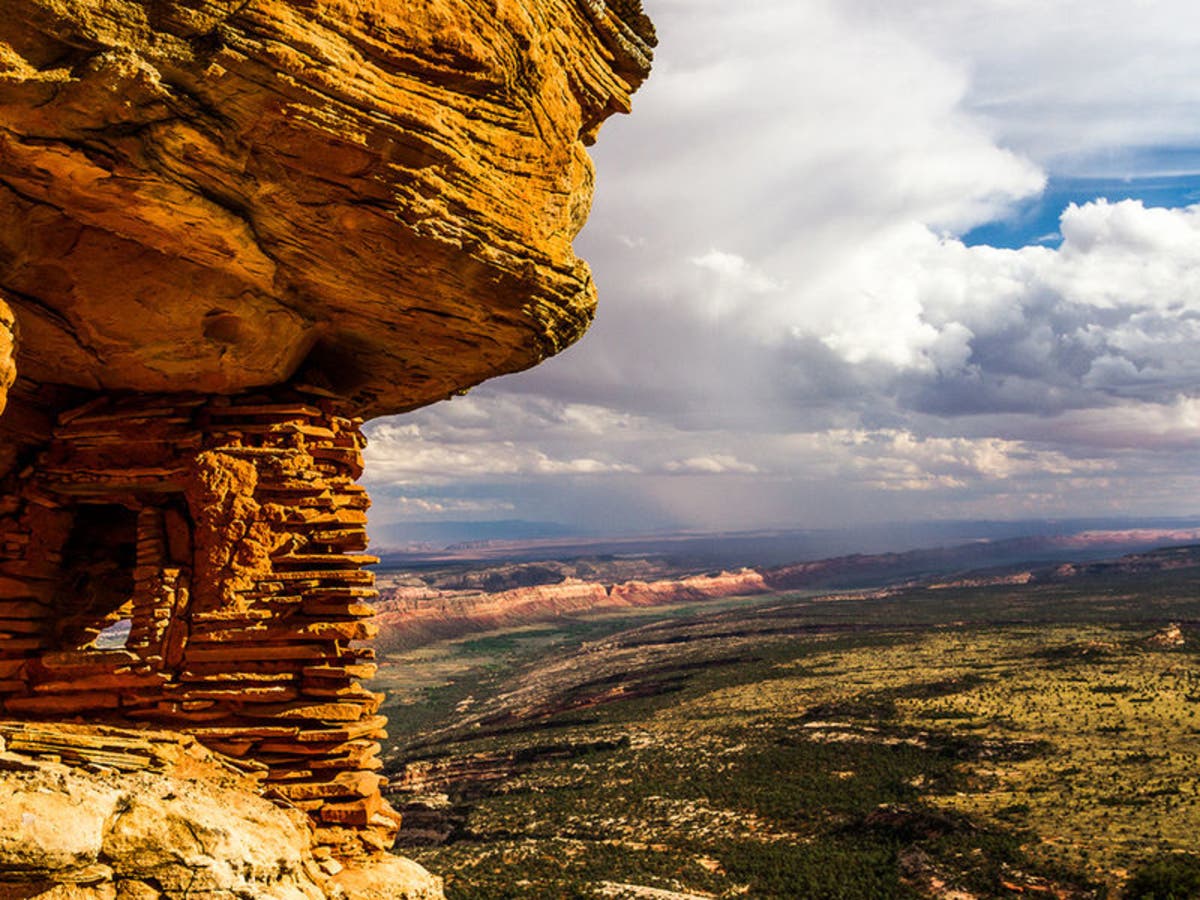
"Look out over the expanse, the land, the mountains, and take in the beauty," says the the former president and chairman of the Navajo Nation, Peterson Zah. "This is our church, this is our temple."
Zah is talking about Bears Ears National Monument, 1.35 million acres in southern Utah and northern Arizona. This is land that is sacred to the Navajo, to the Hopi, the Ute Mountain Ute, the Ute Indian Tribe, and the Pueblo of Zuni.
It is land designated a national monument by President Obama in 2016 after 60 years of effort to protect the 100,000 Native American archaelogical and cultural sites. Many of the sites have been threatened by looting and grave robbing.
Find out what's happening in Phoenixfor free with the latest updates from Patch.
It is also the birthplace of many Navajo leaders, including Manuelito, who led them on the Long Walk and eventually helped negotiate the treaty that freed the Navaho from internment camps.
The Trump administration is looking to undo Obama's action. Interior Secretary Ryan Zinke gave President Trump a series of recommendations about Bears Ears and nine other monuments and an announcement could come any day.
Find out what's happening in Phoenixfor free with the latest updates from Patch.
In his report, Zinke suggests shrinking the size of several of the sites.
In the case of Bears Ears, he suggests not only cutting the size of the monument but easing restrictions on activities such as coal mining and grazing.
The possibility of mining on the land leaves Zah, who grew up on the reservation and went on to lead the nation, heartbroken.
"There was a television segment with General Schwarzkopf in a bomber as they flew over sites in Iraq," Zah remembers. "And they would reach a point and he would say, 'don't bomb there, that is a sacred site. It is a place that people pray.' Yet we don't have that same respect for places like that in our own country that my people consider sacred.
"Because I look different, because people like me look different, we do not get the same respect as people that we were at war with."
Zah would like to believe there is some other motivation, some other reason that would allow people to destroy sites in their own country that are sacred to people.
He had listened earlier this year as President Trump, in ordering Zinke to review the designation of monuments, talked about the designation of Bears Ears being "an egregious use of power."
"We're returning power back to the people," Trump had said. "Today we're putting the states back in charge."
Trump's talk of "the people" and "the states" ignores an important group, the Native Americans who have been there for more than 1,000 years.
"It is such disrespect," Zah says. "For the Navajo, this is a place where you can see the power of the land, you can feel the power of the Great Spirit. It is a place where we pray and honor our ancestors.
"We were forced off that land in the 1800s but it has always been important to us," he says. "For hunting, for ceremonies."
Zah has a strong sense of his tribe's history and the struggles they've had.
He has strong memories of being a child on the reservation during World War II when all the men in his family were in the Army and his family struggled to survive, including an episode when they had to eat the family's pet pony.
And there were his battles to get an education.
Some thought he should be a medicine man. He had other plans, though, being president was never on his radar.
"I always wanted to help others," Zah says. "I've wanted people to understand where we came from, who we are as a people.
"Our heritage is important and we need to fight to protect it."
Zah takes some solace in the fact it's not clear that the president even has the authority to scale back Bears Ears or any of the other places designated as monuments by his predecessors.
In 1938, when Franklin Roosevelt was considering abolishing Castle-Pinckney National Monument, which had been established by Calvin Coolidge, his attorney general wrote he didn't have the authority to do so.
"The Executive can no more destroy his own authorized work, without some other legislative sanction, than any other person can," Homer Cummings wrote.
Still, the Navajo and the other tribes are prepared to go to court if necessary.
Zah thinks that if more people would visit the area, they would understand the power that is there.
"When I was younger, I went to Washington, D.C., and visited the National Cathedral," he says. "I went to the Mormon Temple in Salt Lake City. The power of the beauty that is in those places is impossible to miss.
"It is the same thing at Bears Ears."
He fears what will happen if the protections are removed.
"It will disturb the balance," he says. "That is wrong.
"We need to respect each other, respect our differences, and work toward harmony. It is the only way."
Photo Josh Ewing, courtesy Bears Ears Inter-Tribal Coalition.
Get more local news delivered straight to your inbox. Sign up for free Patch newsletters and alerts.