Politics & Government
550+ CA Bills On Newsom’s Desk: What To Know
Plus, a look at some of the most noteworthy and interesting bills on which Gov. Newsom took action over the weekend.

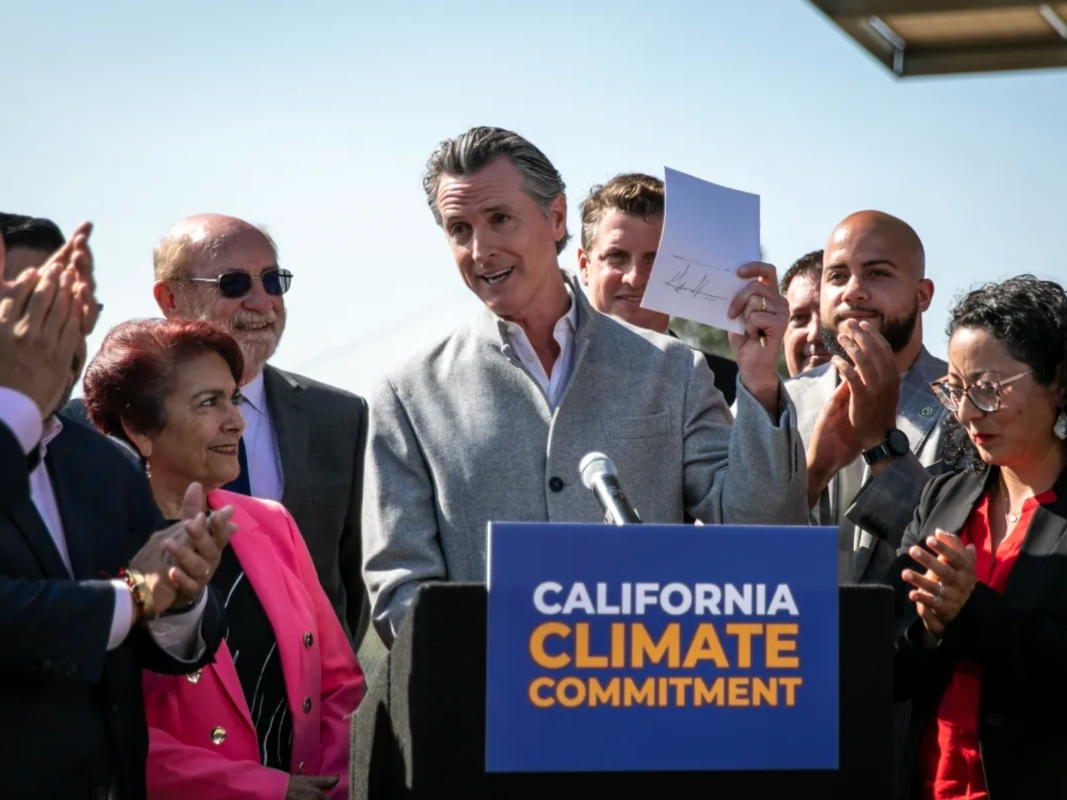
CALIFORNIA— Gov. Gavin Newsom has until midnight Friday to determine the fate of the more than 550 bills on his desk.
The bill tally from veteran Sacramento lobbyist Chris Micheli is, and underscores just how much work Newsom has ahead of him: He needs to sign or veto an average of about 110 bills per day to get through all of them by the Friday deadline.
CalMatters is tracking Newsom’s decisions on some of the most interesting, controversial or noteworthy bills state lawmakers sent him before the 2022 legislative session ended last month. Here’s a closer look at three proposals that especially caught our eye — and the politically fraught choices they may pose for Newsom:
Find out what's happening in Across Californiafor free with the latest updates from Patch.
- A bill that would usher in the nation’s most wide-ranging changes to solitary confinement by preventing inmates in California’s prisons, jails and immigration detention facilities from being held in solitary confinement for more than 15 consecutive days, and for more than 45 days out of 180. The proposal would also ban the practice altogether for people younger than 26 or older than 59; women who are pregnant, recently had a baby or suffered a miscarriage; and those with physical or mental disabilities. The bill’s proponents say solitary confinement is tantamount to torture and does nothing to rehabilitate inmates. But a former member of the Mexican Mafia, who spent decades alone in 8-by-10 cells, much of it in solitary, told CalMatters’ Nigel Duara that he disagrees. “Without some kind of deterrent, I mean, you go whack a guy and you get 15 days in the hole and you’re back in a regular general population yard,” he said. “Is it a bad place? Sure. But they have to have bad places for bad people.”
- A bill that would extend by one year the lifespan of California’s first-in-the-nation reparations task force, allowing it to deliberate until July 1, 2024 on how to best compensate African Americans for slavery and its lingering effects. The proposal would also permit state lawmakers to remove and replace people on the nine-member task force. Advocates voiced alarm about these provisions when the reparations task force met Friday and Saturday in Los Angeles, CalMatters’ Lil Kalish reports: Audience member Tiffany Quarles described the bill as “a betrayal of Black Americans,” adding, “We’ve been waiting for 400 years. We do not need an extension.” Meanwhile, Chris Lodgson, an organizer with the Coalition for a Just and Equitable California, said the removal clause “politicizes” the process: “If some of the politicians don’t like the fact that we’re getting cash reparations, they could simply remove people on the task force who support them,” he said. During the two-day meeting, the task force also began putting dollar figures to potential compensation for Black Californians who can establish lineage to enslaved ancestors. For more, check out Lil’s story.
- A bill that would allow jaywalking on empty streets, permitting law enforcement officers to stop pedestrians only when “a reasonably careful person would realize there is an immediate danger of a collision,” CalMatters political intern Ariel Gans reports. Newsom last year vetoed a similar bill that would have repealed the state’s jaywalking laws and prohibited fines until Jan. 1, 2029, warning that it would “reduce pedestrian safety” even as he denounced the “unequal enforcement of jaywalking laws” and their use as a “pretext to stop people of color.”
- Last year, pedestrian fatalities in the U.S. hit a four-decade high, and California recorded the highest number of any state. At the same time, California’s local law enforcement agencies write thousands of jaywalking tickets every year, which studies find disproportionately impact people of color.
- Kevin Claxton, interim executive director of the California Bicycle Coalition: The bill “allows police to issue a ticket when someone crosses the street in a way that puts them or others in danger, but it will end biased and pretextual jaywalking stops that don’t improve public safety.”
- California District Attorneys Association CEO Greg Totten: “This is very bad public policy that’s going to endanger pedestrians and really tie the hands of law enforcement who are trying to do their job and keep pedestrians safe.”
Newsom acts on key bills
Newsom has so far signed nearly 550 bills and vetoed just over 60, according to Micheli. Here’s a look at some of the most noteworthy and interesting bills on which he took action on Friday and over the weekend:
- The governor on Sunday signed a raft of bills and vetoed a handful of others, including a high-profile proposal that would have mandated kindergarten for California children. In his veto message, Newsom cited the state’s “lower-than-expected revenues over the first few months of this fiscal year” and a need for “disciplined” spending, a familiar refrain in his recent veto messages. Also Sunday, Newsom announced that he’d signed two bills that aim to crack down on surging catalytic converter theft by making it illegal to buy the parts from anyone other than licensed auto dismantlers or dealers and by requiring buyers and sellers to keep detailed records so stolen products are easier to track.
- On Friday, which Newsom proclaimed Native American Day in California, the governor signed a package of bills that he said would support the state’s Indigenous communities. Among other things, the bills would:
- Remove the word “squaw” — which the Newsom administration described as a “racist and sexist slur” for Native American women — from “all geographic features and place names in the state.”
- Rename University of California’s Hastings College of the Law as the College of the Law, San Francisco — part of a series of restorative justice efforts for Native Americans “whose ancestors suffered mass killings and other atrocities funded and supported by college founder Serranus Hastings in the mid-19th century,” according to Newsom’s office.
- Encourage schools to partner with local Native American tribes to develop educational material highlighting “the unique history, culture and government of tribes in their region.”
- Set up an emergency “Feather Alert” system — similar to Amber or Silver alerts — to strengthen search efforts for missing and murdered Native Americans, particularly women and girls.
- Also Friday, Newsom signed a bill to permit undocumented Californians without drivers’ licenses to obtain a state ID, which will make it easier for them to open bank accounts, obtain housing and access health care and other benefits. He also greenlighted a bill to loosen the requirements for street food vendors to get health permits.
- And in Newsom’s final Friday legislative action, he signed a ream of bills — including one to allow Californians to sue adults who electronically send them unsolicited sexual images or videos — and vetoed a handful of others, including one to strengthen oversight of California’s cryptocurrency industry.