Crime & Safety
CA City's Lingering Foul Odor Emanated From Warehouse Fire
For more than a month residents of a city in Southern California endured an unrelenting putrid stench.


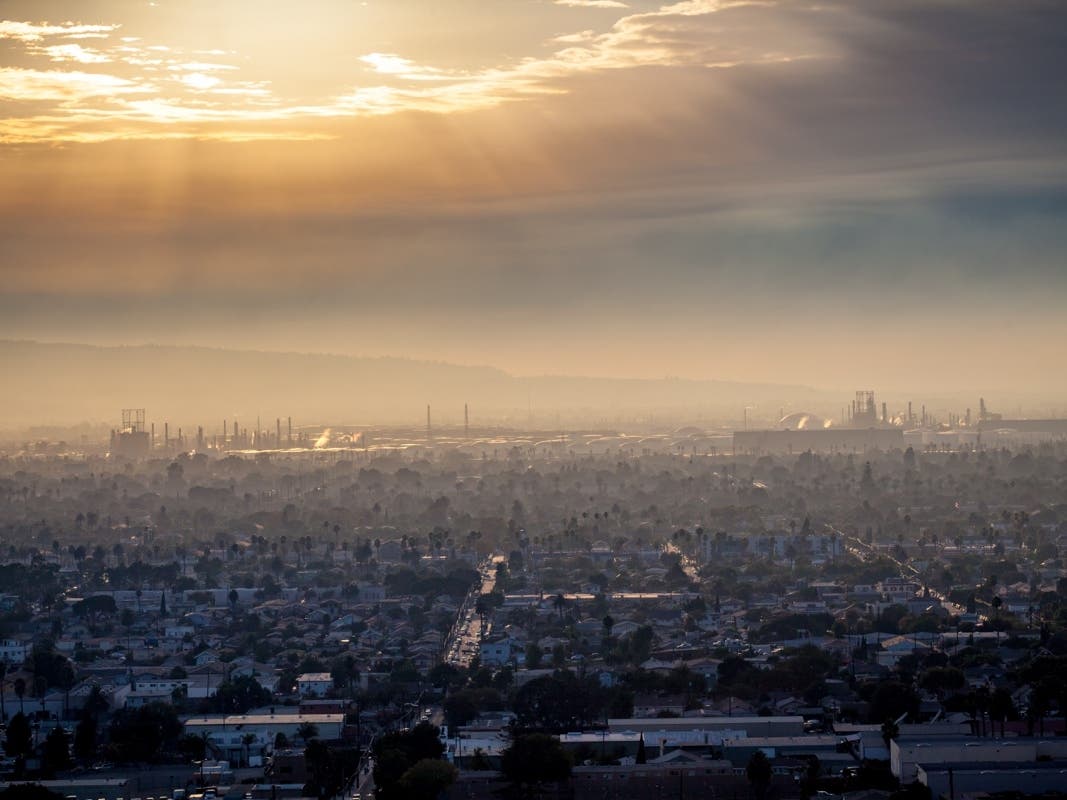
CARSON, CA — Investigators determined that a warehouse fire was the source of a lingering foul odor that sickened Carson residents for more than a month, air quality officials announced Friday.
In September, a massive fire at a warehouse containing beauty products released chemicals into Los Angeles County's 15.7 mile river, the Dominguez Channel, which triggered the permiation of hydrogen sulfide, which often smells like rotten eggs.
The South Coast Air Quality Management District issued violation notices to Los Angeles County and the four companies that stored chemicals in the warehouse, the agency announced Friday.
Find out what's happening in Across Californiafor free with the latest updates from Patch.
Two companies — Virgin Scent Inc. doing business as ArtNaturals and Day to Day Imports — reportedly stored large quantities of wellness/beauty products at a warehouse located at 16325 S. Avalon Blvd. in Carson. The warehouse is owned by Liberty Properties Limited Partnership and its parent company, Prologis Inc., according to the SCAQMD.
On Sept. 30, a large fire erupted on the warehouse property, and efforts to extinguish the fire continued over several days. The fire sent chemicals contained in the stored products, including ethanol, into the sewer system and the Dominguez Channel.
Find out what's happening in Across Californiafor free with the latest updates from Patch.
Shortly after, an anaerobic decay of organic materials occurred in the channel, which caused elevated levels of hydrogen sulfide to be discharged into the air.
Days later, SCAQMD began receiving odor complaints from residents of the Carson area, soon reaching 100 complaints in a single day. Inspectors traced the noxious smell to the Dominguez Channel, which is under county jurisdiction.
The air pollution agency issued notices of violation on Thursday to Los Angeles County and the four companies linked to the warehouse.
Although officials have urged that the odor is not harmful, some 4,600 residents from Carson, West Carson and portions of Gardena, Torrance, Redondo Beach, Wilmington and Long Beach have complained about the odor. Some residents have reported headaches, burning eyes, nausea and other discomfort.
The stench prompted the Los Angeles County Board of Supervisors to declare a local emergency last month. The order came on the heels of another local emergency declaration that came down in the city in October.
I want to be very clear. This declaration ... of a local emergency does not mean that the hydrogen sulfide levels emanating from the Dominguez Channel now pose an imminent danger to the health of our residents. It does not," said Supervisor Holly Mitchell. "We're clear the odor is causing consistent and real health symptoms like nausea, headaches, throat and eye irritation that is deeply troubling and severely impacting the quality of life for far too many residents."
The invisible gas — which smells an extreme case of rotten eggs — could even be smelled from the 405 freeway, a heavily traveled thoroughfare through southern Los Angeles County.
A third-generation Carson resident told the Los Angeles Times that the city wreaked of "rotten flesh sitting in the sun."
Initially, officials told residents that the odor would disappear within a matter of days, but the smell is just as strong as it was when it was first reported Oct. 3. The county's Public Works department began spraying the river with Epoleon, a natural biodegradable spray that mitigates hydrogen sulfide odor by converting the gas into a byproduct of salt, which the county will remove in a separate process — but this is just a short term solution.
To date, Public Works has spent an estimated $5.4 million to date on remediation and providing or reimbursing residents for air filters, air purifiers and temporary relocation.
"Even with that, these Herculean efforts have not eliminated the nuisance odor to date," Mitchell said in early November.
SCAQMD violation notices can result in civil penalties. In some cases, the company or entity can choose to implement voluntary measures to reduce emissions or otherwise prevent further violations. If no settlement is reached, a civil lawsuit may ultimately be filed in Superior Court, according to the SCAQMD.
City News Service contributed to this report.
Get more local news delivered straight to your inbox. Sign up for free Patch newsletters and alerts.