Weather
California Parched By Historic Drought: 2022 In Review
As 2022 comes to a close, we take a look at how the driest period in 126 years has affected the Golden State.


CALIFORNIA — As 2022 comes to a close on a year of historic drought, more than a quarter of the Golden State is facing extreme drought conditions, and the New Year isn't expected to provide much relief.
The three-year period from 2020 to 2022 is the driest on record in the last 126 years. However, there is some cause for optimism as an atmospheric river washes over parts of the state in the final week of the year.
As of Thursday, the U.S. Drought Monitor reported that 28 percent of the state was facing extreme drought conditions, down from 32 percent reported around the same time in 2021. Still, more of the Golden State is experiencing exceptional drought conditions than last year up from one percent to 7 percent.
Find out what's happening in Across Californiafor free with the latest updates from Patch.
Every single one of California's 58 counties are under a drought emergency proclamation, and residents were asked to reduce their water use by 15 percent more than they were asked to conserve in 2020.
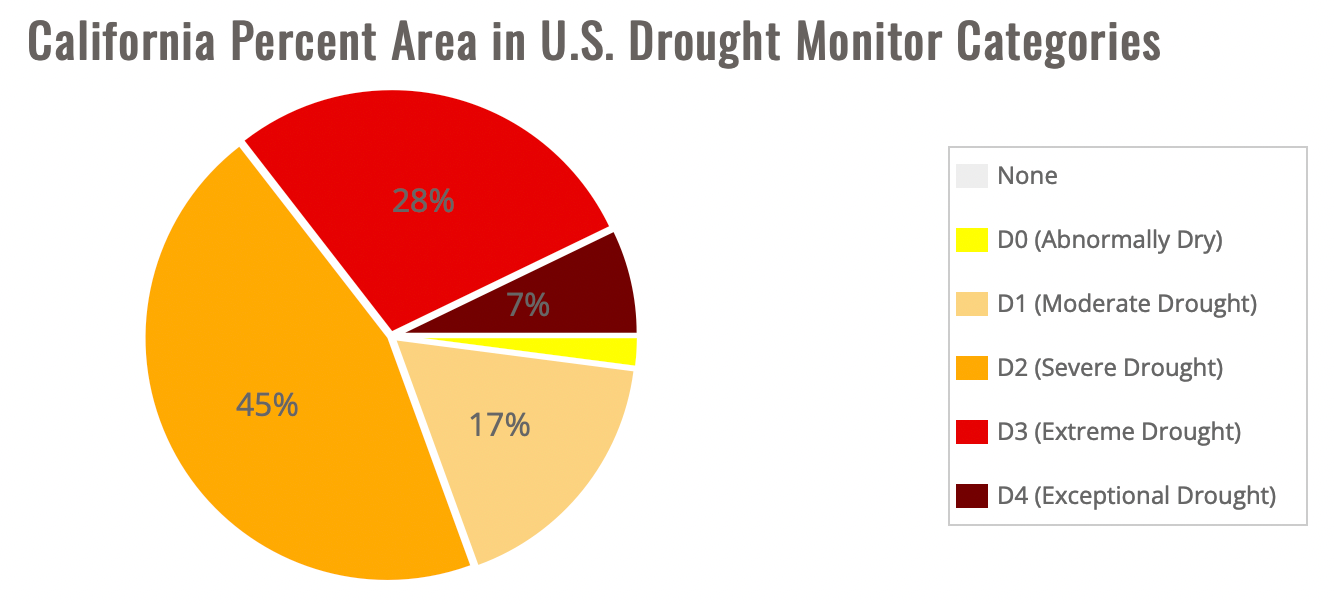
In an exceptional drought, which 7 percent of the state is facing, fields are left fallow, orchards are removed, vegetable yields are low, honey harvest is small, and the fire season is very costly. The number of fires and area burned are extensive in exceptional drought conditions. Additionally, fish rescue and relocation begin as river and lake levels drop. Pine beetle infestations occur in California forests, and tree mortality is high. Wetlands dry up, the survival of native plants and animals is low, and fewer wildflowers bloom. Lastly. wildlife death is widespread, and algae blooms appear.
Find out what's happening in Across Californiafor free with the latest updates from Patch.
In an extreme drought, which is affecting 28 percent of the state, livestock need expensive supplemental feed, cattle and horses are sold because little pasture remains. Fruit trees bud early, and producers begin irrigating in the winter. Fire season lasts year-round; fires occur in typically wet parts of state; burn bans are implemented; water is inadequate for agriculture, wildlife, and urban needs; reservoirs are extremely low, and hydropower is restricted.
During a severe drought, which is affecting 45 percent of the state, grazing land is insufficient and fire season is longer. Under these conditions, fires burn with high intensity over wider swatches of land. Additionally, trees are stressed and wildlife diseases increase.

In December, the Metropolitan Water District's Board of Directors declared a regional drought emergency for Southern California as the agency prepares for a fourth consecutive drought year.
The MWD imports around half of its water supply to Southern California from the Colorado River and the northern Sierra, but supplies from those sources have been reduced in recent years by the drought. The past three years saw the lowest deliveries in water supply from the Colorado River and the Sierra to the Southern California region in history.
"Conditions on the Colorado River are growing increasingly dire," said Gloria D. Gray, the board's chair. "We simply cannot continue turning to that source to make up the difference in our limited state supplies. In addition, three years of California drought are drawing down our local storage."
Gray added that some residents may have felt "somewhat protected from these extreme conditions over the past few years."
"They shouldn't anymore," Gray said. "We are all affected."
The State Water Resources Control Board also readopted an emergency regulation in an effort to bolster California's water conservation efforts and prohibit wasteful water practices, the board announced on Dec. 9.
Originally adopted in January of 2022, the regulation was extended until January 2024 and applies to all water users including individuals, businesses and public agencies. Wasteful water practices include watering lawns when it rains, decorative fountains without recirculating pumps and washing vehicles without an automatic shutoff nozzle. Those who violate the emergency regulation could be met with warning letters, water audits or fines.
“Extending the ban on these wasteful practices helps all of us make water conservation a daily habit,” said E. Joaquin Esquivel, chair of the State Water Board. “And, as we can see from the state’s recent double-digit conservation percentages during some of the driest months of the year, our emergency conservation regulations and actions by local suppliers are having a cumulative impact.”
A Look Back: 2022 And The California Drought
As 2022 comes to a close, we take a look back at how the extreme California drought has started to affect our lives, and what our local, regional, state and federal elected officials have done and are doing about the worrying water shortage.
Feb. 24, 2022: Storm Runoff Water To Be Collected For Pass Area Residents
Construction began in March on a multimillion-dollar project to collect stormwater that will be delivered to hundreds of Pass Area families a year.
Work on the $7,558,650 Beaumont Master Drainage Plan Line 16 project is designed to boost local water supplies and reduce flooding in the Pass Area, according to the announcement from the Beaumont-Cherry Valley Water District.
May 3, 2022: Water Restrictions Ordered In Calabasas Amid Declared Shortage
Six million residents in Southern California faced water restrictions in June after water officials declared a severe shortage emergency amid the state's worsening drought.
Residents across dozens of Southland cities fell under such restrictions as the region continued to experience severely limited water supplies, according to the Metropolitan Water District.
June 13, 2022: Mandatory Water Use Restrictions In Effect For Newark
Following two critically dry years and due to current water supply constraints, the Alameda County Water District declared a water shortage emergency in Newark, Fremont and Union City and has adopted an ordinance with mandatory water use restrictions aimed at reducing water use by 15% across the Tri-City area.
Aug. 3, 2022: Recycled Water For French Valley Landscaping Getting Significant Boost
A $4.42 million contract to complete a pipeline intended to significantly boost use of recycled water for landscaping in the French Valley area was approved in August by the Eastern Municipal Water District Board of Directors.
Work was slated to begin in the fall and wrap up in autumn 2023, according to the Perris-based EMWD.
A total of 12,300 feet of 12-inch-by-8-inch water pipeline will be constructed along Benton and Pourroy roads in French Valley, the EMWD stated.
Aug. 31, 2022: Water Agency Experts Predict A Fourth Year Of Drought, Urge Bay Area Residents To Conserve More
California water conservation experts sounded an alarm at the end of August. They warned Bay Area residents to brace for a fourth dry year in a row, as the drought persists.
"We are making investments across the state and in the Bay Area to help build our resilience to drought and to climate change," said Wade Crowfoot, the California National Resources Agency Secretary. "The conservation actions we take now will pay off in water reliability later in the future."
People in the Bay Area have stepped up conservation efforts over the last several years.
Sept. 8, 2022: Drought- and Heat-Stressed Berkeley Trees Need Water
As a crushing heat wave continued in the Bay Area, residents were advised to not only drink water themselves, but give their trees a drink as well.
Drought-stressed trees in the Bay Area suffered even more because of the scorching temperatures, said arborist Darya Barar of East Bay-based HortScience Bartlett Consulting.
Trees' immune systems are more susceptible to pests and disease with less water. Some species, like the coast redwood, have seen an "insanely steep" decline over the last 10 years due to the drought, the arborist said.
Sept. 20, 2022: Pass Area Water Official On Drought: People Must Know Seriousness
Riverside County water suppliers told the Board of Supervisors that conservation efforts are aiding the region in weathering the current severe drought, but their future ability to meet demand will depend on new infrastructure and changes in consumption habits.
"As the watersheds dry up in the Southwest, we need to be concerned about some things," Beaumont-Cherry Valley Water District Manager Dan Jaggers told the board during a presentation on the drought emergency. "As the drought continues, we will begin to have further restrictions. People need to know how serious this is."
City News Service and Patch Staffer Maggie contributed to this report.
Get more local news delivered straight to your inbox. Sign up for free Patch newsletters and alerts.