Politics & Government
Newsom Calls On Trump To Issue Refund Checks To Californians After Tariffs Ruled Illegal
The Trump administration has collected billions in tariffs that were ruled illegal on Friday.


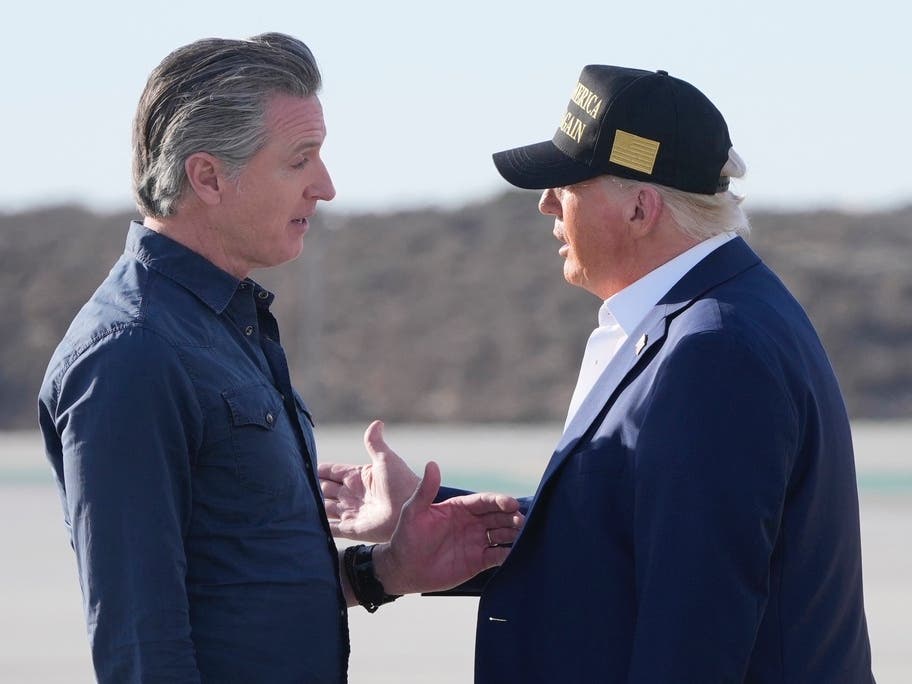
Gov. Gavin Newsom on Friday called on the Trump administration to issue "refund checks" with interest to Americans after the U.S. Supreme Court ruled that some of the president's most sweeping tariffs were illegal.
A California congresswoman that day also announced she co-authored a bill that would guarantee tariff refunds to small businesses.
The high court on Friday ruled that President Donald Trump overstepped his authority by using an emergency powers law to justify certain tariffs he put in place over the last year. The tariffs struck down by the court include import taxes levied on nearly every country in the world.
Find out what's happening in Across Californiafor free with the latest updates from Patch.
California had sued the Trump administration over the tariffs. Newsom said the illegal tariffs collected more than $130 billion from importers, costs that were passed on to consumers through higher prices.
The governor's office cited a Yale report that found the tariffs cost the average American family $1,751 annually and even more for Californians.
Find out what's happening in Across Californiafor free with the latest updates from Patch.
"Time to pay the piper, Donald," Gov. Gavin Newsom said in a statement Friday.
"These tariffs were nothing more than an illegal cash grab that drove up prices and hurt working families, so you could wreck longstanding alliances and extort them. Every dollar unlawfully taken must be refunded immediately — with interest. Cough up!," Newsom said.
The 6-3 ruling found that it is unconstitutional for the president to unilaterally set and change tariffs because taxation power clearly belongs to Congress. “The Framers did not vest any part of the taxing power in the Executive Branch,” Chief Justice John Roberts wrote.
Justices Samuel Alito, Clarence Thomas and Brett Kavanaugh dissented.
The ruling covers so-called "reciprocal" tariffs — imposed on April 2, which Trump called "Liberation Day" — of up to 50% on goods from dozens of countries and a baseline 10% tariff on just about everyone else.
The 10% tax kicked in early April. But the bulk of Liberation Day's higher levies got delayed by several months, and many rates were revised over time (in some cases after new “framework” agreements). Most went into effect on Aug. 7.
Major trading partners impacted by Liberation Day tariffs include South Korea, Japan and the European Union — which combined export a range of products to the U.S., like electronics, cars and car parts and pharmaceuticals. Following trade talks, Trump's rates on most goods stood at 15% for the EU, Japan and South Korea ahead of Friday.
Other impacted tariffs include what Trump termed "trafficking tariffs" on Canada, China and Mexico, which the president linked to the illegal drug trade and undocumented immigration.
Ahead of Friday's decision, “trafficking tariffs” on Canadian and Mexican imports were 35% and 25%, respectively, for goods that don't comply with the 2020 United States-Mexico-Canada Agreement. China, meanwhile, faced a 10% fentanyl-related tariff. That's down from 20% imposed by Trump earlier last year. Chinese goods also once saw sky-high levies after Liberation Day, but rates have since come down during trade talks.
Top U.S. imports from China include mobile phones and other electronics, as well as clothing, toys and household appliances. Meanwhile, Canada and Mexico are both major sources of cars and auto parts. Canada is also the U.S.’s largest supplier of crude oil. And Mexico is a key exporter of fresh produce, beverages and more.
Additionally, the impacted tariffs include ones imposed on Brazilian imports over the criminal persecution of former president Jair Bolsonaro and tariffs on India linked to Russian oil.
The decision is likely to spark a push by companies to get refunded for the billions they have collectively paid in tariffs.
But the court majority did not address whether or how that could happen. Many companies, including the big-box warehouse chain Costco, have already lined up in lower courts to demand refunds. Kavanaugh noted the process could be complicated.
Several members of Congress on Friday announced a bill that's meant to address those kinds of concerns.
The Restoring Economic Lifelines for Independent Enterprises and Family Businesses (RELIEF) Act would require the federal government to issue refunds to businesses for tariffs collected since the start of 2025, according to co-author Rep. Laura Friedman.
Material from the Associated Press was used in this report.
Get more local news delivered straight to your inbox. Sign up for free Patch newsletters and alerts.