Crime & Safety
Uncertainty Clouds Investigation Into CA's Deadliest Avalanche
The February avalanche in the Central Sierra Nevada killed nine people.


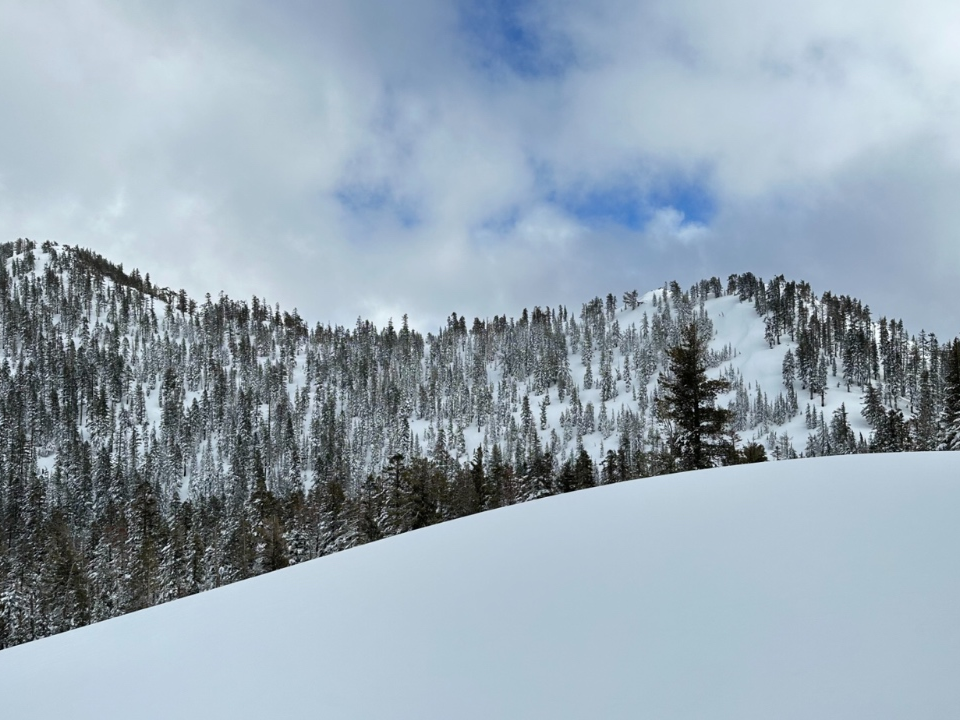
A burning question surrounding California's deadliest avalanche may never be answered, according to a Sierra Nevada nonprofit.
Weeks after an avalanche trapped 13 people in the Castle Peak area of Northern California, killing nine, authorities have yet to figure out what triggered what survivors described as a "river of snow."
While authorities continue to scramble to figure out what went wrong for the group of 15 skiers who were on a multi-day backcountry ski tour in the Sierra Nevada, a new update suggests the cause of the avalanche could remain a mystery forever.
Find out what's happening in Across Californiafor free with the latest updates from Patch.
"The trigger, slab thickness, depth, width, and other details of the avalanche remain unknown and may never be known," according to a report from the Sierra Avalanche Center, a nonprofit group that works to educate the public on backcountry avalanche conditions. "The storm buried the evidence under additional snow before it ended."
Now, the attention turns to the Blackbird Mountain Guides, which state officials are investigating to see whether they acted with criminal negligence in allowing their employees to lead the trip. And the only surviving guide who, according to recent accounts from survivors that spoke with the New York Times, knows what went into the decision to leave the heavily stocked hut as storm dangers increased.
Find out what's happening in Across Californiafor free with the latest updates from Patch.
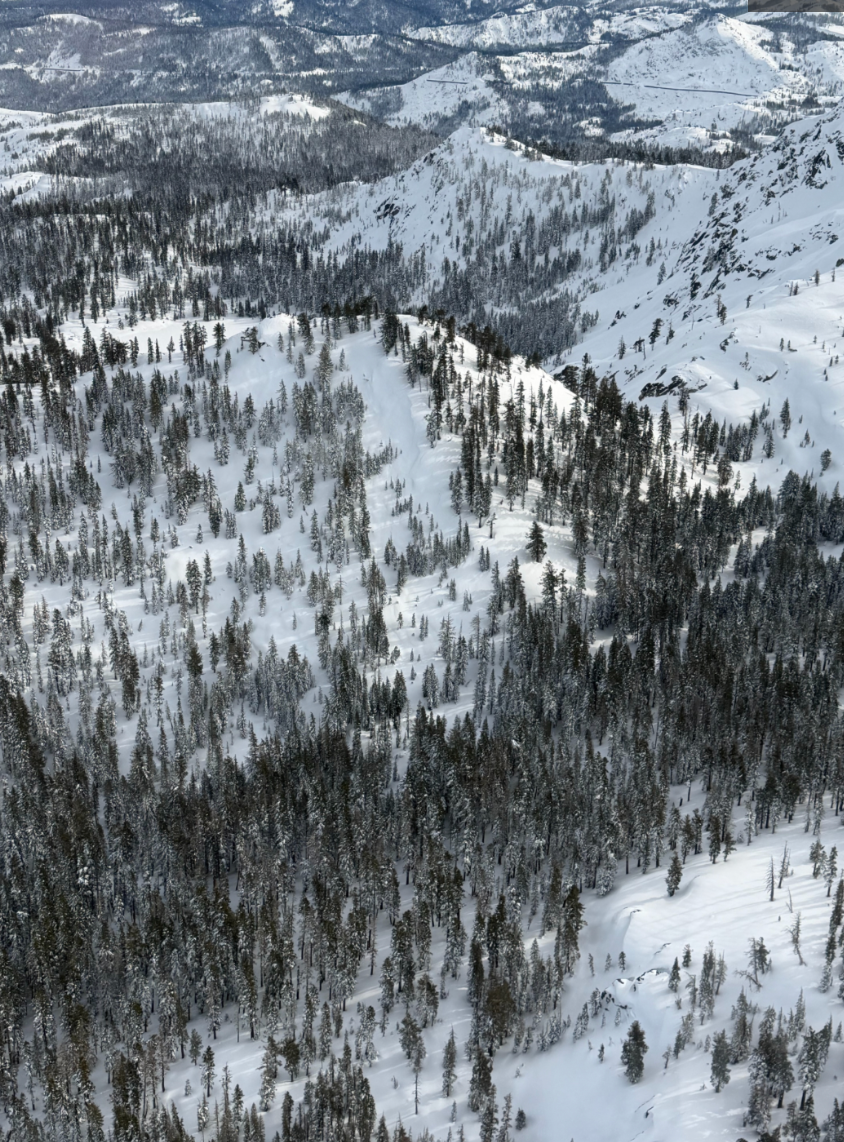
The skiers left for the backcountry on Sunday, Feb. 15. They arrived early in the afternoon at their hut, and by nightfall, it started to snow heavily.
Heavy snow meant tons of fresh powder for the skiers to enjoy. But the Sierra Avalanche Center warned that there would be a possibility of widespread avalanche activity.
Despite the storm, the skiers felt comfortable. The guides, according to the New York Times, told them not to worry; they knew how to pick safe terrain to ski.
SEE ALSO: Avalanche Safety: Spotting The Danger And Surviving The Slide
By Monday, the conditions worsened, and avalanche dangers rose. The guides met that morning behind closed doors, according to the New York Times, to discuss whether they should stay in the hut or head back to their cars on Donner Pass.
They decided to leave, taking a different route from where they came from, as the guides deemed the area more of an avalanche risk, according to the New York Times.
Fighting through whiteout snow conditions for several hours, the group made it less than a mile before they reached the northeast area of Perry's Peak.
Thirteen of the 15 skiers were trapped in the avalanche and buried in a small area near the toe of the debris, according to the Sierra Avalanche Center.
The avalanche appeared to have started from a 36 to 40 degree angle down Perry's Peak and onto the skiers, according to the Sierra Avalanche Center.
"They were buried between 1.5 m ( ~5 ft) and 2.4 m (~ 8 ft) below the surface," according to the Sierra Avalanche Center. "The party was buried in a small depression in the terrain, bounded by trees and boulders, which likely allowed debris to pile up in that small area."
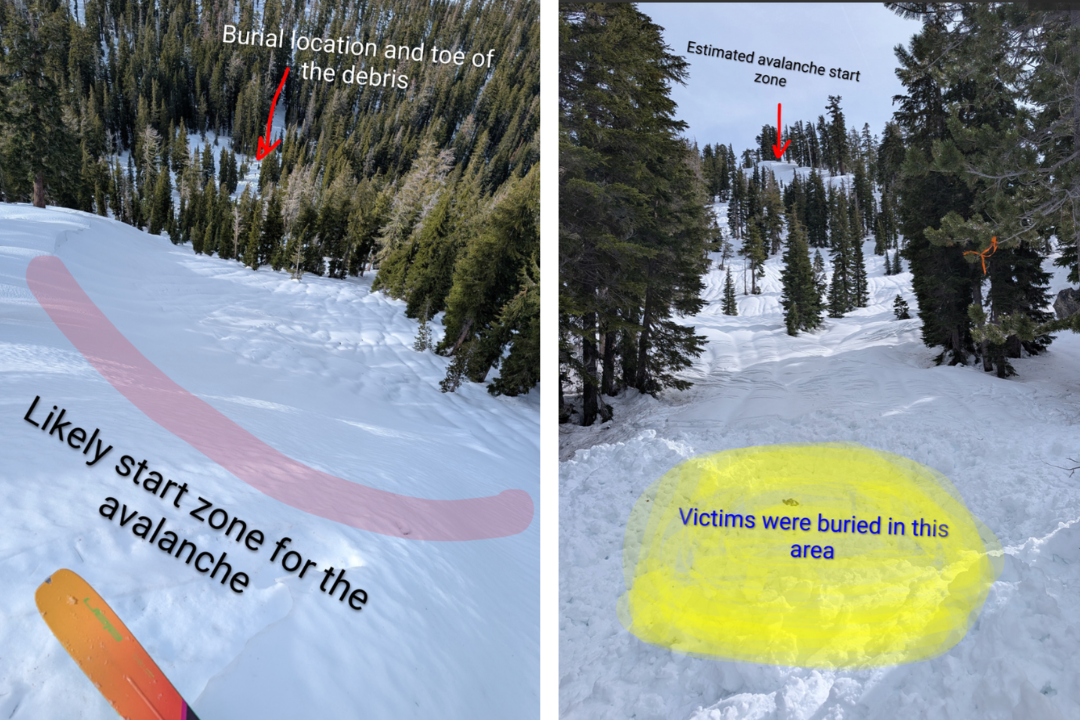
Two skiers who avoided being trapped and one who managed to free themselves desperately searched for their friends and were able to rescue three others.
Search and rescue teams fought through heavy snowstorms and avalanche risks to reach the survivors, some of whom were taken to Frog Lake Huts to rest, and at least two to hospitals for treatment of injuries suffered during the avalanche. At that point, the remaining skiers still trapped under the avalanche were presumed dead.
On Feb. 20, PG&E helicopters successfully performed mitigation efforts in the area to prevent avalanches, according to the report, dropping and dragging hundreds of gallons of water with buckets along a slope.
This broke up the snow to intentionally release unstable snowpack, allowing rescue crews to safely get back into the Castle Peak area and retrieve the bodies of five skiers before returning the next day for the remaining four, according to the report.
Six of the victims were part of a close-knit group of college friends - advanced skiers on a backcountry adventure together, and three were guides with the expedition company.
The three Blackbird Mountain Guides who died Tuesday were identified by sheriff's officials Saturday as Michael Henry, 30, of Tampa, Fla., Andrew Alissandratos, 34, of Verdi, Nev., and Nicole Choo of South Lake Tahoe.
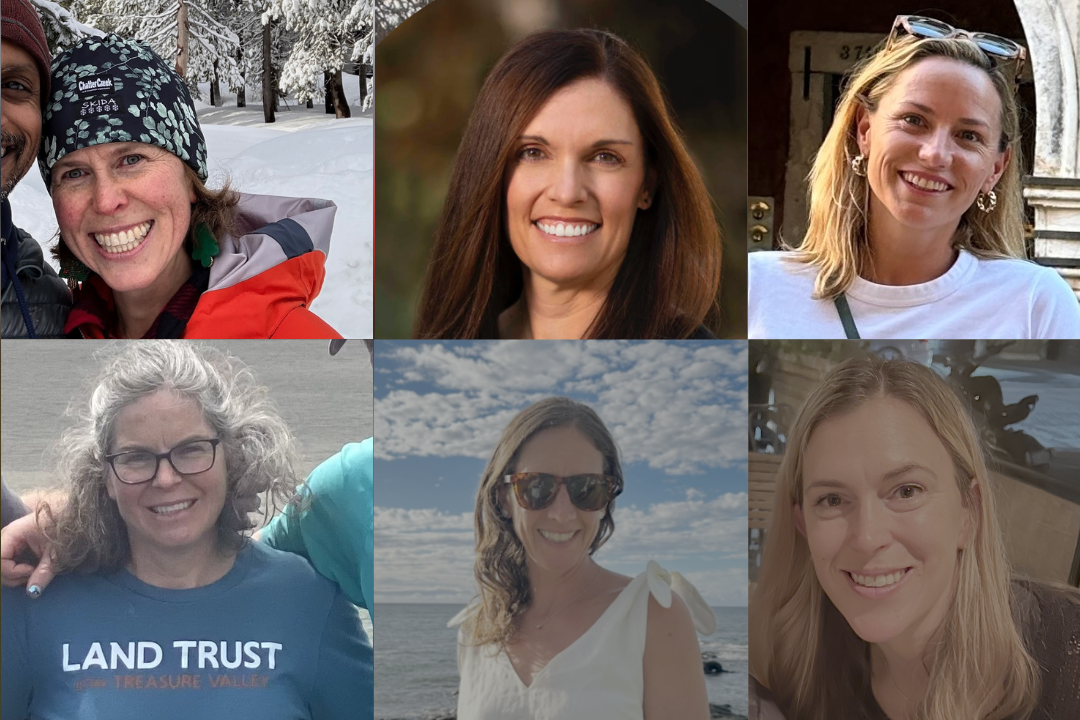
The six skiers killed in the avalanche have been identified as Caroline Sekar, Carrie Atkin, Kate Vitt, Liz Clabaugh, Kate Morse, and Danielle Keatley.
Get more local news delivered straight to your inbox. Sign up for free Patch newsletters and alerts.