Politics & Government
All Your Questions on California Redistricting Answered
Who is in charge of redistricting? Why does it matter? Why now? All these questions and more answered below.


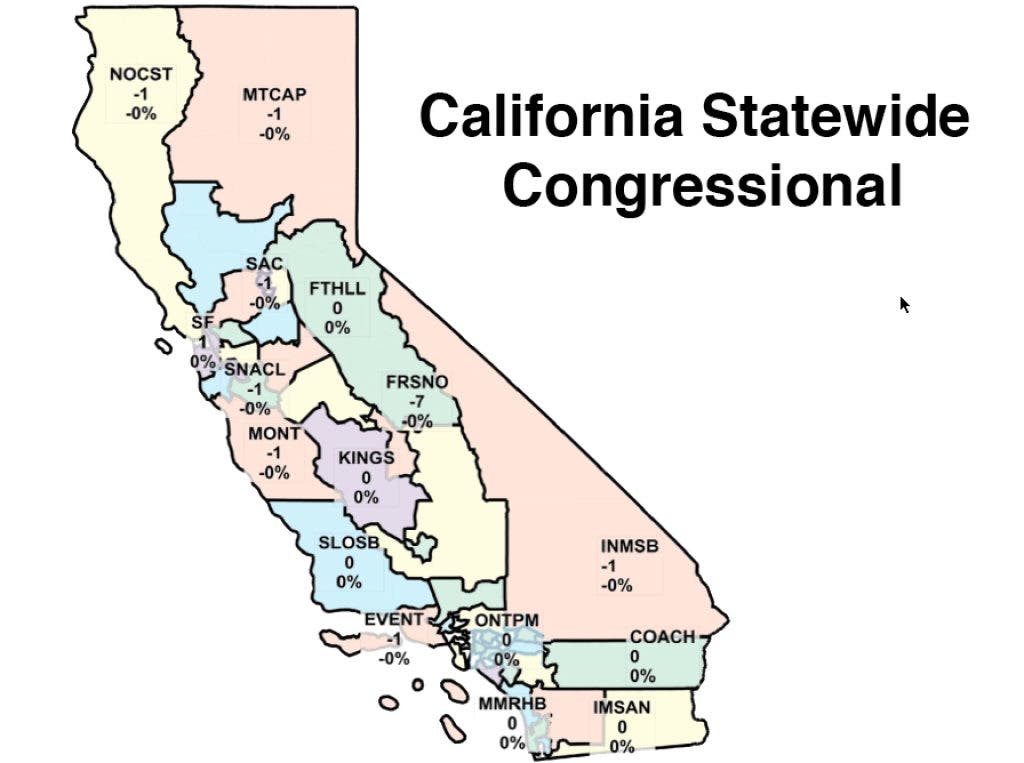
The California Citizens Redistricting Committee released a draft plan Friday for new electoral boundaries for congressional and state districts in California
Below, we answer some common questions about the redistricting process. Much of the information comes from the commission's website, which includes additional information about the commission.
What is redistricting?
Find out what's happening in Agoura Hillsfor free with the latest updates from Patch.
Redistricting is the process of redrawing electoral boundaries to account for any changes in population that might make districts unequal in the number of residents who are represented. The number of congressional districts in each state does not change with redistricting.
Why is it happening now?
Find out what's happening in Agoura Hillsfor free with the latest updates from Patch.
Redistricting is done every 10 years as required by federal law. It is done after new information on population is released in the 10-year-census. The results of the were released this spring.
Which districts are being redrawn?
The commission is redrawing the districts for U.S. Congress, state Assembly districts, state Senate and the state Board of Equalization.
Who created the commission?
The commission was created by the Proposition 11 ballot initiative, which voters narrowly passed in the November 2008 election.
Who is on the commission?
There are 14 commission members from all over the state. Five of them are registered Democrats, five are Republicans, and four are not registered with a political party. The members' biographies can be read here.
Why should redistricting matter to me?
New boundaries can mean new elected leaders, sometimes of a different party than the previous representative of an area. In some cases, it could mean that a state or congressional seat which was previously uncompetitive could now be in play for another party.
Who drew the districts before 2008?
The California Legislature was previously empowered to draw the boundaries for both state and congressional districts. They were not required to meet publicly to carry out the process.
What are the standards that the commission followed in creating the districts?
The main standard the commission was required to follow was in putting cities and neighborhoods together with other "communities of interest."
What exactly is a community of interest?
The commission took the phrase from California's Constitution, which defines it as: A contiguous population which shares common social and economic interests that should be included within a single district for purposes of its effective and fair representation. Examples of such shared interests are those common to an urban area, a rural area, an industrial area, or an agricultural area, and those common to areas in which the people share similar living standards, use the same transportation facilities, have similar work opportunities, or have access to the same media of communication relevant to the election process. Communities of interest shall not include relationships with political parties, Incumbents, or political candidates.
Did the commission consider the political implications of redrawing districts?
The criteria the commission looked at specifically did not include data on what the new districts would mean in terms of voter registration. The commission was not asked to attempt to maintain any kind of existing balance between Democratic and Republican seats.
What if I don't like the new proposed districts?
The districts will not be finalized until August 15. There will be public meetings throughout the state this summer. Residents can also voice their opinions by contacting the commission through telephone or email.
Get more local news delivered straight to your inbox. Sign up for free Patch newsletters and alerts.
