Neighbor News
Wildlife Crossing: Biologists Placing Cameras To Record Animal Usage
Scientists last week captured the first photograph of an animal climbing the unfinished crossing's southern slope

AGOURA HILLS, CA — Biologists plan to install remote cameras this month at the Wallis Annenberg Wildlife Crossing over the Ventura Freeway in the Agoura Hills area to document which animals approach and use the landscaped bridge as construction nears completion.
National Park Service biologists at the Santa Monica Mountains National Recreation Area will use the cameras to study how wildlife responds to the crossing, when animals use it and how effectively it connects habitat in the Santa Monica Mountains and Simi Hills.
“This is more than just about whether animals use the crossing,” Seth Riley, the recreation area’s wildlife branch lead, said in a statement. “We want to understand how effective it is in reconnecting an ecosystem that has been divided by the freeway for decades. That is a much bigger scientific question and answering it will take years.”
Find out what's happening in Agoura Hillsfor free with the latest updates from Patch.
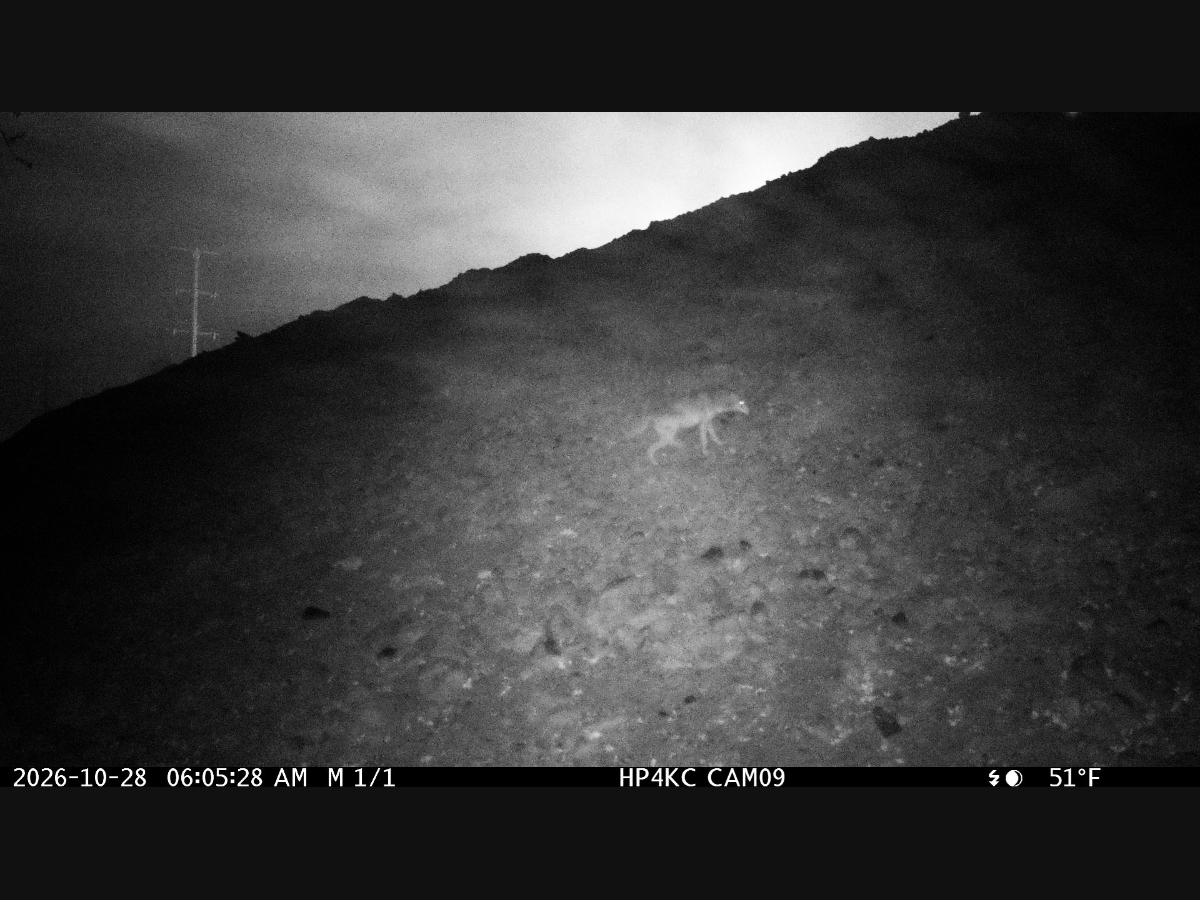
Scientists last week captured the first photograph of an animal climbing the unfinished crossing’s southern slope — a coyote, according to the Park Service. Researchers have also observed bobcats, coyotes, foxes, mule deer and mountain lions using a nearby trail.
A ribbon-cutting ceremony is scheduled for Dec. 2. Officials described the structure as the largest wildlife crossing of its kind in the world.
Find out what's happening in Agoura Hillsfor free with the latest updates from Patch.
The project is intended to reconnect habitat divided by the freeway, allowing mountain lions and other wildlife to move between habitat areas. It follows decades of research, planning and engineering involving the National Wildlife Federation, Caltrans, the National Park Service and the Santa Monica Mountains Conservancy, organizers said.
Images captured by cameras on the crossing will be released to the public, but will not be available in real time for security reasons, according to the Park Service.
The cameras are part of a broader monitoring program developed by Park Service biologists, project partners and other researchers. The program has 14 objectives, including documenting wildlife use and evaluating changes in genetic diversity, vegetation, light, sound and other measures of ecological function.
More information about the Santa Monica Mountains National Recreation Area is on the NPS website.
Get more local news delivered straight to your inbox. Sign up for free Patch newsletters and alerts.