Schools
10 School Buildings Need Seismic Review
Consultants to the Albany Unified School District will continue to study the seismic safety of its buildings, for $62,800, following an initial review by structural engineers. Click the "Keep me posted" button below for updates on seismic issues.
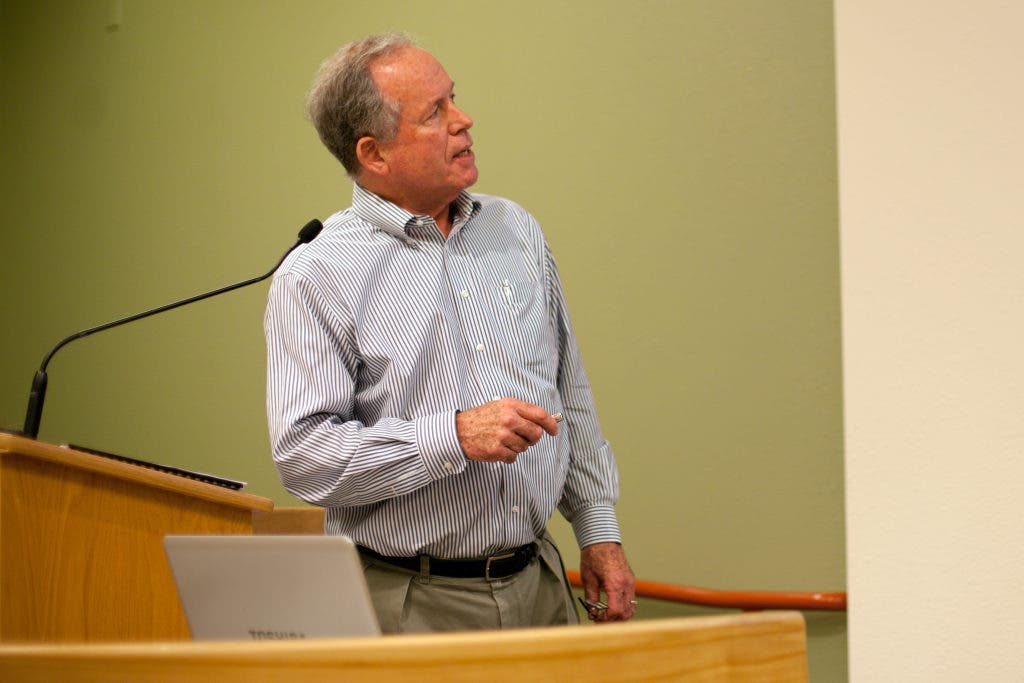
Ten district buildings, at and schools, need further seismic review by structural engineers to make sure they're earthquake-safe, a consultant reported Tuesday night to the .
The new review will cost $62,800, on top of $27,000 already paid to R.P. Gallagher and Associates by the for an initial study of all district buildings.
Last April, that several district buildings were on a state-maintained list highlighting school structures that .
Find out what's happening in Albanyfor free with the latest updates from Patch.
The district about the buildings, but promised a to find out more.
Beginning in October, structural engineers assessed the seismic safety of Albany school buildings.
Find out what's happening in Albanyfor free with the latest updates from Patch.
Ron Gallagher reported the results to officials during .
TWO ELEMENTARY SCHOOLS NEED MORE REVIEW
Gallagher said seven buildings at Marin (buildings A through G) and three at Ocean View (including classrooms, the library and the multi-purpose room) need further study.
The buildings, which have reinforced masonry construction with wooden roofs, could be at risk for what's called "wall-roof separation" during an earthquake, he said.
The structures may require stronger connections between the roofs and walls to fortify them, he explained. Otherwise, the roofs could theoretically separate from the walls and collapse internally in the event of an earthquake.
"There are other things to check, but this is the principal reason" to take a closer look, said Gallagher.
These buildings were constructed before 1978, when the state imposed more thorough construction regulations than previously existed.
OTHER POSSIBLE PROBLEMS
Gallagher said his firm also looked at whether liquefaction, surface faulting or slope failure could pose problems for district structures.
The main red flag there, he said, could be the steep hill behind the , so the district would be well-served to assess the possibility of "slope failure" at that site in the future.
"It didn't seem to me like a big concern," he added.
In a draft version of the report, which was included in the March 20 school board agenda packet, Gallagher noted that Ocean View Elementary School and the temporary school district offices at University Village might be at risk for liquefaction, and that they "should be reviewed by a geologist or geotechnical engineer."
Gallagher said Wednesday that he was later able to review documentation that showed these buildings were not at risk. He included this information in his final report to the district. (Albany Patch has requested this report.)
He said the district should try to pull together documentation for all its portable buildings to ensure they underwent appropriate seismic reviews and approvals by the Division of the State Architect. Those buildings were not assessed in his study.
SOME UNKNOWNS REMAIN
Gallagher said the district was not able to find the original structural construction drawings for the Albany Children's Center, or the district maintenance center.
But all three buildings have woodframe construction, which generally perform well in earthquakes, he said.
The maintenance center, which is located in a garage-type building behind Albany Middle School, did have some nonstructural issues, however.
"It's awfully congested," Gallagher said. "Just walking in, it didn't look good. Let's put it that way."
Added Superintendent Marla Stephenson after the meeting, if materials inside the maintenance center were to shift during an earthquake, district staff could have a hard time reaching the emergency generator, water shut-off valves, or other important tools, which could be a problem during an emergency.
THE ORIGINAL "AB300" BUILDINGS
In 1999, California legislators passed AB300, which required the Division of the State Architect to perform a state-wide vulnerability inventory of school buildings built before July 1978.
The results were published in 2002. Albany Patch that several Marin School buildings, along with the high school's Little Theater, were on the list as possibly at-risk facilities.
Gallagher said one of the Marin buildings on the list has been demolished. But seven others, as noted above, were found to need further review.
When two of his firm's engineers looked at the Little Theater, he said, they determined it likely would perform well in an earthquake and did not need further inspection. Its structural plans, however, could not be found in the district files.
"It would be good to get the drawings to confirm that," he told the board.
MOVING FORWARD
asked whether it also would be appropriate to review nonstructural hazards in all the schools.
"'Appropriate' comes down to a matter of dollars and cents," answered .
She added that the district's facilities supervisor is "confident" he can go through the buildings to ensure that hot water heaters are strapped down, book cases are connected to walls, and overhead fixtures are fastened with aircraft anchors, among other safety measures.
In his written report, Gallagher told the district he expects the next round of work will take about three months to complete.
His engineers, along with murakami/Nelson architects, will perform a "detailed seismic evaluation," which involves a number of structural calculations about the 10 buildings that were identified. He said Wednesday that they would check the buildings against ASCE 31, a nationally-recognized life safety standard.
The consultants will summarize their work, along with possible fixes if deficiencies are found, in a report that will be presented to district administrators and the school board.
Stephenson said, after the board meeting, that the helped move the seismic investigation forward.
"I had planned to do it, but it () prompted me to realize that the public deserves an answer as to our seismic safety and, if the buildings are not safe, we need to find out what steps we need to take to make sure they are."
Want an alert when we write about seismic issues in Albany? Click the "Keep me posted" button below. Read more here.
If there's something in this article you think , or if something else is amiss, call editor Emilie Raguso at 510-459-8325 or email albany@patch.com.
CLARIFICATION: One part of this story originally referred to the risk of liquefaction at two district sites. That has been updated, based on information available Wednesday, to note that consultants do not believe this is an area of concern.