Business & Tech
Albany High Senior Stands Up to Big Corporation and Wins (For Now)
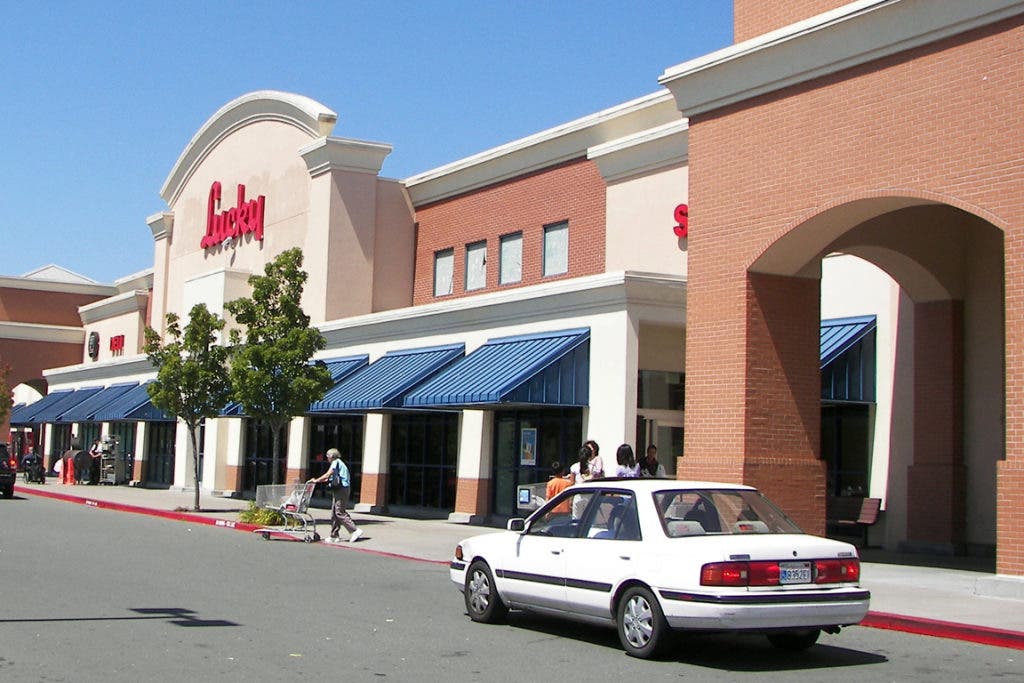
When Andrew An felt discriminated against by an El Cerrito Lucky policy limiting the number of students inside, he asked Patch to look into it, triggering a correspondence that halted the rule at all Lucky stores, at least for further review.

If you have about a problem in Albany, send it in with "You Ask" in the subject line, and we'll do our best to dig up an answer. If your question appears in the column, you'll receive a gift from Albany Patch. Your name will not be shared without permission.
In early April, Andrew An, a senior at , walked into the store at El Cerrito Plaza after school with a few buddies, hungry for snacks. Two of his friends were stopped at the door, and directed to a sign saying only three students were allowed in the store at a time, and the limit had been reached. They couldn’t enter, An wrote in an email to Patch that day.
An, 18, noted that he thinks the only reason they let him continue into the store was because he wasn’t wearing a backpack, so he didn’t look like a student.
Find out what's happening in Albanyfor free with the latest updates from Patch.
“I find this unfair and discriminatory,” An wrote, standing up for his friends.
Albany Patch looked into the student limit policy.
Find out what's happening in Albanyfor free with the latest updates from Patch.
Lucky explains the policy
Alicia Rockwell, the director of public affairs and communications for Save Mart Supermarkets, Lucky’s parent company, confirmed the student limitation policy at the El Cerrito store, saying it was new.
Only three students at a time were allowed in the store between 11 a.m. and 3 p.m. on school days, unless accompanied by an adult, Rockwell said. And students were allowed to use only one set of the store’s doors.
The reason for the policy, Rockwell said, is because, “We do not have enough employees to monitor the action of the students so we need to monitor for the safety of all.”
Rockwell said the policy was directed at all students in general, but added, “There are two high schools nearby.” (Albany and El Cerrito high schools are both within a mile or so of the store.)
ACLU agrees with Andrew
Hold on, said Linda Lye, an attorney with the ACLU’s San Francisco office, when contacted by Patch. The opinion of the ACLU, Lye said, is that the student limit policy may be against the law, treating unequally a protected class or group, in this case youth.
Specifically, she said, the policy is forbidden under the Unruh Civil Rights Act (Civil Code section 51 - 51.3), a California law protecting people from being discriminated against by “all business establishments.”
“All persons within the jurisdiction of this state are free and equal, and no matter what their sex, race, color, religion, ancestry, national origin, disability, or medical condition are entitled to the full and equal accommodations, advantages, facilities, privileges, or services in all business establishments of every kind whatsoever,” says the law, in part.
“The Unruh Act is an equal accommodations statute that prohibits business establishments from denying equal services on the basis of protected categories, including age,” Lye said.
Business policies can't single out a group without factual cause
It’s reasonable and understandable for stores such as Lucky to take steps to protect their property, but the steps they take must apply to all shoppers, and not single out a group, Lye said.
An example of a legal policy would be a requirement that all patrons check their backpacks at the store entrance, she said.
Businesses must have a fact-based justification for a rule applying only to one age group, Lye said, giving the example of car rental companies not renting to people under 25, which is based on data showing that younger drivers have more accidents.
"They'd have to have some kind of basis for treating youth differently," Lye said.
Lye shared a letter the ACLU sent to a Marin County Safeway several years ago regarding the same issue, which is included above as a PDF. This letter was shared, in turn, with Save Mart's Rockwell.
Lucky supermarkets drop the rule
When Rockwell heard the ACLU opinion, she said she would get back to Patch, which she did after a couple weeks. Save Mart's legal department was looking at the case.
“Based on our findings to date we have removed the signs from all stores that had been using them, which includes the El Cerrito location (seven stores total),” Rockwell wrote. “We will continue to research it further.”
She added: “We will continue to look at ways we can provide a safe, secure and friendly shopping environment for all.”
When An heard of the development this week, he checked back at the El Cerrito Lucky after school. Sure enough, he said, the sign was down, and no one stopped him from shopping.
“I don’t really see it as something I accomplished,” An said. “ It’s just pointing something out.” Then he paused. “ I think it’s pretty cool though that we got something done."
An went on: “I don’t think Lucky’s are jerks. Kids shouldn’t shoplift, but at the same time there are steps to prevent shoplifting that don’t include stereotyping.”
Everybody makes mistakes ... even us! If there's something in this article you think should be corrected, or if something else is amiss, call editor Emilie Raguso at 510-459-8325 or email her at emilier@patch.com.