Business & Tech
Berkeley Lab Shares Development Details with Advisory Group (Proposed Site Maps Here)
The lab's community group met last week about the project.
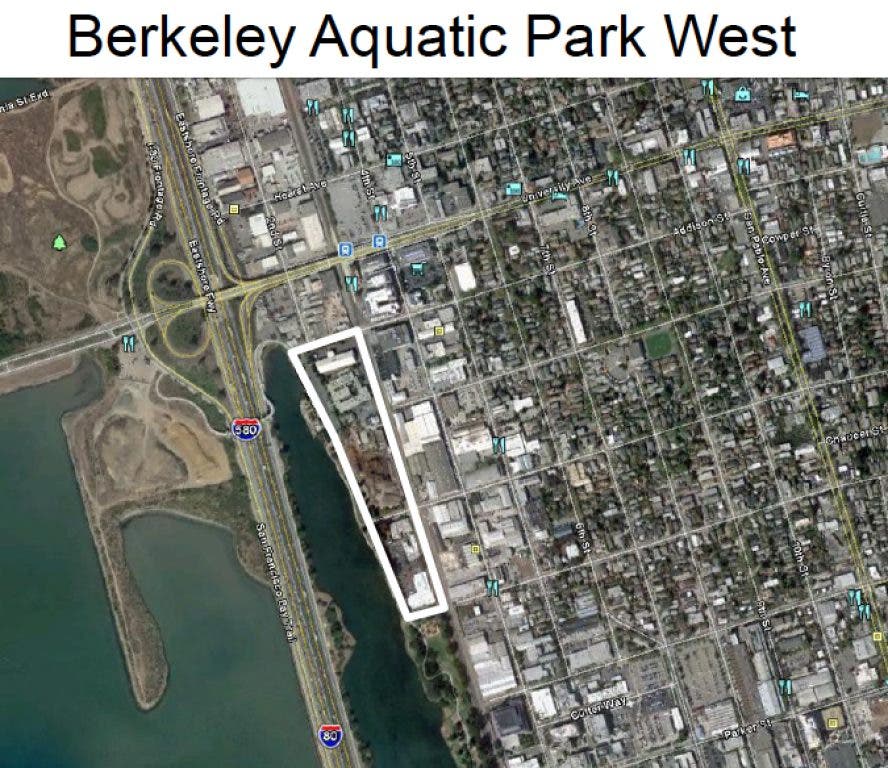
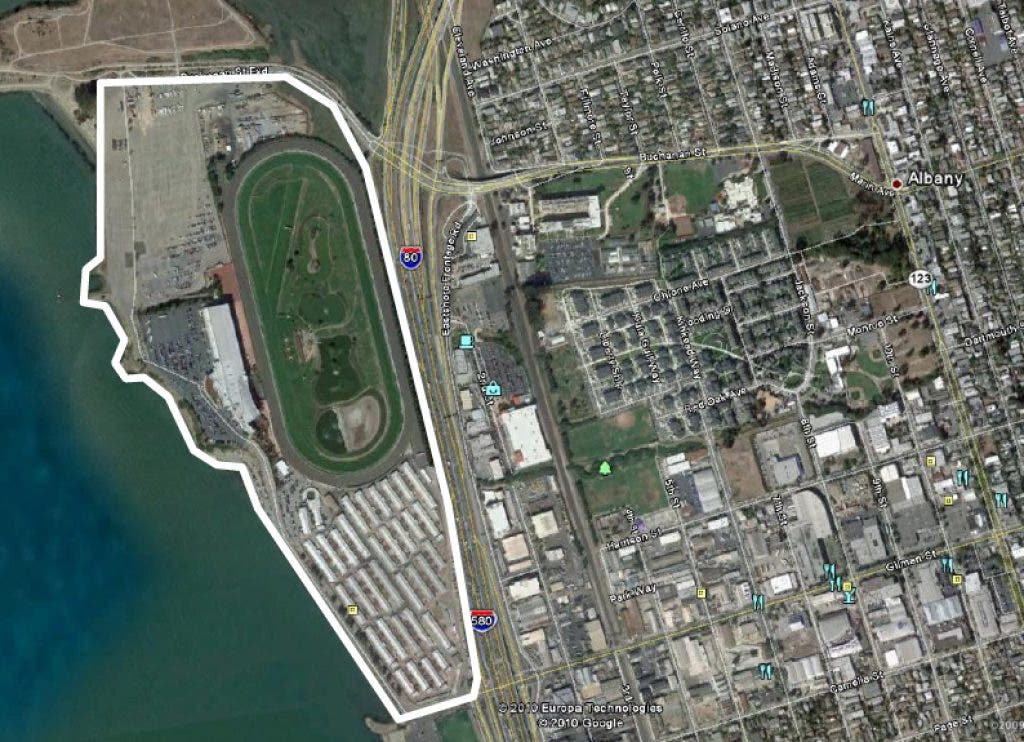


Berkeley Lab officials fielded questions about its proposed second campus at a community group meeting in Berkeley last week, after a .
Thursday night, July 21, a talk with the lab .
(, when the lab comes to Albany, along with a the prior weekend hosted by the city.)
Find out what's happening in Albanyfor free with the latest updates from Patch.
Berkeley Lab Chief Operating Officer Jim Krupnick spoke to the lab's on July 14 to give an overview of the second campus project and answer questions.
- About 25 percent of lab employees (800 people) work off-site.
- In addition to the main campus in the Berkeley Hills, the lab has two sites in Berkeley, operations in Emeryville, a center in Oakland and the Genome Institute in Walnut Creek.
- Less than two years ago, the lab decided there was a need to consolidate to reduce barriers to collaboration; offer more science at a lower cost; and be more able to host future scientific programs.
BIOSCIENCE IS THE STARTING POINT
Find out what's happening in Albanyfor free with the latest updates from Patch.
The three programs the lab will start with when consolidating include one devoted to biofuels, currently in Emeryville; a life sciences lab in west Berkeley; and the Joint Genome Institute in Walnut Creek. Together, the labs total about 475,000 sq. ft.
The lab is looking for a "low-vibration environment" that's compatible with surrounding neighborhoods in a "welcoming community." Amenities include available public transport, a "world-class research environment" and proximity to the main site in the hills.
The facility is described as an "open site with a campus atmosphere."
Krupnick said more than 500 people showed up to a to learn about a possible site at Alameda Point.
He said the Community Advisory Group would discuss the lab again on Sept. 22. That meeting will include massing studies and more information about the six sites being proposed.
Following site selection, scheduled for November, there will be an environmental review that could last into 2013.
"We will then work out funding, and be in the site by 2016," Krupnick told advisory group members, along with several dozen audience members in attendance.
Member Chris Adams asked Krupnick to describe the different developers who are making proposals for the second campus site.
Krupnick said they are a mix of public and private entities; in Alameda, the city is making the proposal. Berkeley, Oakland and Albany have private developers. The University of California owns the Richmond land.
He said each developer has plans to visit the lab to talk with staff about the projects.
"Each one has advantages and disadvantages," said Krupnick. "We're going to have to weigh everything to find the best one."
Adams described the Oakland and Alameda sites as "real outliers geographically," given the lab's hope to make it easy to commute between the main and second campuses.
ENVIRONMENTAL RISKS?
Some advisory group members said they were concerned about the environmental impact the lab could have.
"The idea of a West Berkeley or Aquatic Park site sounds like a disaster in the making if that were to happen," said Carole Schemmerling of the Strawberry Creek Watershed Council. "It makes no sense to impact that area, which is delicate. The same thing with Golden Gate Fields. It's right on the Bay.... It's irresponsible to be planning in places like that."
Member Marcos Gandara, a community member and Oakland resident, said East Bay residents would be better served to keep an open mind about development.
"Those areas will probably be developed, whether by the lab or not. We can go to war battling against every building or we can understand that..... some development is inevitable."
Rebecca Daly, a UC Berkeley graduate student on the Community Advisory Group, asked if Golden Gate Fields plans would impact public access to the .
Lab officials at the meeting said, if Berkeley Lab were to settle in Albany, development would take place south of the Bulb, and would not affect it.
Krupnick said earlier in the meeting that, though the Lab could end up on the Golden Gate Fields site, that "we don't believe the entire property of Golden Gate Fields is being offered to the Lab."
SHOW ME THE MONEY
Member Michael Caplan said a facility like the lab would bring in numerous benefits to a community, from payroll dollars to "people living, working and building a sense of community."
He also mentioned the benefits of related nearby businesses that would grow up around the lab.
"That's a value to the city that people should consider," said Caplan, manager of the Department of Economic Development, who represented the city of Berkeley at the meeting.
Some group members asked about what effect taking a property off the tax rolls might have, while others countered that there would be a large financial benefit to a community even if that happened.
Krupnick said the campus would be open, which would have a positive effect on nearby businesses.
Asked to elaborate on the economic effects, including those on perimeter businesses, Krupnick said the lab is "not in the business of providing food service," which would open up opportunities for local restaurants to step in.
Read more about the process for selecting the second campus of the Lawrence Berkeley National Laboratory on Albany Patch here.
Want updates when we write future stories on this topic? Click the green "Keep me posted" button below.
Everybody makes mistakes ... ! If there's something in this article you think should be corrected, or if something else is amiss, call editor Emilie Raguso at 510-459-8325 or email her at emilier@patch.com.