Business & Tech
Berkeley Lab Update: Albany Residents Curious About Money, Height, Traffic
Last week's Voices to Vision 2 sessions made up the first round of community meetings about the proposed second campus of the Lawrence Berkeley National Laboratory. See the associated documents as PDFs here.
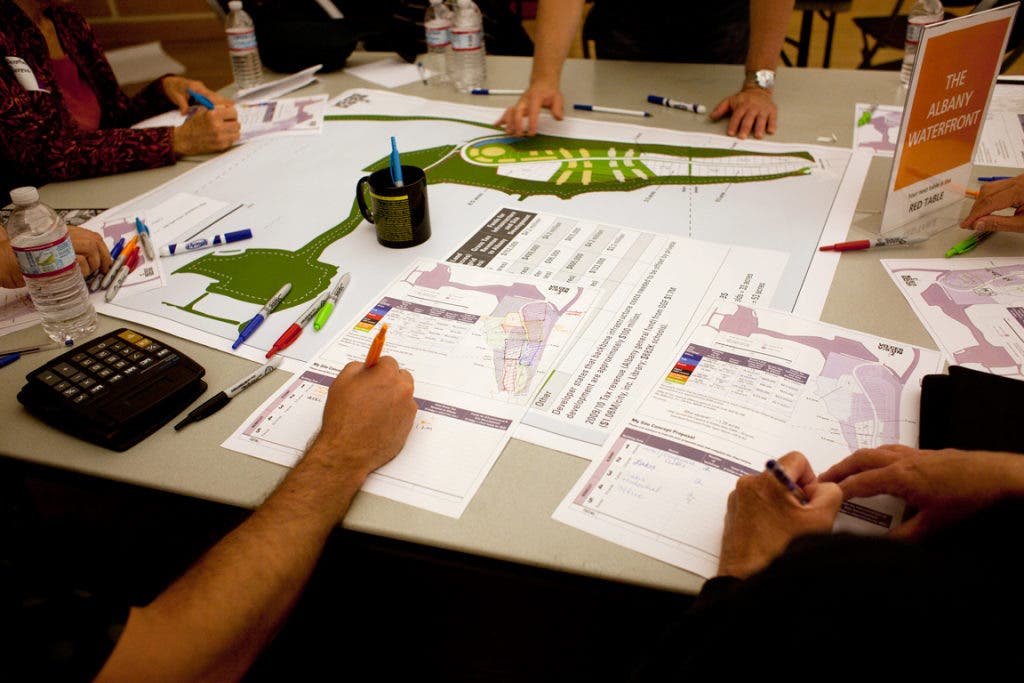


More than 350 people participated in the first round of Voices to Vision 2 talks last week to discuss the idea of having a second campus for the Lawrence Berkeley National Laboratory take the place of on the Albany waterfront.
Five "V2V2" sessions, hosted by city consultant Fern Tiger Associates, took place from July 30 through Aug. 2. The following day, the Berkeley Lab hosted , which included the most detailed presentation to date by developers hired by the racetrack to come up with possible designs for the proposed second campus.
Albany is one of for the proposed second campus, which will serve to consolidate lab operations from around the East Bay. The first phase of development is focused on "life sciences" research and would bring at least 800 current employees to Albany. It would include about 500,000 sq. ft. in facilities, estimated to grow to 2 million sq. ft. later.
Find out what's happening in Albanyfor free with the latest updates from Patch.
Fern Tiger, who was hired by the city but whose fees will be reimbursed by Golden Gate Fields owner , has said her goal is to help inform Albany residents about the process and find out what residents feel about the proposed development.
Tiger called the response to last week's sessions "way more than we ever thought."
Find out what's happening in Albanyfor free with the latest updates from Patch.
"Just because it (the planning) was so quick, and it's summer, so people are on vacation, out of town," Tiger continued. Postcards advertising the sessions went out to all Albany residents 10 days before the meetings.
"We knew this was an issue the community cares a lot about, so we weren't surprised in that respect," Tiger said. But because it was summer, and there was shorter notice than in the previous Voices to Vision process, we were amazed people were able to do it."
Each city session was identical, and there will be additional rounds of identical sessions in the coming months. Information will be posted on Albany Patch once details are announced. The Voices to Vision website also will be updated with the relevant information.
Last week's sessions were broken up into several parts; they included an introduction summing up findings from the first Voices to Vision process, and how the current process to select a second campus poses different challenges for how the community thinks about its hopes for the waterfront.
(See all the documents from last week's sessions as PDFs above.)
Tiger then described the waterfront property under consideration, which includes 107 acres in Albany and another 29 in Berkeley. In 2010, the racetrack paid about $1.7 million in taxes to the city and Albany Unified School District.
Tiger explained that, though the lab is a public institution and, as such, would not be required to pay taxes, the lab has "a very high indirect economic impact on they community they're in" because of jobs, spending in the community by employees, potential spin-off businesses and more. (One open question is whether the Stronach Group would sell the property to the lab or simply lease it; if it is leased, some community members have said, it's possible the property wouldn't go off the tax rolls.)
After the introduction, groups of six attendees discussed six different topics, which included, among others, land use, economics and community benefits. Participants wrote down questions and comments on large sheets of paper, and rotated to different tables after eight minutes. At some tables, there was discussion among those in attendance; at others, they quietly wrote their questions out for future consideration.
Tiger said the developer is aware and supportive of the community process, and that findings from the sessions will be shared with the Stronach Group. Ideally, said Tiger, community feedback will shape the proposed campus plans in the coming month.
Tiger said she's heard from a number of community members that the process for the lab's decision is "too tight." Berkeley Lab officials have said a decision about the second campus could come as soon as November. Occupancy could begin by 2016, according to the current time line, .
"I think that people are trying to understand the tax implications of having a lot of land (go off tax rolls)," Tiger said. "They're also concerned about the heights of buildings."
Developers say they would raise the ground level 27 feet to build a two-story underground parking facility; lab buildings could stand 60 to 80 feet tall.
Tiger said residents also are concerned about the effects on traffic in the area.
"And I also think they're concerned about the fact they spent two years on a process that was very much a vision and a concept [for the Albany waterfront]," Tiger added. "They want to understand how this does or doesn't relate to that."
The sessions ended with an exercise, described by Tiger as "complicated," that allowed residents to place different types of development on maps of the area. Charts indicating potential revenue for different types of buildings and businesses, such as other labs, office space, retail and housing, were provided, though some said the economics of the exercise remained hazy and raised many questions that have yet to be answered.
Greg Armstrong-Mazur, who, at 21, appeared to be one of the youngest participants to attend last Monday's session, said he was there because he wanted to participate in the decision.
"It's important and it affects everyone's lives," he said. "I've lived here all my life and I may end up living in this city when I'm older."
Armstrong-Mazur said he was concerned about whether revenue-generating parts of the development might wind up in Berkeley, which could leave Albany missing crucial tax money. (Albany has hired an economic consultant to look at the impacts of losing the racetrack, and the possibility of a revenue-sharing agreement with the city of Berkeley.)
, an Albany resident for more than 20 years, said she had the sense from conversations that "the energy seems not favorable" toward the lab, particularly in relation to its financial prospects.
"Albany is a community that needs the revenue it has to maintain the small town feel, but with the services that we have," she said. "I don't feel like the lab's going to bring in much money. I guess the potential is there, but I don't think people buy it in a strong enough way, or feel comfortable that it's solid enough to put their support there."
(According to information provided by the lab in , in 2009 the lab contributed about $690 million, in direct and indirect spending, to the Bay Area economy, and has spun off more than 30 companies that were created based on lab technology. That year, Berkeley received about $200 million in direct and indirect spending from the lab, Emeryville got about $7 million and Walnut Creek received about $28 million.)
Chamber of Commerce board member Tod Abbot said he liked the "open campus" design of the lab, and added that there appeared to be a lot of green space, though he said that he was "very concerned about the height."
Resident Steve Terusaki credited Tiger with removing "some of the politics" from the process during last Monday's session.
"I was quite skeptical in Voices to Vision up front," he said, "because of the history of how things happened in this community related to controversial issues. So whoever found Fern and understood her ability to come up with a process that could generate that level of input and dialogue, and stay apolitical, it's doing a great service for the community of Albany. She's encouraged Albany residents to come and voice their opinion and be part of a dialogue on what can happen in this city."
Read more about the process for selecting the proposed second campus of the Lawrence Berkeley National Laboratory on Albany Patch here.
Want updates when we write future stories on this topic? Click the green "Keep me posted" button below.
Fern Tiger Associates is compiling a list of Frequently Asked Questions; see it here.
Everybody makes mistakes ... ! If there's something in this article you think should be corrected, or if something else is amiss, call editor Emilie Raguso at 510-459-8325 or email her at emilier@patch.com.