Health & Fitness
Blog: A Taxing Proposal
City Council candidate Michael Barnes reluctantly urges Albany voters to approve the increase in the local sales tax rate on the November ballot.
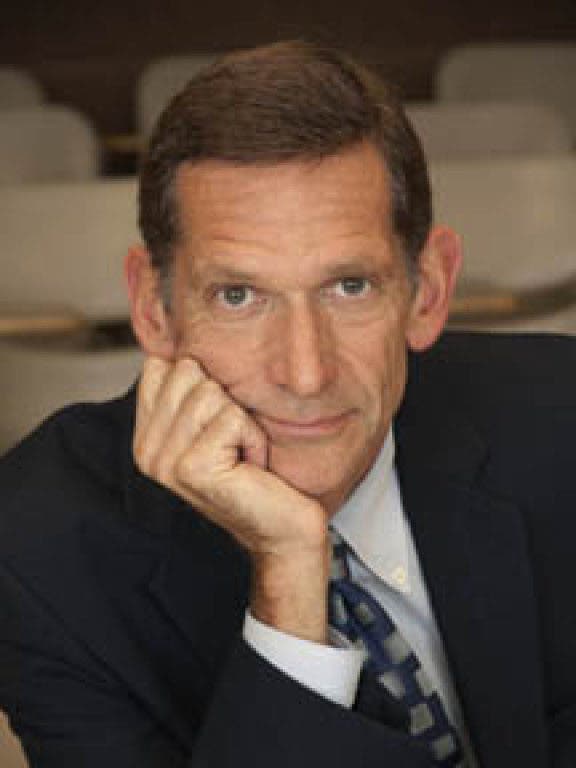
In all the discussion about the mixed-use (Whole Foods) project and other hot button issues, one of the most important topics in Albany politics is being overlooked. On the November ballot you will be asked to vote on a rate for eight years to support city programs. As a city council candidate, I am reluctantly urging you to vote yes on this item.
You can .
With this increase the sales tax rate in Albany will rise to 9.25 percent, an unusually high rate compared to other Bay Area cities, but one that is the same as El Cerrito (according to figures presented to city council). Due to a temporary state surcharge a few years ago, sale tax rates were temporarily this high before, but they have lapsed back to their old rate. This time the increase in the tax rate will only apply in Albany and will be used only by our city government—and it only last for eight years.
Find out what's happening in Albanyfor free with the latest updates from Patch.
The economic crises of the past few years have not been kind to our city budget. The city is running very lean. Compared to other cities of similar size, our staffing ratios and expenditures are low. The other day I called the non-emergency police dept. number to get advice on a minor emergency in our neighborhood, and a police officer answered the phone instead of a dispatcher. Because the city is short a dispatcher right now, an on-duty police officer had to fill that role, removing him from patrol duties.
The federal government has the ability to play Robin Hood—tax the rich and redistribute income to the poor (of course the federal government hasn’t been doing much with that ability in recent years). But for local governments, the tax options are much fewer, and they tend to be regressive.
Find out what's happening in Albanyfor free with the latest updates from Patch.
A progressive tax is one that takes a higher proportion of income from people who have more income. A regressive tax is one that takes a higher proportion of the income of people with less. Sales taxes are regressive because low-income folks have to spend most of their income, while richer folks can afford to save more, so less of their income is subject to sales taxes.
If the one-half percent sales tax boost becomes law, regressive sales taxes in Albany will rise. Meanwhile, our other important local govt. function, the school district, has grown unusually dependent upon parcel taxes. Parcel taxes also tend to be regressive because they charge a fixed amount per parcel, regardless of the value of the parcel. So the tax falls relatively heavily on less valuable property, and more lightly on more valuable property.
Like our city government, our school district runs a tight ship. State budgets being what they are, the district doesn’t have much choice. But if that is the case, why do we have to rely more than other cities on regressive taxes?
One answer is lack of development. Another part of the problem (not unique to Albany) is that public and private universities generally do not pay property taxes to local governments. UC and the city have attempted to remedy this situation by developing the mixed-use (Whole Foods) project, which would put a big chunk of UC property on to the tax rolls.
But the proposal, like the new Safeway store proposal, has been under consideration for many years. Until these proposals and others like them bear fruit, the city and school district will be under additional stress.
I suggest that you should think of the one-half percent sales tax as a temporary bridge that allows us to get some vital projects completed. Even in go-slow Albany, eight years should be plenty of time to get the mixed-use (Whole Foods) and Safeway projects completed, and many others, too.
The Safeway store on Solano has needed a remodeling for years. Along San Pablo Ave, the mixed-use (Whole Foods) project would add some visual appear to a blighted area. The location where this project will be built had been occupied by WWII-era housing originally built for shipyard workers, but the last of those building were torn down a few years ago. I wrote about the old Cordonices buildings here:
Oh, just one more thing. The amount of additional income the sale tax increase will bring is about $600,000 annually. I know what some of you are thinking. The $600,000 figure sounds familiar. Where have we heard it before?
$600K was approximately the cost of the “Voices to Vision” report on the Albany waterfront. That’s right—if we didn’t do Voices to Vision, we would only need seven years of extra sales tax revenue, not eight.
Why should Albany residents vote to tax themselves more if it is just squandered on dubious projects like Voices to Vision? The flip side of asking for more revenue is the responsibility of the city council to spend that money wisely—on public safety goals like sufficient police and fire personnel, well-maintained sidewalks and streets, etc.
So this November, in addition to voting for the half-percent sales tax increase, please vote for three city council members who will spend the extra revenue wisely.