Business & Tech
College Dropout Series: The One-Man Factory
A young Albany High graduate started his own backpack company in West Berkeley after dropping out of college.
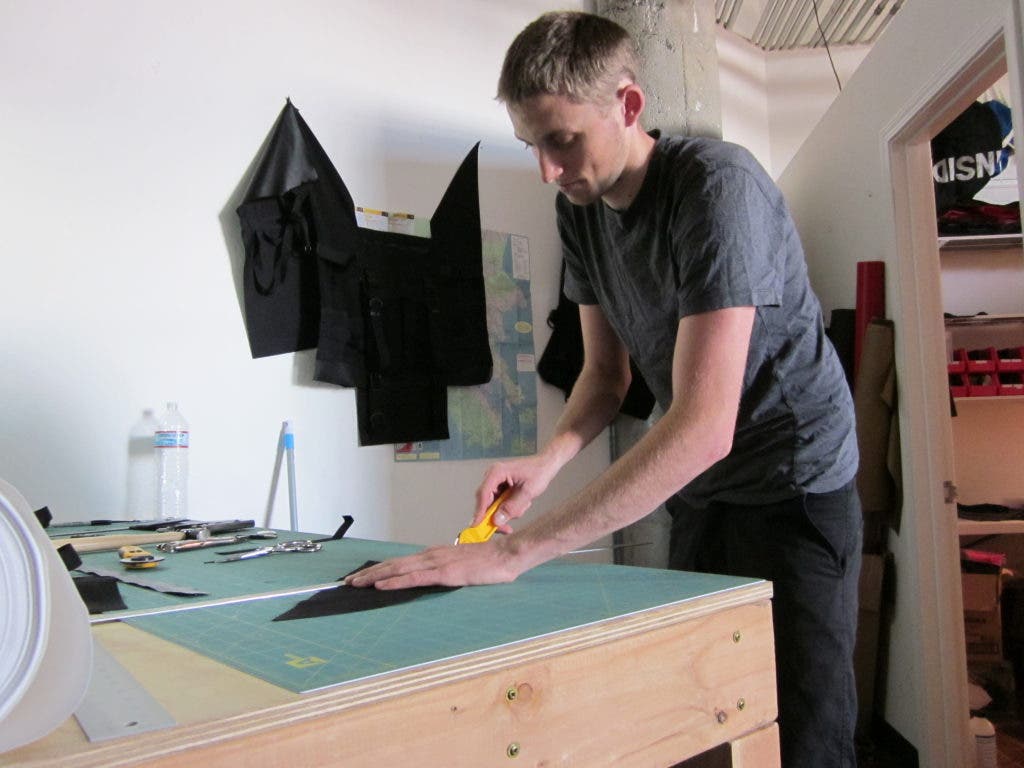

This is the first of a two-part series on the lives of two entrepreneurial college dropouts who graduated from . Come back Tuesday for the second installment.
Eric Fischer, age 22 and a 2006 graduate of , spends eight hours a day sewing backpacks in his workshop in West Berkeley. Fischer is the sole founder, owner and worker of Inside Line Equipment.
The company specializes in bicycle commuter backpacks. Fischer’s bags have a rectangular, utilitarian design and are constructed of sturdy cordura and waterproof vinyl. His backpacks are available at and ilequipment.com; prices range from $180 to $360.
Find out what's happening in Albanyfor free with the latest updates from Patch.
Fischer receives enough orders to stay in business — he recently sold backpacks to customers in Japan, Australia and Belgium — but not enough yet to hire employees.
“I can’t sew for more than 10 hours a day; I start hallucinating after 10 hours,” he said.
Find out what's happening in Albanyfor free with the latest updates from Patch.
Albany Patch visited his workshop to see the one-man factory in action.
WHEN THERE IS A “WHEEL,” THERE IS A WAY
Fischer is 6 feet 4 inches tall and his limbs are as thin as baseball bats.
His physique reflects his cycling background. Fischer was a Category II cyclist (Category II in professional cycling is similar to the Minor Leagues in professional baseball), biking for Team Clif Bar Cycling in 2010 and Team Safeway Bicycle Plus in 2009.
While preparing for the 2009 Berkeley Bicycle Club Criterium, the race that loops around Albany High and like the Indy 500, Fischer wanted to carry his special racing wheels in a backpack. So he sewed a pair of shoulder straps onto a wheel-carrying case, creating his first bag.
The wheel backpack sparked fascination within Fisher. He started researching cycling backpacks, paying close attention to a bag’s assembly and ergonomics. Soon, he crafted his own designs.
ONE THREAD AT A TIME
Fischer said he always liked building things. He constructed a two-story tree house during middle school, and an elephant-sized BMX half pipe during high school.
But Fischer had no previous experience with arts and crafts.
“There are sewing and fashion classes out there, but I like making my own patterns, doing my own research and figuring out how things work by myself,” said Fischer.
Throughout 2010, Fischer drew hundreds of sketches, tested dozens of prototypes and practiced sewing until operating a sewing machine was as easy as riding a bike. In early 2011, he opened Inside Line Equipment.
OUT OF THE NEST
Fischer originally worked in his parents' house in Albany but eventually had to move out.
“It takes an awful lot of space to run a sewing production facility,” said Howard Fischer, Eric's father. “There are all sorts of materials and machines. It’s not something you can do in the space of a small bedroom.”
When Fischer expanded production from his bedroom to the dining room, his dad pushed back. Howard Fischer said he didn’t want the house to turn into a factory.
To have more work space, Fischer moved into a 900-square-foot studio in West Berkeley. Bundles of fabric, a large cutting table and two sewing machines transformed the studio into a workshop.
The workshop also doubles as Fischer’s home; his bed lies just a few feet away from his sewing machines. Fischer joked that the best part of working at home is sewing immediately after he wakes up.
Howard said he is proud of his son’s independence. Eric didn’t borrow any money from his parents to get the company going. He purchased all the equipment, including a $1,600 sewing machine, with the money he earned as a bicycle mechanic at Solano Avenue Cyclery.
A SMALL FISH IN THE INDUSTRIAL FACTORY POOL
Fischer said it’s hard being a small company in an industry geared toward mass production.
“No one wants to sell you 10 buckles. You gotta buy 200 of them,” he said, pointing to a black buckle on his backpack.
Fischer sells just 10 to 20 backpacks a month, so buying large quantities of fabric and parts is costly for him.
Acquiring equipment for heavy-duty sewing is also a challenge.
“This is not used by the majority of people that sew,” said Fischer, referring to a small metal cutter in the workshop. “So it’s not something you can buy at a crafts store. I found it in a sailing shop.”
Fischer said he spends extra time and money on quality materials and machinery because he wants to make a durable product.
“This could sit on someone’s back for 15 years,” said Fischer, holding up one of his backpacks. “Or sit in someone’s closet, which hurts me.”
HANDMADE IN THE BAY
Without money to hire additional workers, Fischer, who still works at Solano Avenue Cyclery to supplement his income, spends most of his time sewing. He said his girlfriend is sometimes frustrated by his long working hours.
But he said his hands-on production ensures high quality.
“You can definitely tell they are handmade,” said Tobe-Ano O'Neil, an owner of two Inside Line Equipment backpacks. “It’s not a mass-produced thing where, lots of times, you get little threads that come undone.”
Being a small company also gives Fischer the flexibility to create custom bags. A few months ago, he built a backpack designed specifically to carry a model lightsaber for a Star Wars enthusiast.
Most importantly, Fischer said, he likes his job.
“I’m doing it because I really like making bags," he said. "I really like making things. I like packing things and sending them out, not because I want to make lots of money.”
A MAJOR IN CYCLING
Fischer, who only finished one year of college before dropping out, credited competitive cycling with preparing him to run a small business.
He said following a training plan, having racing goals and being accountable to his teammates taught him discipline, long-term planning and responsibility.
Fischer said he is riding recreationally this year, but intends to race again in 2012.
A RARE BUT EXCITING SIGHTING
If business picks up, Fischer plans to employ additional workers and expand into cycling apparel, such as jackets and jeans tailored for cyclists.
In the meantime, Fischer said he enjoys making backpacks for people.
“I love seeing people ride around wearing my bag,” said Fischer. “I haven’t sold that many yet, so it’s rare but very exciting.”
CORRECTION: Eric Fischer's Inside Line Equipment backpacks are made of a sturdy material called cordura. The article was corrected to reflect this.
Everybody makes mistakes ... ! If there's something in this article you think should be corrected, or if something else is amiss, call editor Emilie Raguso at 510-459-8325 or email her at emilier@patch.com.