Politics & Government
UC Suspends Civil Lawsuit Against Gill Tract Defendants
Attorney Michael Siegel released a statement Wednesday that UC Berkeley regents have dropped the civil lawsuit against defendants involved with Occupy the Farm. Click the "Keep me posted" button to learn more about the Gill Tract.
In a statement released by email just before 12:30 p.m. Wednesday, attorney Michael Siegel announced that the allegedly involved in what UC Berkeley described as illegal activities at the Gill Tract earlier this year has been dropped.
Siegel wrote that this action came just two weeks after the Alameda County district attorney's office declined to prosecute most of the activists arrested May 14 when University of California police resumed control of the Gill Tract.
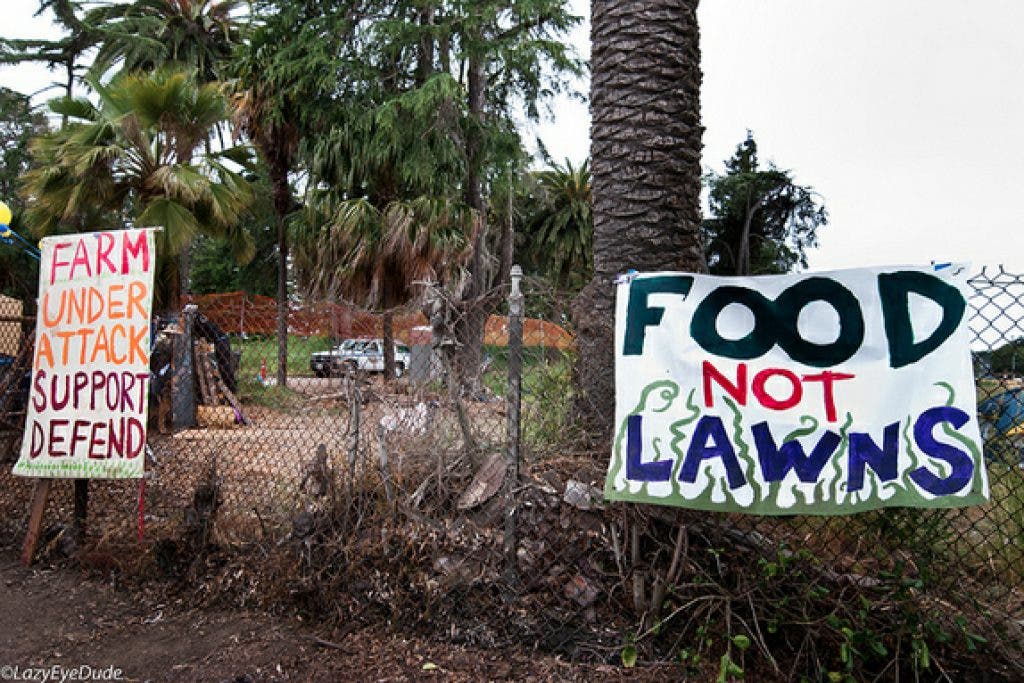
Activists took over the university-owned research field in April with the stated goals of , and raising awareness about urban agriculture.
Find out what's happening in Albanyfor free with the latest updates from Patch.
UC Berkeley spokesman Dan Mogulof said Wednesday that the university reluctantly made the decision to suspend litigation against the activists because the university's primary goals had been achieved, and the process of pursuing compensatory damages against the activists would have been a long road.
"They were trespassing on property that did not belong to them. They did cause a significant amount of damage. Our attorneys were very confident of our chances" in the lawsuit, Mogulof said.
Find out what's happening in Albanyfor free with the latest updates from Patch.
He said the university had achieved its goal of regaining control of the Gill Tract and protecting going on there.
Mogulof added that the university "will not hesitate to resume the litigation, and/or seek criminal charges if the need arises."
Siegel said he first received word Tuesday that the lawsuit would be dismissed against four of his clients, then learned Wednesday morning that the entire suit would be dropped. (A PDF copy of the letter sent to Siegel by UC attorneys is attached to this story.)
Activists involved with Occupy the Farm celebrated the news that the lawsuit, at least for now, is over.
“We are not at all surprised that UC has walked away from what amounts to a frivolous lawsuit against a group of community activists committed to promoting sustainable urban agriculture on public lands. What they need to do now is take the next step and let the community tend the crops,” said Effie Rawlings, one of the defendants, according to Siegel's statement.
(His complete statement appears at the bottom of this story, following by the complete statement by the University of California.)
Siegel said he was one member of a legal team that also included Dan Siegel, Vylma Ortiz, Neil Satterlund and Ioana Tchoukleva.
He wrote: "The Regents saw the writing on the wall: their entire case was based upon our clients’ protected conduct of petitioning public agencies, communicating on issues of public concern, and participating in a movement for food justice and food sovereignty."
UC Berkeley had been pursuing an injunction to keep a group of activists involved with Occupy the Farm away from the Gill Tract. A already had been issued against number of them.
A statement from Albany resident Ulan McKnight also was included in Wednesday's email from Siegel.
“As a resident of Albany since I was a child, I can say that we have been fighting for the University to do right by the community with this land for two decades. From the City Council to the school district right up to The Farm, we’ve faced the UC pushing industrial agribusiness over a local food system,” said McKnight, a member of the Albany Farm Alliance and a named defendant.
In Siegel's statement, another Occupy the Farm defendant said the fight for the future of the Gill Tract is not over. The group says it hopes to see "permanent protection of the Gill Tract for the practice and promotion of sustainable, urban agro-ecology."
“We have not wavered from our commitment to creating a world-class working Urban Farm that is by and for the people of the East Bay and supports efforts in food justice, soil remediation and, most importantly, the transformation of our food system to one that is in the hands of the people,” says Ashoka Finley, an urban farmer and another one of the defendants.
Scroll down to see the full statements from both the attorney for Occupy the Farm defendants and the spokesman in this matter for the University of California at Berkeley.
Click the "Keep me posted" button below for an update when we publish future stories on this topic. Read more on Albany Patch about the Gill Tract occupation.
If there's something in this article you think , or if something else is amiss, call editor Emilie Raguso at 510-459-8325 or email her at albany@patch.com.
////
OCCUPY THE FARM STATEMENT:
UC REGENTS ABANDON LAWSUIT AGAINST GILL TRACT FARMERS
Facing anti-SLAPP Motion by the defendants, The Regents request dismissal
Only two weeks after the District Attorney refused to prosecute activists arrested on May 14, at the Gill Tract in Albany, the Regents of the University of California were forced to abandon their lawsuit against 17 named defendants in the face of an imminent anti-SLAPP motion.
“We are not at all surprised that UC has walked away from what amounts to a frivolous lawsuit against a group of community activists committed to promoting sustainable urban agriculture on public lands. What they need to do now is take the next step and let the community tend the crops,” said Effie Rawlings, one of the defendants.
SLAPP suits (Strategic Lawsuit Against Public Participation) are a tactic used primarily by corporations to suppress First Amendment activities of their critics by burdening them with legal fees and court proceedings. If the court were to rule in favor of the anti-SLAPP motion filed by the defendants, The Regents would have been on the hook for all attorney fees and costs incurred by the defendants up to this point.
“The Regents saw the writing on the wall: their entire case was based upon our clients’ protected conduct of petitioning public agencies, communicating on issues of public concern, and participating in a movement for food justice and food sovereignty,” stated attorney Michael Siegel, one member of a legal team that also included Dan Siegel, Vyla Ortiz, Neil Satterlund, and Ioana Tchoukleva. “Their evidence consisted of such heinous acts as running a website, operating an information booth, and offering to pay for the farm’s water.” Or, as Dan Siegel stated at a recent court appearance: The Regents were essentially complaining of “malicious mulching.”
Occupy the Farm says that it will continue to fight for the permanent protection of the Gill Tract for the practice and promotion of sustainable, urban agro-ecology. “We have not wavered from our commitment to creating a world-class working Urban Farm that is by and for the people of the East Bay and supports efforts in food justice, soil remediation and, most importantly, the transformation of our food system to one that is in the hands of the people,” says Ashoka Finley, an urban farmer and one of the defendants.
“As a resident of Albany since I was a child, I can say that we have been fighting for the University to do right by the community with this land for two decades. From the City Council to the school district right up to The Farm, we’ve faced the UC pushing industrial agribusiness over a local food system,” said Ulan McKnight, a member of the Albany Farm Alliance and a named defendant.
////
UNIVERSITY OF CALIFORNIA STATEMENT:
We have reluctantly decided to suspend civil litigation that was initiated against those individuals who trespassed on and damaged the university’s agricultural research property at the Gill Tract.
While the court’s decision to grant our request for a temporary restraining order affirmed the illegality of the occupation, a successful outcome to the litigation would, in all likelihood, be only of symbolic importance with expected costs outweighing anticipated benefits. Although the campus was forced to expend precious resources in order to honor its commitments to faculty and students, obtaining compensatory damages from this particular group of defendants would be a very lengthy process.
At the same time, it is clear that our primary goals have been achieved:
· As a result of UCPD’s highly professional and effective response, the university has regained complete control and supervision of its property.
· The important agricultural research work is underway without interference.
· Our legitimate property rights have been secured and one of our most important, fundamental values---academic freedom---has been safe-guarded
We remain fully committed and prepared to respond to any future attempts to interfere with the university’s research and educational activities. UCPD has already shown that it is fully able to respond to any intrusion in a safe and effective manner, and we will not hesitate to resume the litigation and/or seek criminal charges if the need arises.