
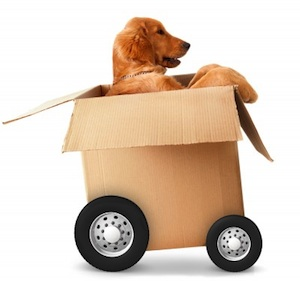

According to the American Veterinary Medical Association, 39% and 33% of households own a dog or cat, respectively. So, when a person or a family moves, often a pet is moving too.
Just like humans, animals need some special attention during a move. Keep in mind that pets can often sense that change is in the air.
With all the moving-related work in front of you, pets can get lost in the shuffle. Here are some ideas to make the transition easy for you and your furry family member.
Keep Routines
Keep your pet’s daily routine the same as much as possible. If you have a dog, walk him or her as usual. A well-exercised dog is a happy dog.
Be Prepared with Supplies
As you are moving out of the old home and into the new one, consider boarding your pet or asking a friend to care for the animal. With doors opening and closing all day, you do not want your pet to get loose or in the way of the movers.
Will you need a pet carrier to transport your pet to your new home? Often you can buy a used one on Craigslist.
Have food, medications, food and water bowls, leash, etc., in an easily accessible “Go Box”. You do not want to have to look through ten boxes to find the items you need.
If you are moving to a new state, county or country, make sure you know the rules regarding leash laws, vaccinations, licensing and other owner responsibilities.
Pet Doctor
Have medications up-to-date and in ample supply. Get copies of your pet’s medical records from your current veterinarian.
If you are moving far away, have a veterinarian and emergency clinic lined up in your new town. Get recommendations on yelp.com or ask people you see with dogs when you visit your new home or neighborhood. These people will probably also know about good walking routes or dog parks in the area.
Your New Home
Double check that your new house is set up for your pet, including a dog/cat door, fences, litter box and sleeping location.
Have your pet’s bed, dish and toys in the house before you bring them in. Then take your pet into the new home so s/he can walk around and smell everything. Be confident and relaxed yourself so that your pet senses that all is well.
It may take time for your pet to feel at home. Some pets, when rattled, will act out or regress. Be prepared to correct their behavior and retrain as needed. If you have concerns, seeking professional help is always an option.