Neighbor News
Banning city leadership discusses historical preservation
At the San Gorgonio Pass Historical Society meeting, Banning mayor and city manager propose creation of historical commission.
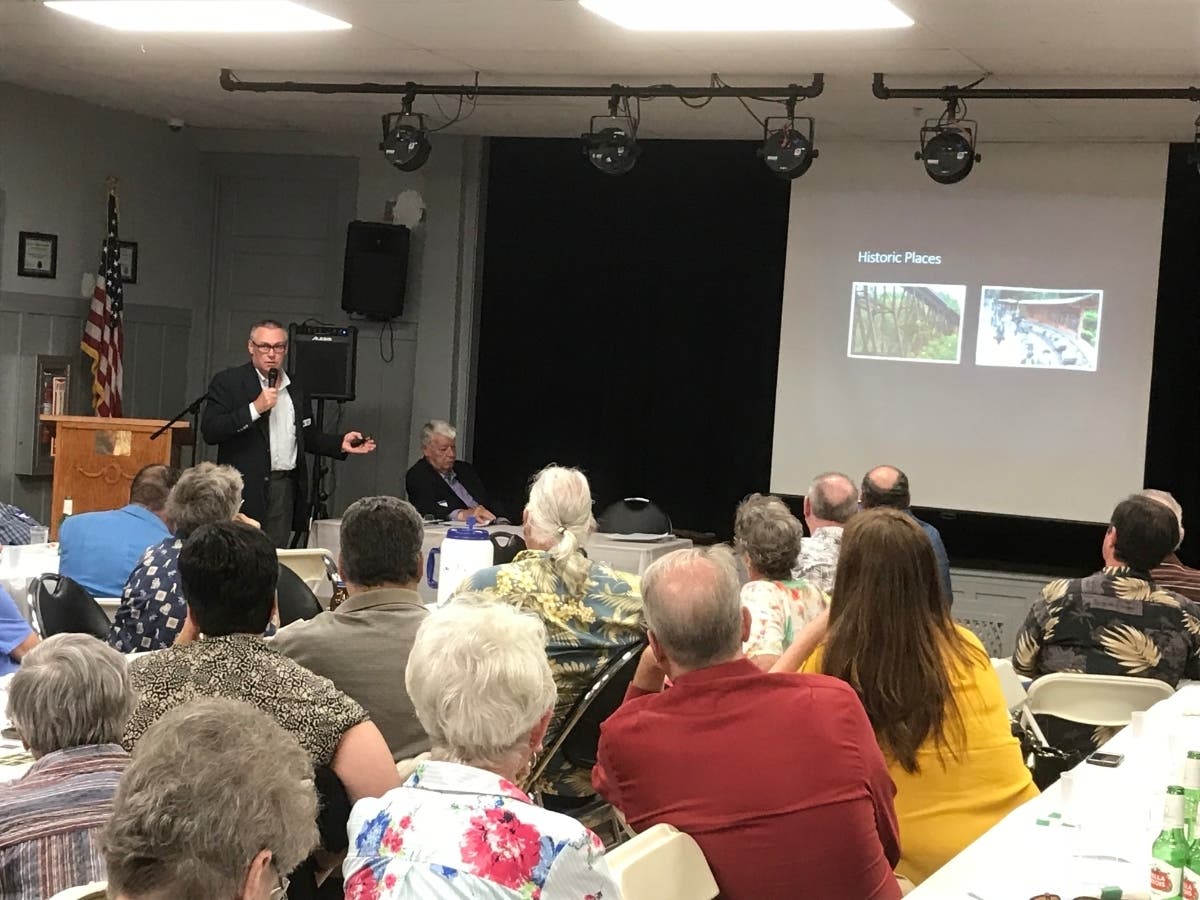
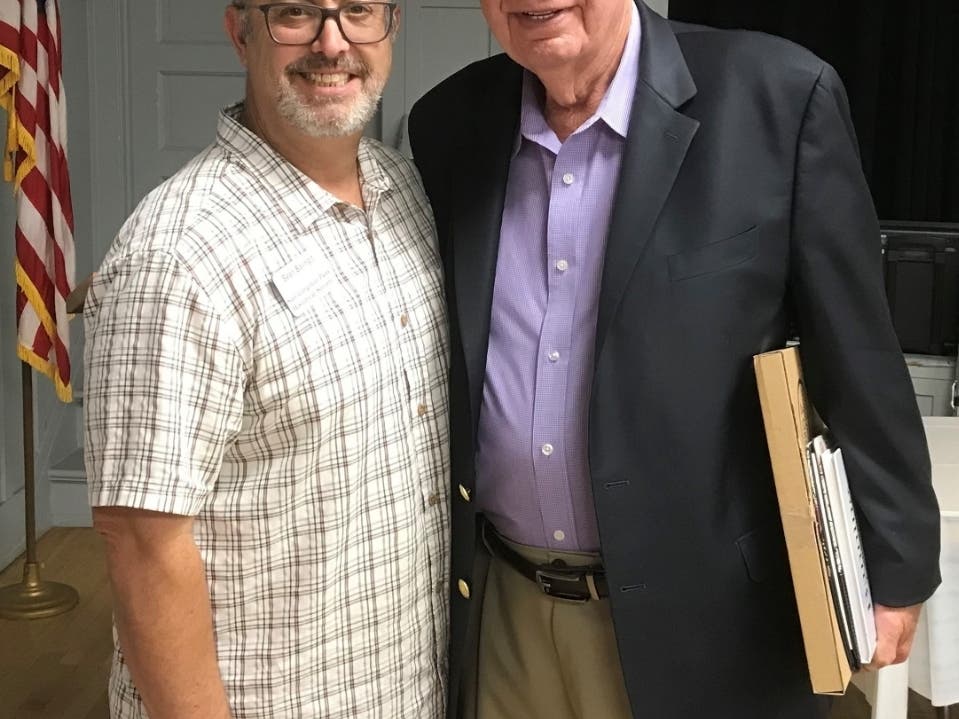
On June 13, the San Gorgonio Pass Historical Society hosted Banning Mayor Art Welch and City Manager Doug Schulze to discuss historical priorities within the city. The meeting was arranged months in advance but came a day after deconstruction work was done on Banning’s Reid Building, which is considered the oldest standing commercial structure in the Pass area. With more than 100 people in attendance, the city leadership addressed the Reid Building and other concerns at the meeting held at the Beaumont Woman’s Club.
In response to concerns about the Reid Building, which sits on the northeast corner of San Gorgonio Ave. and Livingston St., Shulze said that a stop-work order was issued to the contractor on June 12. He clarified that the stop-work order was due to discrepancies in what was permitted – deconstruction of the interior – and what was actually dismantled – both interior and exterior materials. At the end of day, June 12, the Reid Building’s frame appeared to be intact. Schulze stated at the meeting that the city is working to encourage a return to the building’s wood-clad exterior and preservation of its iconic south-facing façade within the design by the new owner.
With concern for the Reid Building by those in attendance, including the mayor and city manager, Welch asked the historical society to form an advisory committee to the city council, which he said should then be sanctioned by the council. He said that the city needs to establish ordinances for historical awareness in order to prevent losing or irreparably altering the city’s historical landmarks. “We should have a working relationship based on fact between Banning and the historical society,” said Welch. “We should establish city ordinances that describe where we want to go and what we want to be. We need policies that stay on the books regardless of who is in office.
Find out what's happening in Banning-Beaumontfor free with the latest updates from Patch.
“This should’ve happened years ago, and it’s time now to step it up.”
Schulze presented a PowerPoint slide show and suggested that the Mills Act may be an option for the city. A California program, the Mills Act provides “economic incentives, in the form of property tax reductions, that foster the preservation of residential neighborhoods and revitalization of downtown commercial districts,” according to the city manager’s presentation. He explored the potential pros and cons of the Mills Act, which include detractions such as the lack of interest, qualifying sites and resources to implement the program, loss of property tax revenue, property rights interests, and restrictions placed on properties, and positive aspects of the act that may encourage seismic safety programs, contribute to affordable housing, promote heritage tourism, foster pride of ownership, as well as provide the economic benefits of conserving resources and reinvestment, revitalization of older neighborhoods, and retaining a sense of place and continuity with the community’s past.
Find out what's happening in Banning-Beaumontfor free with the latest updates from Patch.
Schulze also reviewed a comprehensive list of historically related goals, policies and programs focusing on cultural resources within the city that would provide avenues for review, inventory, collection, education and outreach. Already set within the city’s general plan, he said that these goals, policies and programs had been adopted by the city but have not been followed. He also recommended the city establish a historic preservation commission as an advisory body to the city council “to implement policies/programs established in [the city’s] Archaeological & Cultural Resource Element of the General Plan,” as stated in his PowerPoint slide show.
Sean Balingit, president of the historical society, voiced his support on behalf of the society for the establishment of a historical commission to be an advisory board for the city council, and said the society will follow up immediately with the city to form the body.
Preceding the meeting, attendees were treated to a dinner and live music featuring a ceremony honoring Welch and his years of service to the community. The dinner, catered by Russo’s, was underwritten by historical society board member Bob Rochelle, to honor his friend, Welch, who was lauded by other longtime friends in speeches. Rochelle presented Welch with proclamations from state and county leaders along with a portrait of the mayor, which Rochelle painted.
In March, the historical society hosted a similar meeting to explore historical awareness priorities with Beaumont’s Mayor Julio Martinez III and City Manager Todd Parton, and they stated that there currently are no historical preservation-related guidelines, ordinances, designations, priorities or programs in place in Beaumont. The Beaumont city leaders said historical preservation-related ordinances take time and a great deal of study. At that meeting, Martinez suggested an ad hoc Mayor’s Committee, which would include a member from the historical society, to explore the issue.
Over the summer, the historical society’s free events include a history exhibit on display at Beaumont’s July 4 Freedom Festival at Stewart Park, and the society’s museum, located inside the Beaumont Woman’s Club, is open on Saturdays, July 6 and August 3, from 10 a.m. to 2 p.m. Information about the society’s ongoing activities may be found on the San Gorgonio Pass Historical Society Facebook page.