Community Corner
CA's Inland Empire Suffers Warehouse Pollution Crisis
Asthma rates and cancer risks are "drastically elevated" in areas close to warehouse distribution centers, especially in CA's Inland Empire.


RIALTO, CA — About three years ago, Ana Gonzalez's son frequently came down with a severe cough, which often turned into bronchitis and, on one occasion, pneumonia. Her doctor later told her that her son had developed asthma because of local pollution in Rialto — a city she has called home for 23 years.
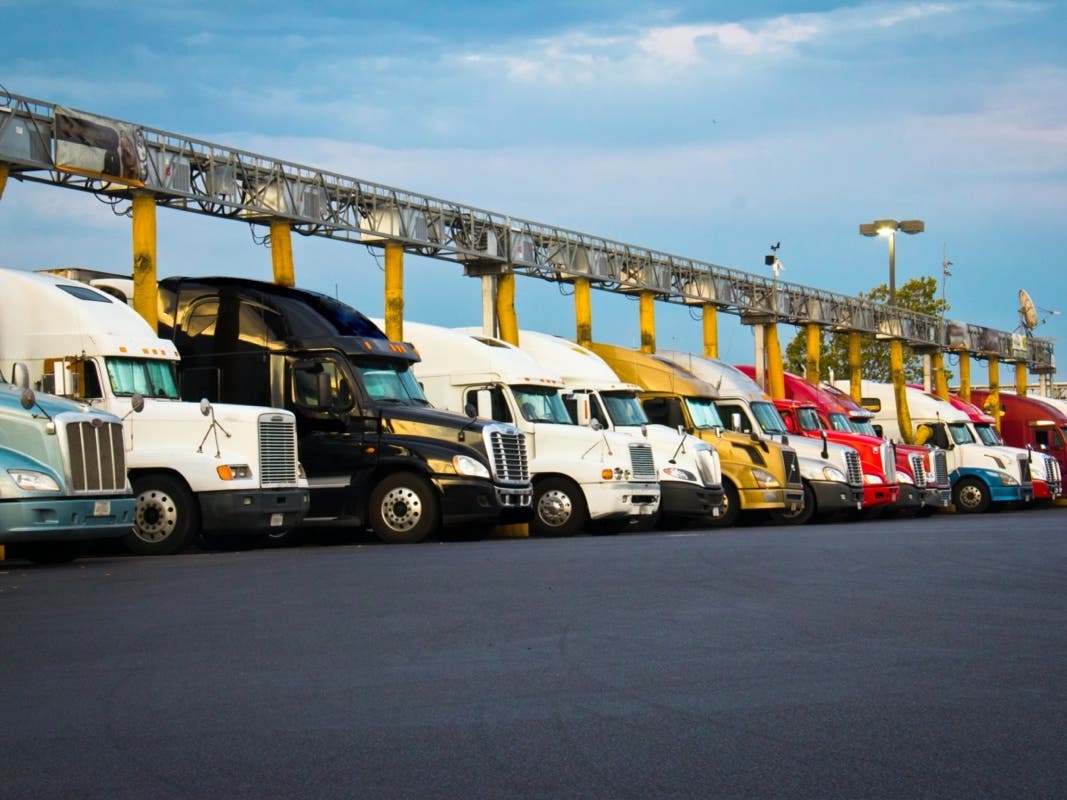
The pollution in question stemmed from distribution warehouses — which drew sprawling lines of large diesel big rigs — that were built in the Inland Empire over the last decade.
Gonzalez was deeply disturbed earlier this month when she saw another line of 18-wheel diesel trucks sitting idle, she told Patch Wednesday.
Find out what's happening in Banning-Beaumontfor free with the latest updates from Patch.
She took out her phone and began filming that day when she saw the convoy of big rigs sending fumes into the air. Gonzalez's April 17 video, posted to Facebook, showed trucks with engines idling, lined up outside an Amazon Fulfillment Center on Linden Avenue in Rialto, just blocks away from Locust Elementary School.
"I'm passionate about this, not only because of what's happening to my son. ... You see all these kids suffering from asthma, ... you know, illnesses due to the pollution," said Gonzalez, who is also the finance and administrative director with the nonprofit Center for Community Action and Environmental Justice. "It's so heartbreaking."
Find out what's happening in Banning-Beaumontfor free with the latest updates from Patch.
There are 47 distribution warehouses for different companies in Rialto alone, according to an April report by the People's Collective for Environmental Justice and student researchers from the University of Redlands.
Warehouses such as these are peppered all over the Inland Empire.
San Bernardino County recently ranked as the No. 1 most ozone-polluted county in the nation, according to an April 21 report from the American Lung Association.
"This is the reality of the Inland Valley region," Gonzalez said in a Facebook video.
Asthma rates and cancer risks are "drastically elevated" in areas close to ports and warehouse distribution centers, the report said.
Amazon has built more than a dozen facilities in the Inland Empire since 2012, NBC reported. A handful of Walmart warehouses were also built in the region over the years.
"Amazon has made record profits in the last decade, and it has come largely at the cost of communities in the Inland Empire that have seen several large fulfillment centers built near their backyards," researchers wrote in the report. Warehouses are also more likely to be located in low-income neighborhoods with higher levels of poverty, the report said.
"Low-income and minority communities tend to experience higher levels of these pollutants and associated health consequences, so the waiver may help decrease environmental inequality," said Joseph Shapiro, an associate professor in the University of California, Berkeley’s Department of Agricultural and Resource Economics, in an interview Wednesday.
A discussion about the Inland Empire's air quality will be put up to a vote on May 7 with the South Coast Air Quality Management District. The board will vote on whether to impose more stringent regulations on how warehouses manage truck trips to and from facilities.
"May 7, the AQMD is going to be taking an important vote to pass a very strong and direct source rule for this to stop," Gonzalez said in her video.
The Golden State has had some of the strictest auto emissions standards since the 1970s — save for 2019, when the administration of former President Donald Trump revoked the state's waiver from the Environmental Protection Agency. This week, the EPA was able to restore California's right to toughen tailpipe emission standards under the administration of President Joe Biden.
But diesel and gas emissions from trucks remain the main pollution warehouses create, the report said. Trucks spew a large number of toxic chemicals into the air, including nitrogen oxides, particulates, carbon monoxide and benzene.
This issue doesn't just exist outside warehouses in Rialto, Gonzalez said. Trucks coming into the city also jam traffic corridors, and it's only gotten worse, she said.
"It's not only a pollution issue; it's also a safety concern," she said. "We're in a pandemic. I cannot imagine, when everybody goes back to school and back to work, how that's going to cause a major impact."
Gonzalez still remembers the orange groves that once characterized Rialto when she first moved to the city two decades ago. In 2021, most of those citrus groves are now gone. "We have no agricultural land left, and that's sad because if you look at our city symbols, it's all about the oranges and the grapes and all of that, and that's gone," she said.
Get more local news delivered straight to your inbox. Sign up for free Patch newsletters and alerts.