Community Corner
Hundreds Of Endangered Frogs Released Into San Jacinto Mountains
Prior to their release, it is estimated there were fewer than 100 adult mountain yellow-legged frogs left in the wild.


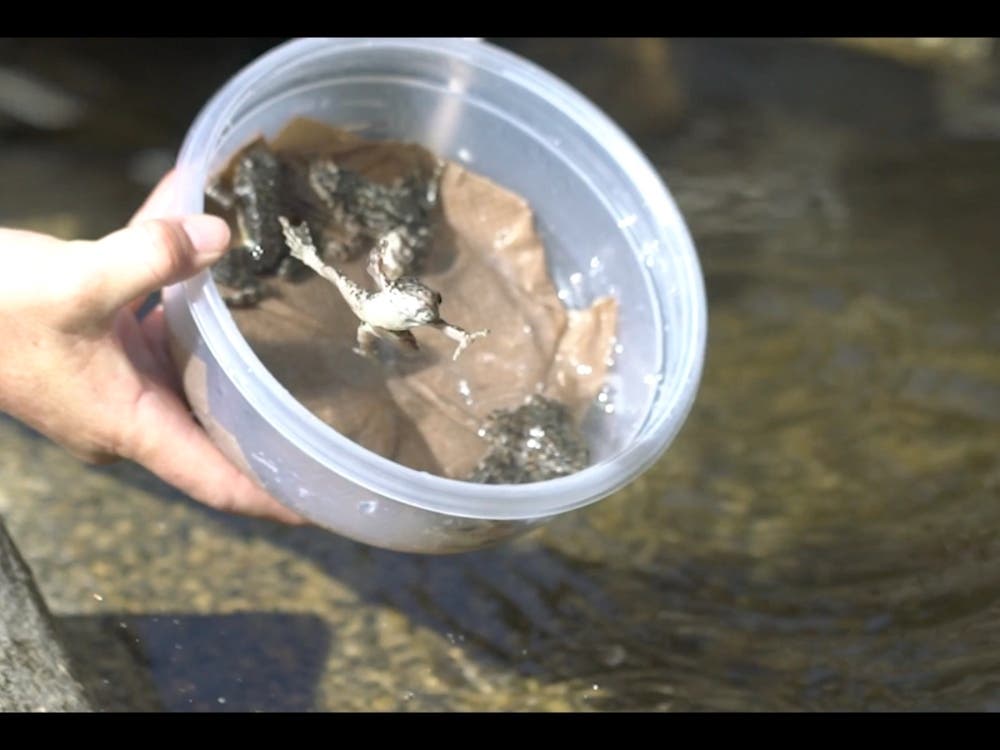
RIVERSIDE COUNTY, CA — Scientists from around the state gathered together July 8 on Mount San Jacinto — they brought with them hundreds of endangered mountain yellow-legged frogs for release in the hope that the now-rare amphibians can make a comeback in their native habitat.
For more than 20 years, the U.S. Fish and Wildlife Service, California Department of Fish and Wildlife, U.S Forest Service, U.S. Geological Survey, San Diego Zoo Wildlife Alliance and other partners have worked together on recovery actions for the Southern California population of mountain yellow-legged frogs.
The recently released frogs were bred by the San Diego Zoo Wildlife Alliance and are 1 year old. It is hoped that after completing successful overwintering in their mountain habitat, the creatures — which are a mix of males and females — will survive for the next few years to reproduce and establish a self-sustaining population in the San Bernardino National Forest, wildlife officials said.
Find out what's happening in Banning-Beaumontfor free with the latest updates from Patch.
The release is the second to occur at the location after the California Department of Fish and Wildlife completed an extensive habitat improvement project to benefit the frogs. An additional release is planned at this site later this month, bringing the total number of juvenile frogs being released this year close to 400.
“Climate change and chytrid fungus are creating challenges to mountain yellow-legged frog survival that the species has never faced before," said Debra Shier Ph.D., San Diego Zoo Wildlife Alliance. “Through our collaborative efforts to create and grow ex-situ insurance populations, to use science to understand and mitigate threats, and to develop effective reintroduction strategies, we hope to successfully reestablish the mountain yellow-legged frog in its native habitat and allow the species to play its important role in the ecosystem into the future.”
Find out what's happening in Banning-Beaumontfor free with the latest updates from Patch.
Getting the frogs to the release site involved transporting them by vehicle to a trailhead in special cooler backpacks that maintained a suitable temperature for the high-altitude creatures, and then making a more than a 5-mile hike to the actual release location. Watch video footage of the frogs' release here.
“It will take many partners working together to help us fully restore mountain yellow-legged frogs throughout their Southern California range,” said Scott Sobiech, field supervisor for the U.S. Fish and Wildlife Service’s Carlsbad Office. “Although the frogs still face many threats, this release is a tremendous example of the progress we are making towards recovery for the frog.”
Historically, the Southern California population of mountain yellow-legged frogs was widely distributed across the San Gabriel, San Bernardino, San Jacinto, and Palomar mountains. Several factors, including non-native predators, recreation impacts, and disease contributed to the disappearance of the species from most of its habitat by the time it was listed by the U.S. Fish and Wildlife Service as an endangered species under the Endangered Species Act in 2002. At the time of listing, the Service estimated there were fewer than 100 adult frogs left in the wild.
Over the years, recovery efforts have included management of lands on Angeles and San Bernardino National Forests to minimize human impacts to habitat, and conservation and research programs by the San Diego Zoo Alliance, U.S. Geological Survey, Los Angeles Zoo, Omaha’s Henry Doorly Zoo and Aquarium, Santa Ana Zoo, and UCLA to inform future conservation and management of the species.
“As land managers, our main role is to protect the frogs and their habitat so populations can recover,” said Kim Boss, district wildlife biologist for the San Jacinto Ranger District. “One example is closing populated streams to public entry when frogs are active. We thank the public’s continued adherence to the closure so these unique frogs have a fighting change.”
Although much of California is experiencing drought and heightened risk of wildfire, the conditions at the release site in the San Jacinto Mountains remain favorable to support the frogs.
“The [California Department of Fish and Wildlife] has spent a lot of time evaluating, permitting and rehabbing release waters and we’re optimistic about the location,” said Russell Black, senior environmental scientist supervisor for the CDFW. “It has a large amount of drought-resistant habitat that should provide a stable location for these frogs for many years.”
The population of frogs across their historic range remains low, and recovery efforts will continue into the future.
Watch video footage of the frogs' release here.
Get more local news delivered straight to your inbox. Sign up for free Patch newsletters and alerts.