Neighbor News
Saving the “S” — A Valley Tradition Lives On
The San Jacinto Valley has once again come together to protect one of its most beloved and enduring symbols — the iconic "S".


PRESS RELEASE
Saving the “S” — A Valley Tradition Lives On
FOR IMMEDIATE RELEASE
Find out what's happening in Banning-Beaumontfor free with the latest updates from Patch.
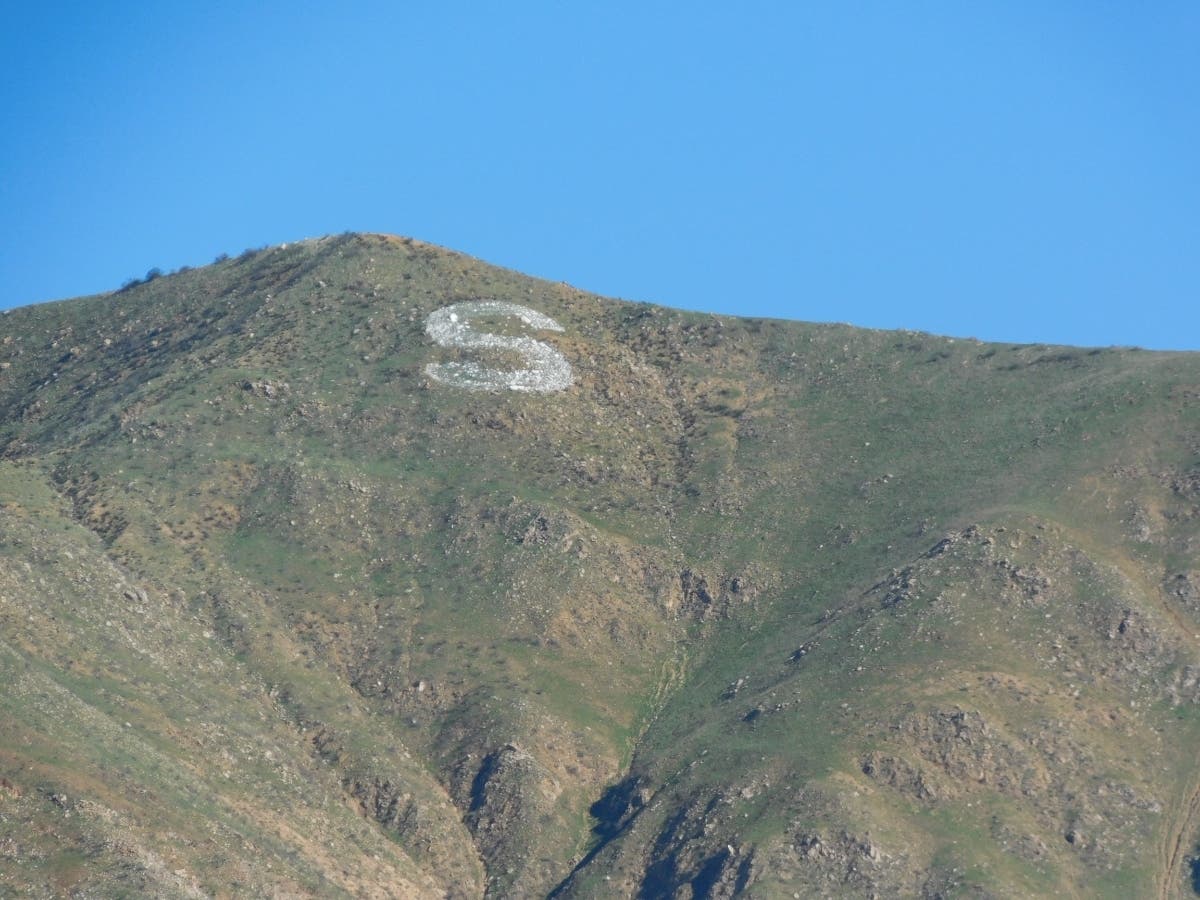
The San Jacinto Valley has once again come together to protect one of its most beloved and enduring symbols — the iconic “S” that watches over the community from North Mountain.
Thanks to the dedication of the Ward Family, one of the Valley’s oldest and most respected families, a full field of golfers gathered at Golden Era Golf Course for a special fundraising tournament to
support the preservation and future of the historic “S.” The event raised vital funds to ensure the landmark remains visible, vibrant, and secure for generations to come. The trophies and plaques were all handmade and the plaques feature the “S” on North Mountain, the original painted by Linda Ward Skipworth, San Jacinto High class of 74. Susan Ward, class of 79, served as this year’s Grand Marshal for the event.
Find out what's happening in Banning-Beaumontfor free with the latest updates from Patch.
“The ‘S’ needs continued care and permanent improvements so it can truly stand out for the entire community,” said tournament organizer John Ward. “Seeing such a strong turnout today shows how
deeply people care about preserving this tradition and piece of Valley history.”
The tradition of the “S” began in March of 1929, when San Jacinto High School Boy Scout Troop 46 first placed the letter on the mountainside. For years afterward, incoming freshmen and teachers made the climb annually to whitewash the “S,” marking the beginning of a rite of
passage that would span nearly a century.
During World War II, the “S” was temporarily removed so enemy aircraft could not use it as a landmark to target nearby March Field, which served as a wartime pilot training base. In 1944, the “S” proudly returned to the mountain.
A new tradition was born in 1949 when San Jacinto alumni climbed the mountain during a home football game and illuminated the “S” with 50 red flares at halftime. That display grew over the years — expanding to 128 railroad flares and later evolving into generator-powered electric lights in the 1960s. Alumni and coach, Charlie Silvas, who served both San Jacinto High School and the Soboba Reservation, played a vital role in keeping the tradition alive during this era.
Beginning in the 1970s, Mike and Joan Ward continued the legacy after graduating, faithfully maintaining and lighting the “S” each year for San Jacinto High School’s Homecoming and Graduation ceremonies.
Today, the Ward Family continues to lead the effort, guiding the “S” crew up the mountain with the support of the Soboba Band of Luiseño Indians and the Placencia Family. Each football season, the
lighting of the “S” at halftime remains one of the most powerful traditions in high school sports — blazing proudly on the 50-yard line of Tiger Stadium and 2,300 feet above the Valley floor.
As the 100-year anniversary of the “S” approaches, careful planning is underway to ensure its preservation as a historic landmark. By uniting community partners — including the San Jacinto
Unified School District, City of San Jacinto, Riverside County, Soboba Band of Luiseño Indians, San Jacinto Education Foundation, alumni, and the dedicated “S” crew — the Valley is working together to protect this symbol for our children and grandchildren.
Key sponsors for the event included: City of San Jacinto, the Charlie “B-Bop” Silvas Family, Hemet Sportsman’s Club, C.L. Smith, Golden State Consultants, Namerrs Signs and Printing, San Jacinto
Education Foundation, Engineering Resources of Southern California, Rapid Tire and Automotive, and Golden Era Productions.
On a clear day, the “S” can be seen as far away as French Valley — a testament to its physical presence and its deep-rooted place in the heart of the community. The “S” is more than a letter on a mountain; it is a symbol of pride, unity, and tradition that the San Jacinto Valley proudly calls its own.