Neighbor News
Twenty Years: Tony Viola Leaves a Lasting Legacy Through Grandfathers for Golf
Retiring director's greatest achievement wasn't teaching golf—it was helping children build character, confidence and hope.
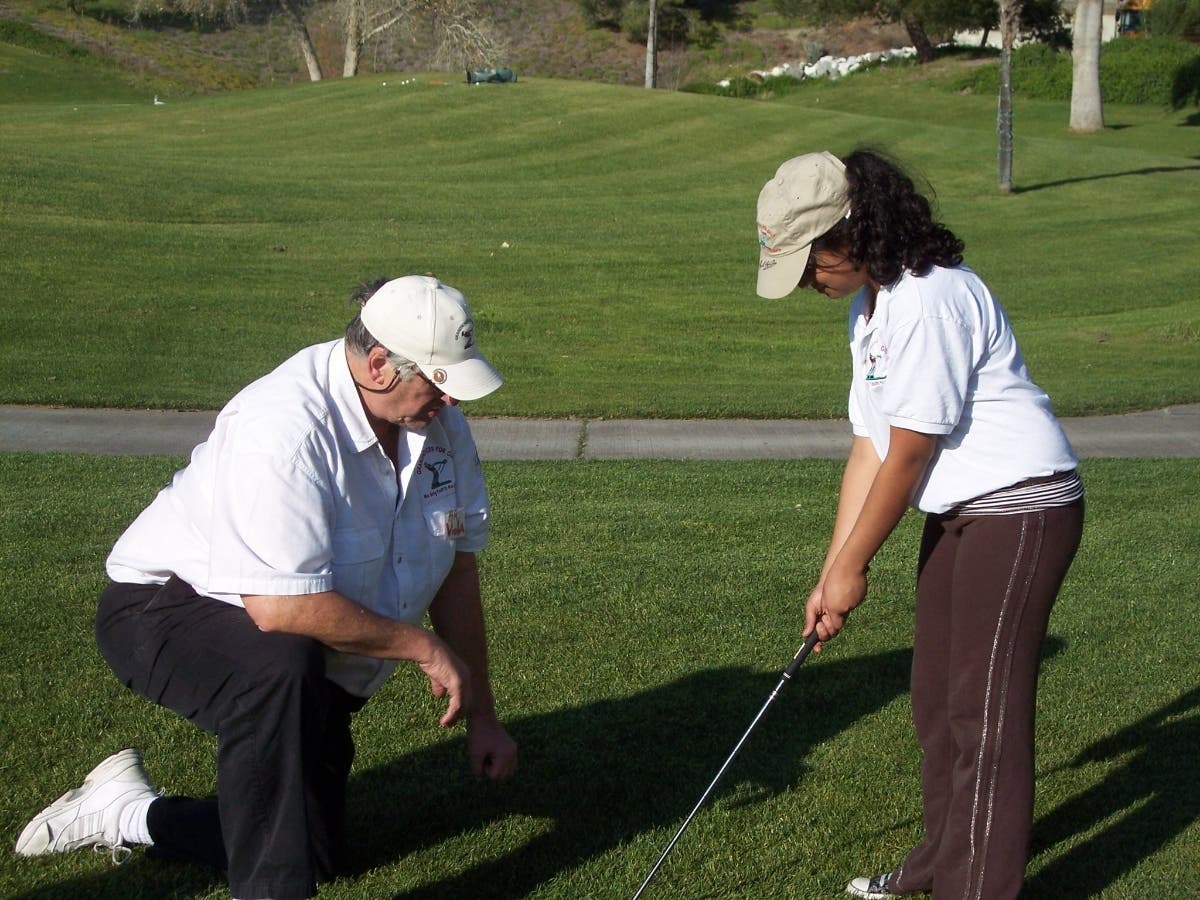


"It is all about the kids."
Those six simple words have guided Tony Viola for more than two decades as the driving force behind Grandfathers for Golf, a program that has introduced thousands of children from the Pass Area and the San Jacinto Valley to the game of golf while teaching lessons that reach far beyond the fairways.
Now, after 20 years of dedicated service, Viola is stepping away from his leadership role because of health concerns. While his retirement marks the end of an extraordinary chapter, the impact of his work will continue for generations.
Find out what's happening in Banning-Beaumontfor free with the latest updates from Patch.
Grandfathers for Golf was originally founded by Marty Finn and Carl Pierchner with just six young golfers at the Soboba Golf Course. When Viola became involved, he embraced the founders' vision and expanded it into one of the most respected youth golf programs in Southern California.
From the beginning, Viola believed that every child deserved the opportunity to play.
Find out what's happening in Banning-Beaumontfor free with the latest updates from Patch.
"It has to be free. I will not charge the kids."
That philosophy has never changed.
Through grants from the Southern California Golf Association (SCGA) and the Southern California PGA (SCPGA), along with generous community support, Grandfathers for Golf has remained completely free for every participant. Every child receives a golf shirt, hat, golf clubs, golf balls and professional instruction—all at no cost.
As the program grew, respected golf instructor Frank McCullum led the advanced instruction while Golden Era Golf Course became the program's permanent home. Viola is quick to credit Golden Era for its unwavering support.
"The Church has been very good to us and we had a wonderful working relationship for 20 years," he said.
Golden Era Golf Course has provided the facilities free of charge, making it possible for Grandfathers for Golf to continue serving hundreds of children each year. The course also allows the volunteer instructors to play, a benefit Viola says has helped attract and retain dedicated volunteers.
Before the COVID pandemic, nearly 200 children participated annually. Over the years, Viola estimates that several thousand young people have come through the program, with approximately 50 earning college golf scholarships.
But for Viola, success has never been measured by trophies or scholarships.
Instead, it has been measured by the lives changed.
He recalls one young girl who struggled with coordination when she first joined the program. Through determination and encouragement, she steadily improved, eventually making her high school golf team and later becoming its captain.
Another unforgettable success story involved a young boy on the autism spectrum who was initially non-verbal.
"He just kept coming," Viola remembers.
Eventually the young golfer connected solidly with the golf ball for the first time.
"It was like a light went on."
Golf became the vehicle through which he developed confidence, communication skills and independence. His grateful parents later thanked Viola, believing the program had helped transform their son's life.
Viola believes golf is especially beneficial for children on the autism spectrum because it is an individual sport where participants can progress at their own pace without the pressure often found in team athletics.
Grandfathers for Golf also partnered with Childhelp in Beaumont, serving children who were wards of the state. Because of privacy requirements, participants remained separate from other groups and photographs were never permitted. The organization even took many of those children to compete in a tournament in Pacific Palisades.
For these young participants, the lessons extended well beyond golf. Before each practice, they spent 30 minutes learning manners, respect and proper etiquette.
Those life lessons have become one of the defining characteristics of the program.
"Golf teaches kids about rules, honesty, integrity and manners," Viola says. "We use golf as the medium to teach etiquette, golf skills and an appreciation for the outdoors."
Many of the children who attended were from immigrant families, and the program became their first introduction to American culture, friendships and community involvement.
Today, Viola often meets former students throughout the valley.
"They'll stop me and say, 'Do you remember me? I started with you when I was six years old.'"
Those moments remind him that the greatest rewards have nothing to do with golf.
Grandfathers for Golf has received numerous state and regional awards and has been recognized by the Southern California Golf Association as a model youth golf program.
Each April, the organization hosts its annual fundraising tournament, which also honors the volunteer grandfathers who have passed away. The event raises money to ensure that every child can continue participating free of charge.
Although Viola has retired, the future of Grandfathers for Golf remains bright. Leadership has been passed to new President Jeff Riley, who is committed to continuing the organization's mission.
"Grandfathers for Golf is alive and well and welcomes any child who can get here," Viola says. "It is free and will always remain so."
The organization also hosts a fundraising golf event every Wednesday at 8:00 a.m. at Golden Era Golf Course, with 100 percent of the proceeds directly benefiting the children in the program.
Community members interested in volunteering are encouraged to contact Jeff Riley at (951) 604-1312 or (951) 692-1383.
Donations are always welcome. Grandfathers for Golf is a 501(c)(3) nonprofit organization, and all contributions are tax-deductible. Donations can be made through the organization's website by selecting the "Donate" button.
For Tony Viola, however, the greatest measure of success will never appear on a scorecard.
It is found in the thousands of young people who learned far more than how to swing a golf club. They learned honesty, perseverance, respect, confidence and sportsmanship—lessons they carried from the golf course into their everyday lives.
That is a legacy no trophy could ever match.