Politics & Government
Water Agencies Take Fight Against Feds to Supreme Court
The agencies joined in a lawsuit against the USFWS in 2011 after it unilaterally doubled protected space for the endangered fish.


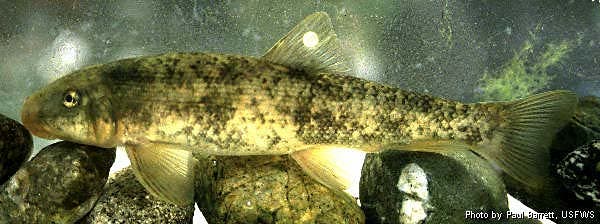
A dozen Inland Empire water agencies are asking the nation’s high court to resolve legal questions concerning regulations that they say are preventing them from accessing supplies during the state’s extreme drought -- all to protect an endangered fish species.
The Riverside County Flood Control & Water Conservation District, Riverside Public Utilities and 10 other area agencies joined in a petition asking the U.S. Supreme Court to review a challenge to the U.S. Fish & Wildlife Service’s habitat expansion for the Santa Ana sucker.
The agencies collectively joined in a lawsuit against the federal agency in 2011 after it unilaterally doubled protected space for the fish, effectively shutting off 125,800-acre-feet of water, depriving the region of one-third of its fresh water stocks, according to the plaintiffs.
Find out what's happening in Banning-Beaumontfor free with the latest updates from Patch.
A federal judge in Santa Ana sided with the Wildlife Service, culminating in an appeal to the U.S. Ninth Circuit Court of Appeals, which also ruled against the water agencies and in favor of the government.
The agencies relied on readings of the National Environmental Policy Act of 1969 and congressional revisions in 1982 to the Endangered Species Act, requiring federal agencies to work with local interests to iron out resource issues that arise from mandates on behalf of endangered animals.
Find out what's happening in Banning-Beaumontfor free with the latest updates from Patch.
According to Greg Wilkinson, the water agencies’ attorney, Congress “explicitly directed federal agencies like the Wildlife Service to utilize the experience of local agencies when they administer the Endangered Species Act.”
Yet he said that was not the case when the USFWS ordered inland agencies to stop drawing water from various channels in the interest of encouraging growth of the sucker’s spawning grounds.
Just as importantly, the attorney said, are provisions in the National Environmental Policy Act that compel federal enforcers to assess the ramifications of their Endangered Species Act decisions before making them final.
According to Wilkinson, the Ninth Circuit Court of Appeals ruled that the NEPA does not apply to the Wildlife Service, while the Tenth Circuit Court of Appeals has ruled that it does, giving rise to an inconsistency that only the Supreme Court can resolve.
“Residents of Cheyenne, Wyoming, Santa Fe, New Mexico and Denver, Colorado -- all of which are within the Tenth Circuit -- can compel the Wildlife Service to comply with NEPA when critical habitat is designated, while residents of Riverside, San Bernardino or anywhere else in the western U.S. within the Ninth Circuit, cannot,” Wilkinson said. “This unequal application of the law is overdue for correction.”
Wildlife Service officials told City News Service previously that the critical habitat designation for the sucker was only intended to establish additional vetting procedures before developers or municipalities move ahead with making changes along channels reserved for the threatened fish.
Federal officials issued findings in 2005 that concluded state and local conservation efforts to protect the species were paying off. However, in 2010, Wildlife Service representatives reversed course.
Citing a 2004 study, they declared gravel and cobble substrate required for the fish’s survival had been drastically reduced since construction of the Seven Oaks Dam, located in the San Bernardino Mountains. Federal officials wanted higher volumes of water released from the dam to promote algae growth for the benefit of sucker habitat.
The Tucson, Ariz.-based Center for Biological Diversity was a driving force behind federal action.
The nonprofit sued the USFWS in 2007, arguing that the agency had failed to extend critical habitat to encompass stretches of the Santa Ana River and its tributaries where the fish population was plummeting.
--City News Service, photo courtesy of the USFWS
Get more local news delivered straight to your inbox. Sign up for free Patch newsletters and alerts.