Sports
Goalball: Giving the Visually Impaired the Chance to Play
The only regular goalball league games in the Bay Area are held in Berkeley, every Wednesday at the West Campus Boys' Gym.


Crouching down and wearing blacked-out ski goggles, Roger Acuna feels his way to the corner of the court with his hands by following a thread of taped-down twine.
The referee slams down what from a distance looks like a basketball, and with outreached hands Acuna follows the sound of the bells jingling inside the ball.
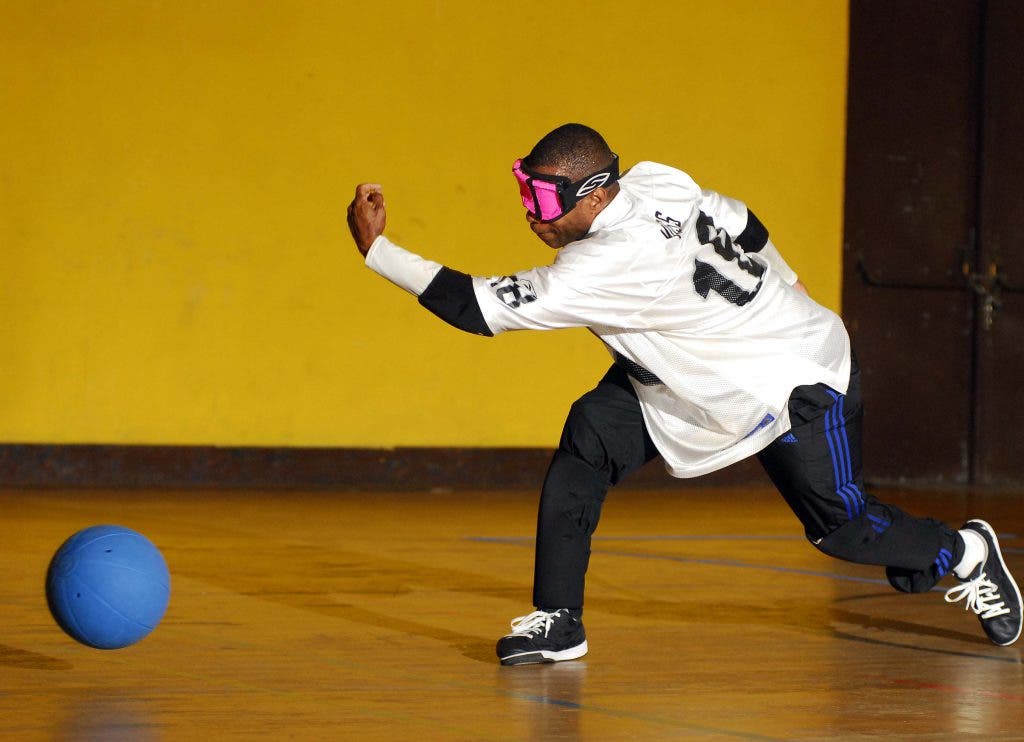
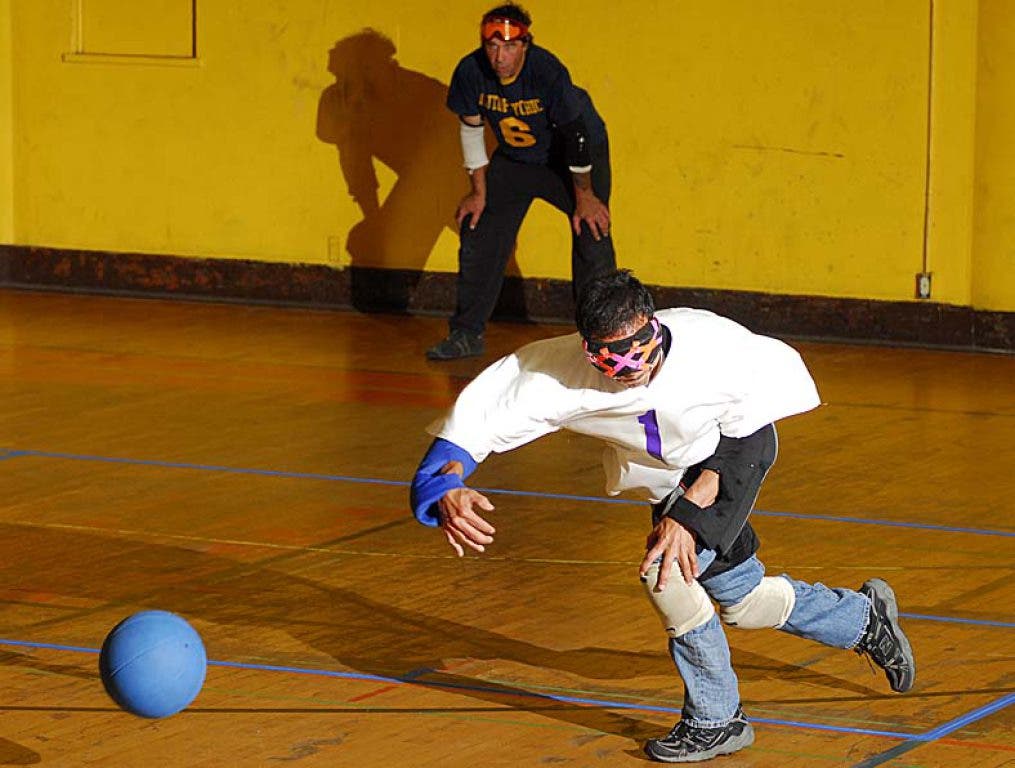
“Silence, please,” commands one of the referees. He blows a whistle. Immediately, Acuna grabs the jingling ball and begins a running spin toward the opposite end of the court with the ball cupped between his hand and forearm.
Find out what's happening in Berkeleyfor free with the latest updates from Patch.
Unlike most team sports, goalball is played in almost total silence and, because each player wears modified night shades, every player is 100 percent blind.
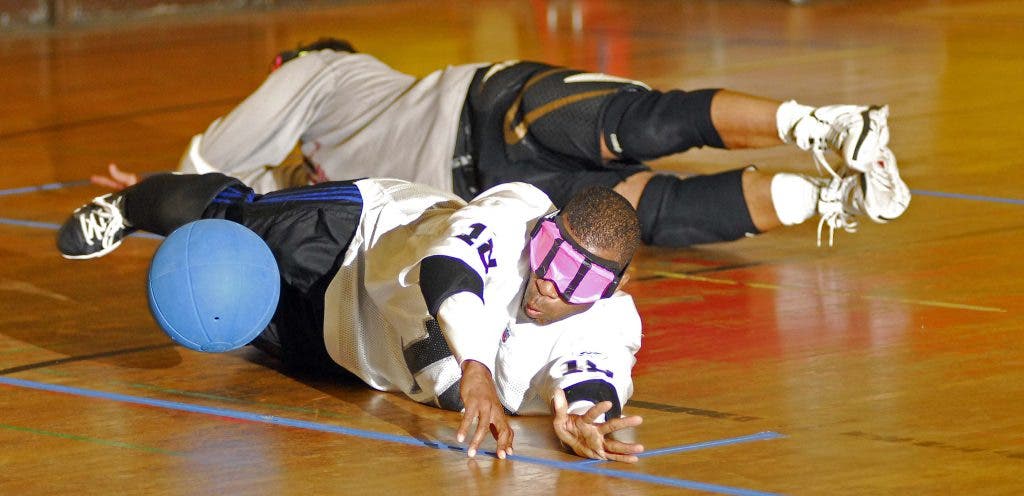
Just when it seems Acuna may centrifuge out of control, the ball ejects from his hand — bouncing and jingling toward the three heavily padded and blinded players at the other end of the court who, in near perfect unison, dive toward the sound of the ball in an attempt to block it from the goal. They thud to the ground, forming a barricade.
Find out what's happening in Berkeleyfor free with the latest updates from Patch.
One blocker comes up with the ball in a successful defensive play, and with a return serves the ball to the opposing team.
Every Wednesday, Acuna and about 20 other visually impaired players come to play in the only regular Bay Area goalball league games, here in Berkeley at the basketball court inside the West Campus Boys' Gym.
The sport was invented in Austria in 1946 to help rehabilitate visually impaired World War II veterans, according to the World Goalball Association. Today, it is one of 28 sports played in the International Paralympic Games, which begins after the Olympic games finish.
Players wear the blacked-out ski goggles to even the playing field, since some legally blind people have still have partial eyesight.
Bay Area Outreach and Recreation Program Coordinator Jonathan Newman runs the program, which brings together — but is not limited to — the visually impaired.
Newman is quick to highlight that goalball is a sport like any other, but is simply geared towards the visually impaired and provides the same outlets for any athlete, disabled or not.
“What this sport does is break down some of the walls that occur with a disability and creates a common ground, and people don’t see a disability but see an athlete who wants to compete,” said Newman.
In regards to the physicality of the sport, Newman points out that the players wear heavy pads around their hips, knees and elbows to help ease the pain associated with throwing themselves down on the hard oak floor, only to be hit by a three-pound partially deflated ball.
“I feel like it's like boxing or football, where you have to build up a tolerance to the pain,” said Newman. “You have to make yourself tougher or stronger, but yeah, it hurts.”
For Newman, who has been with the Bay Area Outreach and Recreation Program for more than 20 years and coaching goalball for much of that time, a large part of the game is strategy as opposed to sheer power.
“As you get better at it, it becomes a very strategic and technical game,” said Newman. “There is a whole chess game component of it, and then of course the straight physicality of it.”
Alameda resident William Johnson, who started playing goalball 20 years ago after he lost an eye to cancer, is one of the few sighted players who plays in the league. In his experience, Johnson said sighted players rarely play goalball for any great length of time because of the variety of less painful and physically demanding team sports available to them.
By following the tape on the floor and the bells inside the ball, goalball is also unique, he said, because it rewards the tactile and auditory senses in absence of sight. However, contrary to popular belief, “the blind don’t hear better, they just pay better attention to what they do hear,” said Johnson.
Energetic and formidable, Joe Hamilton has been blind since the age of 10. He travels over two hours from his home in Sacramento every week to play in the Bay Area Outreach and Recreation Program goalball league.
“I come down here on Wednesday nights because it’s the best game in town,” said Hamilton, who also plays for the United States Paralympic Goalball Team.
For Hamilton, because of the sport's orientation toward the visually impaired, goalball has been a perfect fit. “I needed a team sport that I could compete in and do better than [my brothers] did in basketball, and goalball was it,” he said.