Community Corner
Beverly Hills Student Tracks Near-Earth Asteroid
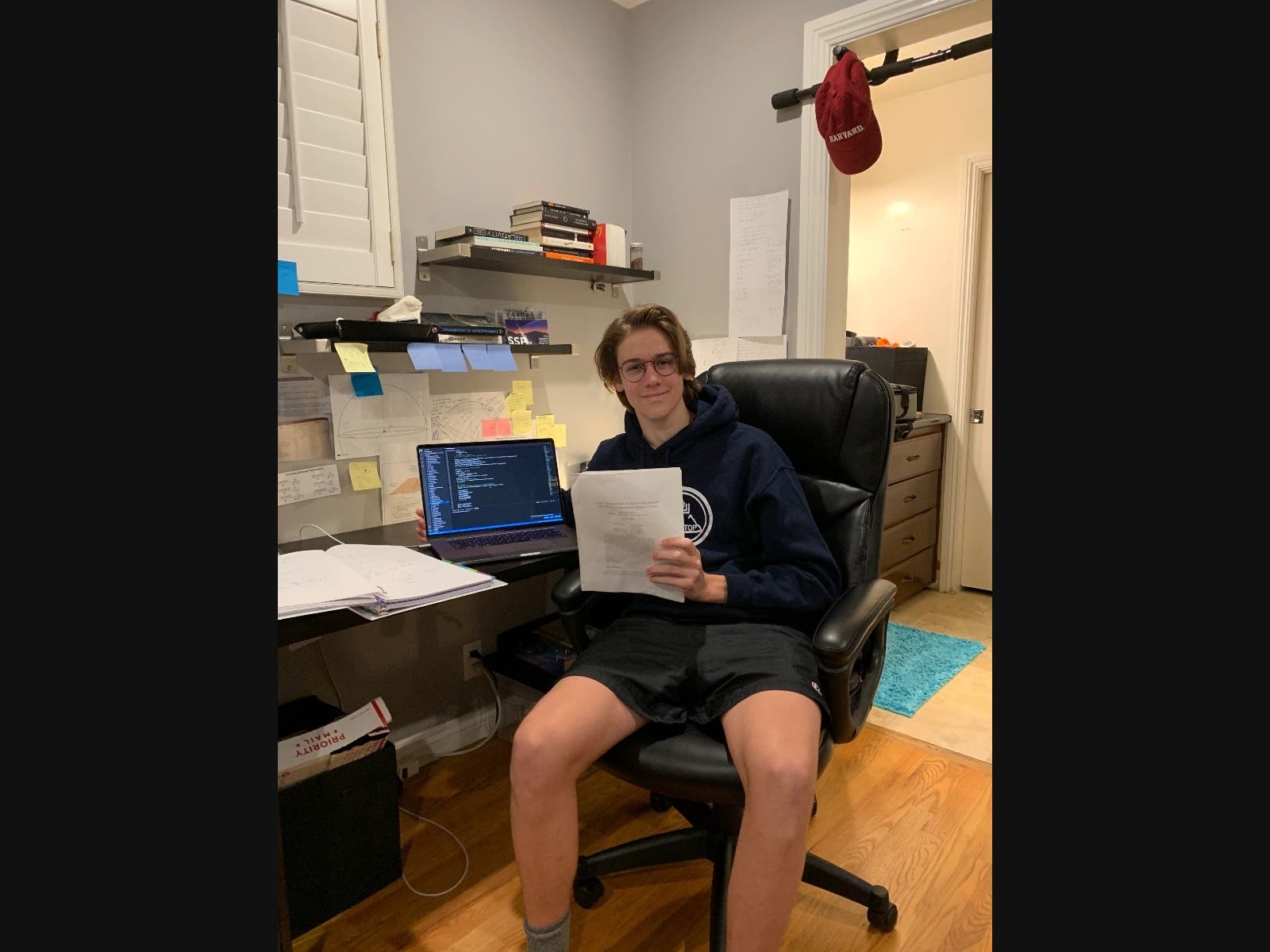
Nick Walker of Beverly Hills High School helped determine the location and orbit of a nearby asteroid.


BEVERLY HILLS, CA — Given the events of 2020 so far, perhaps an asteroid might soon come charging toward the earth. After all, just a few weeks ago an asteroid roughly the size of an SUV zoomed 1800 miles away from Earth, the closest known encounter an asteroid has ever had with the earth.
But if it does, we may actually be able to divert it, according to Beverly Hills High School senior Nick Walker.
“We already have the technologies to deflect them,” said Walker, 17. “There are missions headed by the [NASA Jet Propulsion Laboratory] and NASA to deflect an asteroid, and I think there are two ways to do this. One would be launching a probe to the asteroid, and because these asteroids orbit around the sun like planets do, we may have the time to intercept it. So what you do is blow it up into smaller pieces completely, so it’s not as big of a hazard … or using a rocket booster push it out of its orbit to result in not posing a hazard to humanity.”
Find out what's happening in Beverly Hillsfor free with the latest updates from Patch.
Walker got to know all about asteroids this summer as part of the Summer Science Program, a joint venture between New Mexico Tech, University of Colorado Boulder, Purdue University, and Indiana University, where he joined 35 other students to participate in asteroid research. Walker, who hopes to attend MIT to study computational astrophysics, worked remotely with a team of two other students to study the 1988-DZ4 asteroid.
Using some physics and calculus that he learned at Beverly Hills High School, Walker and his team spent up to 18 hours a day taking photos of the asteroid, determining its exact location in the universe, and learning all about the properties of its orbit.
Find out what's happening in Beverly Hillsfor free with the latest updates from Patch.
“Once we have those coordinates, which are referred to as celestial coordinates, we can run a bunch of those different combinations through a Python code program that all the students developed with the help of professors, and then we run it through the simulation and we determine properties of the orbit of the asteroid: how big it is, how long it takes for the asteroid to orbit around the sun,” Walker said.
At the end of the summer, Walker and his team presented their research to Harvard University’s Minor Planet Center, which designates and studies the minor planets, comets, and natural satellites of the solar system, which Walker said was one of the proudest moments of the program.
“The important thing about it is all of the data we submit … helps make the projection of the asteroid’s orbit much more accurate,” said Walker. “Following asteroids and calculating the positions is important because we don’t want them crashing into us.”
So should an asteroid come barreling towards Earth soon, we'll know who to call.
Get more local news delivered straight to your inbox. Sign up for free Patch newsletters and alerts.