Health & Fitness
Beverly Hills' Overlooked Commercial Areas
The southeastern section of Beverly Hills is in need of commercial redevelopment.
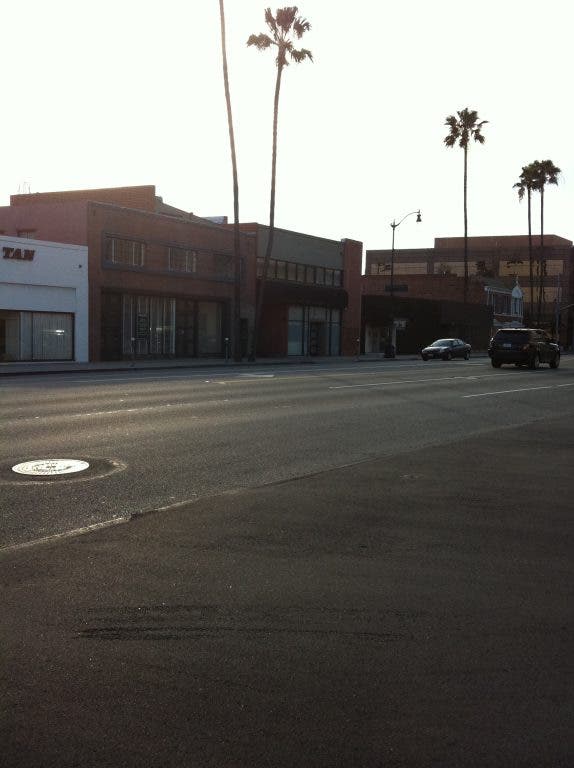


Once upon a time only the "Golden Triangle" was shown on maps of our commercial streets as the powerful Rodeo Drive Committee established the shopping district as one of the world's premiere retail destinations.
Yet the attention paid to that commercial hot spot left other business districts in Beverly Hills overlooked and ignored. There was a lack of adequate street cleaning, lighting and police protection in those areas—and no group to insist on improvements.
According to its website, the Beverly Hills Chamber of Commerce seeks to "serve the luxury capital of the world through marketing, advocacy and education for Beverly Hills business community."
Find out what's happening in Beverly Hillsfor free with the latest updates from Patch.
However, about 20 years ago more than a dozen chamber board members from large businesses controlled 75 percent of the chamber's votes, wielding a powerful influence over the group's agenda.
When I asked the largest vote holder why he was not better representing businesses outside the Golden Triangle, his answer to me and a friend was, "It's a free country." Further, a city planning commissioner actually laughed when I asked for more attention to South Beverly Drive.
Find out what's happening in Beverly Hillsfor free with the latest updates from Patch.
"Why?" he asked. "You're not Rodeo Drive."
As the South Beverly Drive Business Association chairman, I used my snail-mail list to notify active residents and more than 2,500 storefront business owners to repeatedly state the case for improvement of ALL business areas in Beverly Hills. This effort was noted in local papers, the Los Angeles Times, as well as in a 1990 Wall Street Journal article which is presented below:
Beverly Hills hardly seems the place for the little guy to get an even break, but some small-business owners recently struck a blow for equality in this ghetto of glitz. The arena for this victory was the Beverly Hills Chamber of Commerce. For decades, the chamber allocated voting power on a perfectly plutocratic basis: the more the company paid in dues, the more votes it got. As a result, a single large company had as many as 52 votes.
This situation didn't sit well with some small-business owners, particularly ones whose operations were located in the less tony parts of Beverly Hills. (Yes, there are less tony parts of Beverly Hills.) Some of these businesspeople felt their areas were being slighted by city government on such matters as police protection, street maintenance and public parking for customers. "And the city was greatly influenced by the chamber" on such matters, says Russ Levi, a local businessman who led the effort to change the voting rules.
The reformers' campaign included mass mailings to local residents, businesses and government officials. As a result, the chamber recently changed its rules so that any single company can have a maximum of 10 votes. This brings Beverly Hills in line with many of the other 3,500 chambers of commerce around the country, which in the past decade or so have put a cap on voting power.
Former mayors Allan Alexander and Robert Tanenbaum carried the message of our ad hoc group of storefront owners and renters to city residents. Extensive and embarrassing publicity for the main corporations that controlled the chamber was relayed in letters to residents, businesses and newspapers. The chamber board finally had a meeting about a year and a half after the unfair voting practices were brought to light, leading the group to amend its voting procedures.
South Beverly Drive was improved as a result. From Wilshire Boulevard to Whitworth Drive, the street was promoted as a place for residents in that neighborhood to gather. Sidewalk offices were soon converted to revenue-generating shops. Affordable restaurants were opened. The street joined the Golden Triangle in its large contributions to our city's coffers. So, what other commercial area should join this commercial success?
Councilman John Mirisch is bringing attention to the need for development in the southeast section of Beverly Hills. He believes that residents need their own neighborhood commercial areas where they can socialize together by shopping and dining nearer to their homes. The 90211 commercial ZIP has been overlooked for almost 100 years since the city's incorporation. The buildings there do not meet the edifice standards of our city—nor is there a feeling of community when residents and tourists shop and dine there.
"The east is a buffer zone between Beverly Hills and Los Angeles. Issues such as business signage that are strictly enforced in the west and [Golden] Triangle go ignored east of Robertson," Human Relations Commissioner Thomas Pease said. "Also, a few commercial property owners are letting some of their places slide into shockingly poor repair. It's noticeable when driving, but when walking it's really incredible to see some of these places. It's too bad since there are some really pretty buildings there and this is the impression we're giving people traveling Olympic."
Former Mayor Nancy Krasne is also on board with more development in the eastern section of town.
"The east-side commercial section is critical to the city's development and survival. Robertson is an indispensable corridor that needs to be thought out carefully and parking added to make it a community that is special unto itself, just as South Beverly is to its neighbors," Krasne said. "Depending solely on the retail area—and limiting that to the [Golden] Triangle and South Beverly Drive—is short-sighted and unfortunate. We have so many viable areas that need to be looked at closely and the money spent wisely."
Special tax incentives for building and rehabilitation may encourage a dramatic redevelopment in the southeastern section of Beverly Hills, where there are many vacant stores and little foot traffic. Let's bring incentives to improve this overlooked area before more medical offices fill the vacant buildings with their lack of collectible sales taxes, their generation of much greater vehicular traffic and their inability to create a neighborhood commercial district that can develop a sense of community in the area.
Thank you for reading this message. Russ