Health & Fitness
The Parks and Playgrounds We Needed
Read about how a few of our city's beautiful parks and playgrounds were developed.
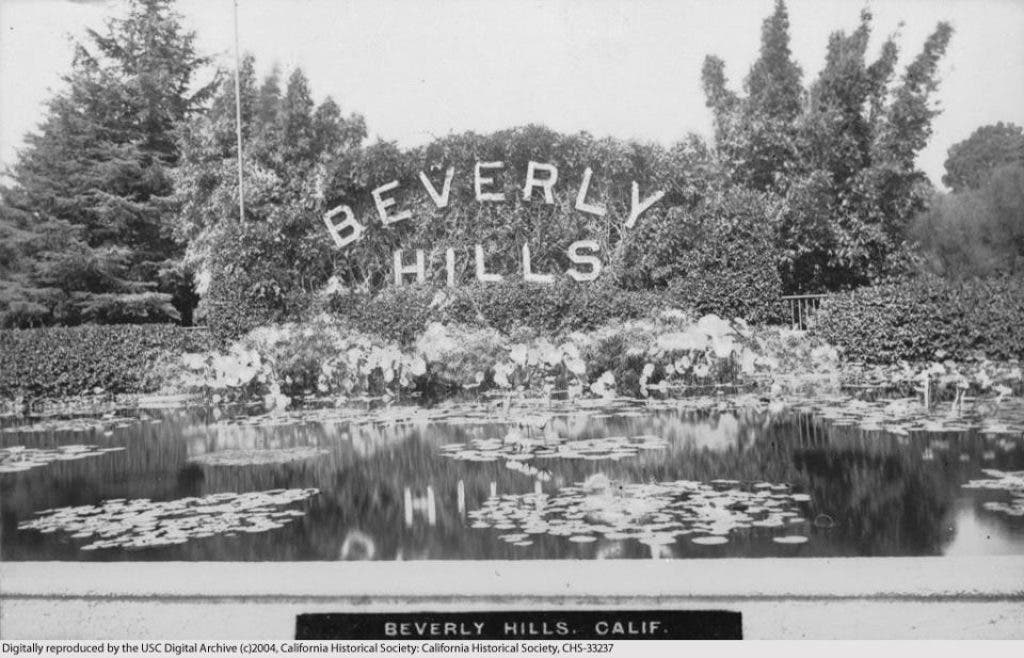


The years from 1927-1932 witnessed the establishment of many Beverly Hills parks that are still enjoyed by residents and visitors today. These six important years were objectively recorded within the pages of our early and respected newspaper, the Beverly Hills Citizen.
Beverly Hills enjoyed the fastest percentage growth in population of any city in the United States during the late '20s. Early in 1927, a Citizen article wrote of "the need for city recreation facilities for children's play."
Riddle: Why did the children cross the playground? To get to the other slide.
Find out what's happening in Beverly Hillsfor free with the latest updates from Patch.
Some of our major parks and playgrounds were built during this period: Sunset Park (now ), Reservoir Park (now ), , , and Strip Park (now ). Parks Supervisor George V. Chapman and Playground Supervisor W. J. Hamrick were vital in helping to develop our first parks.
In March, 1927, a petition, survey and eventual report produced by the city served as a plan for the future creation of most of our major parks. La Cienega Park was developed on 21 acres, complete with a swimming pool ("The Plunge"), two tennis courts, a horse show arena, basketball and croquet courts, horseshoe pitching and a playground.
Find out what's happening in Beverly Hillsfor free with the latest updates from Patch.
One month following the La Cienega Park petition, another was circulated for a 12-acre site in the southwest section of town. In January 1928, the City Council declared that the Roxbury Park Tract, at Roxbury and Country Club drives, would be purchased for $400,000. Soon Roxbury Memorial Park was built there.
"Careful consideration must be given to acquire more available grounds while there is reasonably priced land to be had," the Citizen reported at the time.
The influential Beverly Hills Bowling Green Association chose Roxbury Memorial Park as its new home when the group's previous green at Santa Monica Boulevard and Camden Drive was replaced by one of the many commercial buildings being erected in the area—the early beginnings of the "Golden Triangle" business district.
And in case you ever wondered why "memorial" is featured in the park's name, it's because the park is dedicated to Beverly Hills soldiers who have been lost to war.
Another eventual park facility was built in 1927 by Edward Doheny Jr. for his son at a cost of $800,000. The land was then purchased by Beverly Hills in 1954 and swapped with developer Paul Trousdale for his 425 acres that held Greystone Mansion and Park.
Built in stages during the late '20s, Strip Park, now Beverly Gardens Park, was purchased for $10-12,000 per house lot, one lot at a time. There was much debate whether commercial or recreation facilities should be built on the long strip. Aside from some churches there, the North Homeowners Association provided the end result—a passive park with bridal trails only!
With the development of Beverly Hills parks came trees. According to the Citizen, the city's southern and southwest streets were to be bowered by magnificently arching trees, "a heritage of never ending beauty which will be a satisfying foretaste of the Kingdom of paradise." By 1927, 35,000 trees graced our city's streets and parkways. In respect to our tree culture, Rotarians often sang the song To a Tree. Even today Beverly Hills continues to receive the title of "Tree City, USA."
Thank you for reading, Russ