Crime & Safety
Inmates, Too, Risk Their Lives Fighting CA Wildfires
Inmates are paid $2 per day and $1 an hour when fighting an active fire, in addition to time off their sentences.


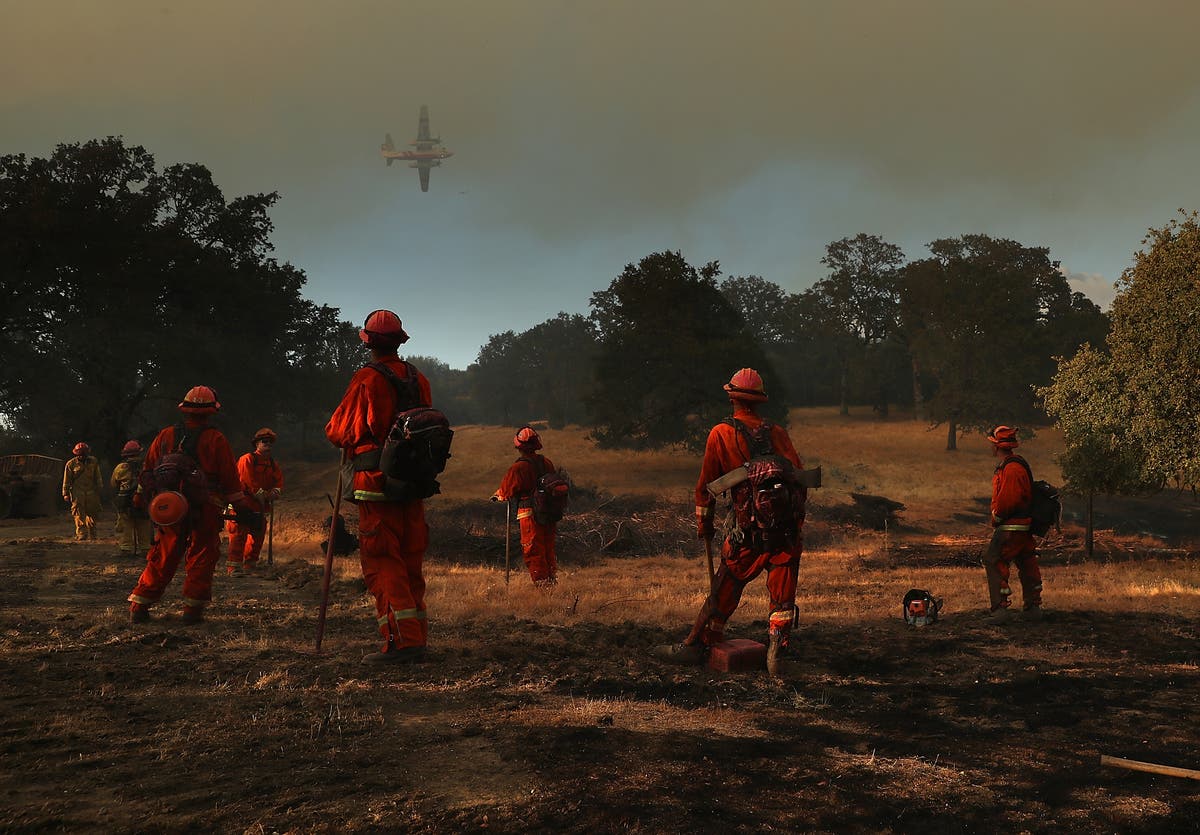
CALIFORNIA – As wildfires rage through California, firefighters are battling the flames that have killed 44, burned more than 200,000 acres and forced evacuations of hundreds of thousands of people. But among those fighting the blaze are California inmates, part of a volunteer fighting program run by the California Department of Corrections and Rehabilitation (CDCR).
There are 1,418 fire camp inmate firefighters and 155 CDCR staff members currently deployed to assist with wild fires throughout California, according to CDCR Public Information Officer Alexandra Powell. Regular firefighters are paid an average of $72,000 annually in California, according to Thrillist. These firefighting inmates are paid $2 a day and $1 an hour when fighting an active fire, in addition to time off their sentences, CNBC reported.
Although their pay differs greatly, it doesn't mean the work the inmates are doing is any less dangerous. There have been six deaths of fire camp inmate firefighters as a result of working on containing a fire since 1983, Powell said. In 2016, an inmate was killed while battling a brush fire in Malibu. Earlier this year, an inmate firefighter died while on a training hike his first day on the job.
Find out what's happening in Beverly Hillsfor free with the latest updates from Patch.
During largescale wildfires, there is always a Medical Emergency Response Team on site at the established base camp to provide assistance to any injured people or respond to medical emergencies that occur, she said. Each inmate firefighter is also entitled to workers’ compensation benefits for injuries that occur during work, and/or if those injuries result in proximate death, she added.
"All inmates receive the same entry-level training that CALFIRE's seasonal firefighters receive, in addition to ongoing training from CALFIRE throughout the time they are in the program," according to the CDCR website.
Find out what's happening in Beverly Hillsfor free with the latest updates from Patch.
There are 47 fire camps across California with 3,700 inmates working. All inmates who volunteer for the program must have "minimum custody" status, which is the lowest security classification for inmates based on good behavior, following rules and participating in rehabilitative programming in prison. The program is off limits to sex offenders, arsonists and inmates with a history of escape.
When they're not fighting fires, the inmates work on clearing brush and fallen trees to reduce the chance of fire, maintaining parks, sandbagging, flood protection and reforestation, the CDCR website said.
Proponents of the program argue it saves the state between $90 and $100 million a year and helps inmates learn new skills while working in a team environment, Fox News reported. However, some argue that the skills inmates learn won't help them find jobs after their release, and it puts their lives at risk.
“When prisoners do volunteer work, it’s especially important that we make absolutely sure that they’re making a free and uncoerced and truly voluntary choice,” David Fathi, director of the ACLU’s National Prison Project, told Fox News. “That’s especially important when the work they’re doing is very dangerous, like fighting wildfires.”
Dennis Dumas, who served at the inmate fire camp in Norco, Calif. between 2005 and 2007, told Newsweek that the firefighting program is one of the best programs the Department of Corrections has.
“It’s sought after in the institution, there are a ton of privileges [such as] additional visits,” he told the news website.
When factoring in the average per capita cost to house and feed an inmate in the California system, the pay is fair, he added. According to press secretary Vicky Waters, it costs to CDCR $81,458 each year to house and care for each inmate.
“Everyone is happy to be out there, they’re happy they get the pay increase, and they’re happy to be fed and clothed. It’s all covered for them,” said Dumas. “But I think that the reward for the work completed and risks taken needs to translate to a clear employment path, not money given to inmates who haven’t proven themselves in society.”
Deirdre Wilson, a former inmate who served in the Puerta La Cruz fire camp between 2004 and 2005, told Newsweek she signed up for the fire program because she saw it as a way to reduce her sentence and was desperate to return to her children.
“It’s a cruel joke,” she said. “You’re volunteering to put your life on the line, but you’re not really volunteering—the system evolved out of a system of slavery where we commodify human bodies and function off of their labor.”
However, she added that the camps were "much nicer" than prison, with better facilities.
“You’re not locked in a room,” she said. “It was a lot more freedom, and we ate much better.”
To learn more about the CDCR program, visit their website.
PHOTO: LAKEPORT, CA - AUGUST 01: Inmate firefighters look on as a firefighting aircraft prepares to drop fire retardant ahead of the River Fire as it burns through a canyon on August 1, 2018 in Lakeport, California. The River Fire has burned over 27,000 acres, destroyed 7 homes and stands at 38 percent contained. (Photo by Justin Sullivan/Getty Images)
Get more local news delivered straight to your inbox. Sign up for free Patch newsletters and alerts.