Politics & Government
Race And Change Debated In Calabasas Town Hall
A public Zoom meeting tackled systemic racism, police brutality, and why some people call the city 'Cala-blackless.'


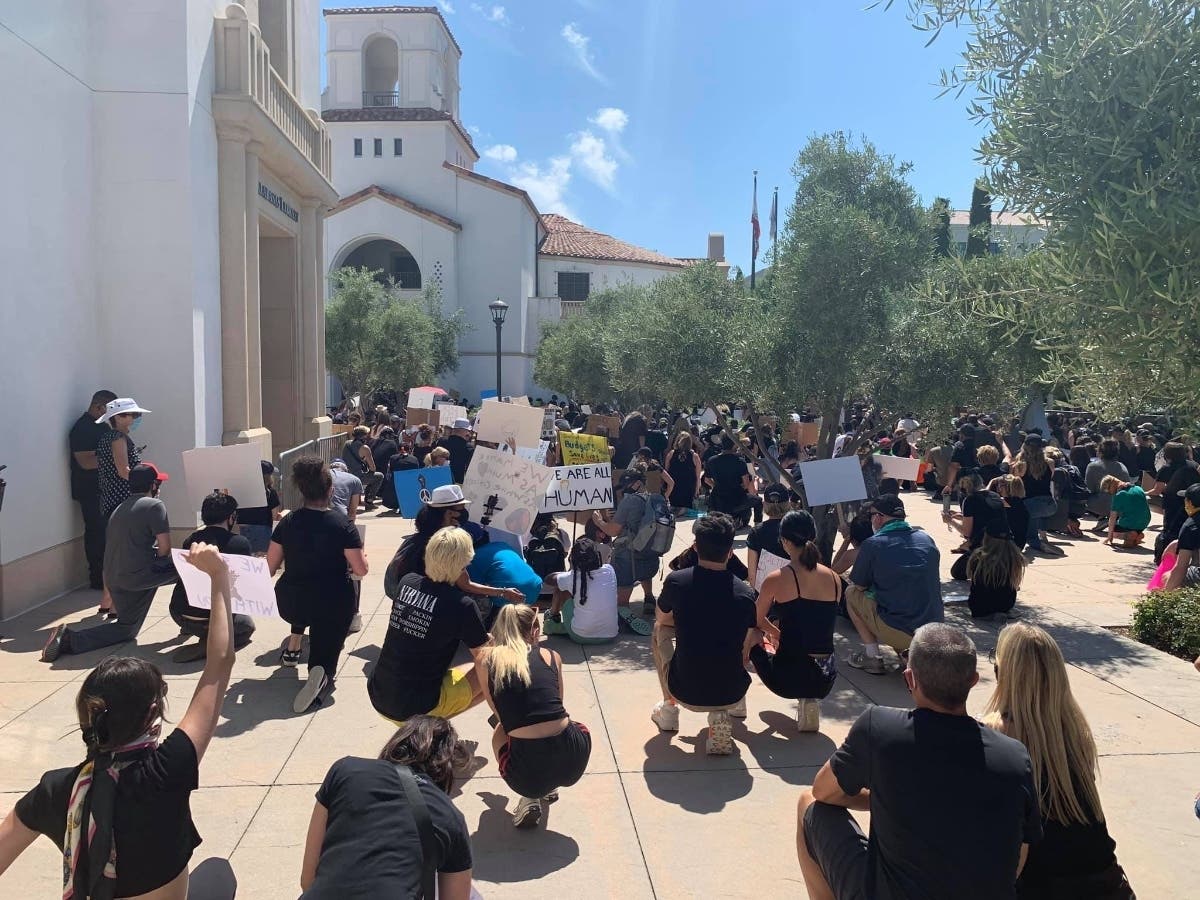
CALABASAS, CA — “The school’s history of inequality is so well-known that when you look up ‘Calabasas High School racist,’ the search auto-completes itself on Google,” CHS alum and actor Laila Drew said during a recent Zoom town hall on how to create a more inclusive community.
Drew, an African-American who said that she had left CHS her junior year because of the “racism and inequality” she faced, was one of a number of Calabasas residents and stakeholders joining the “Race and Change” Zoom call Monday.
The Zoom call, which featured 11 panelists and attracted over 140 viewers, was organized by the Mayor’s Youth Council and moderated by Mayor Alicia Weintraub, Councilmember David Shapiro, and Youth Council Chair Adam Jaysen. Weintraub said that the discussion was a long overdue beginning to a conversation about how to improve diversity, tolerance, and inclusivity in Calabasas. Panelists, who ranged from Olympic medalist and Calabasas business owner Audley Harrison to former NBA player and Calabasas business owner Al Harrington, answered a number of questions from viewers related to race and inclusion in the city.
Find out what's happening in Calabasasfor free with the latest updates from Patch.
At the beginning, Calabasas High School students of color discussed their experiences living and learning in a community that was only 0.8 percent African-American, according to the 2010 Census.
One former student, Anehita Okojie, said that she did not learn anything about Black literature, history, or culture in her English and social studies courses. Sienna Ribeiro said that she has felt belittled because of her skin color, and recounted a time that a fellow student had once used the term “colored” in a class and was not corrected by the teacher. Drew said that she tried to expose a racist teacher and was threatened with expulsion if she didn’t drop the issue. Tai Flemming, a student at the Viewpoint School, said that she felt her school excused micro and macro-aggressions with a “slap on the wrist” and a perfunctory acknowledgment that never led to meaningful action.
Find out what's happening in Calabasasfor free with the latest updates from Patch.
Two Calabasas educators were present to discuss how their schools planned to address these challenges. Las Virgenes Superintendent Dan Stepenosky noted that all district staff and many school board members are currently attending a nine-week training called Leadership for Social Justice that explores bias, racism, and creating safe and constructive dialgoues around race in educational settings. At the end of the course staff will be required to create an action plan for the coming year.
Stepenosky also noted that the staff is revising its curricula so it includes more diverse viewpoints.
Speaking of viewpoints, also present was LeRhonda Greats, director of diversity, inclusion, and community life at the Viewpoint School. Greats stressed the importance of listening and believing students.
“Listen to the students living and having these experiences – believe them, partner with them, make sure we bring them on board to help offer solutions,” she said, noting that the she had brought the school’s Black Student Union to meet with the school’s administration. “Students are tired of telling us what the problems are when we aren’t doing anything.”
Law enforcement, a centerpiece of the current protests and discussions, was also present. Lost Hills-Malibu Sheriff’s Station Captain Chuck Becerra said that his station condemned George Floyd’s death while in Minneapolis Police custody, and noted that the Los Angeles County Sheriff’s Department has revised its use of force policy, required all deputies to wear body cameras, and require all parties on scene to report what occurred.
Becerra then asked participants to tell him what they wanted from the Sherif’s Department. Answers ranged from having trained mental health professionals called on-site to disturbances, greater accountability for deputies breaking rules to an entire systemic revamp.
Mayor Weintraub asked what the city of Calabasas – which operates independently of the school district or the sheriff’s department – can do. Suggestions ranged from incorporating more diverse voices into the Calabasas Film Festival, asking the library to include more books on antiracism, especially for children, and hiring a more diverse staff in City Hall.
“This has been so eye-opening, and I know everyone here is committed to changing the experiences and doing our part,” Weintraub said. “We’re a team here in the city of Calabasas, and we want to be a part of the solution.”
Get more local news delivered straight to your inbox. Sign up for free Patch newsletters and alerts.