Business & Tech
Sculptures by Siro
At a quaint gallery on Mulholland Highway, a sculptor who works in bronze produces beautiful pieces of art.
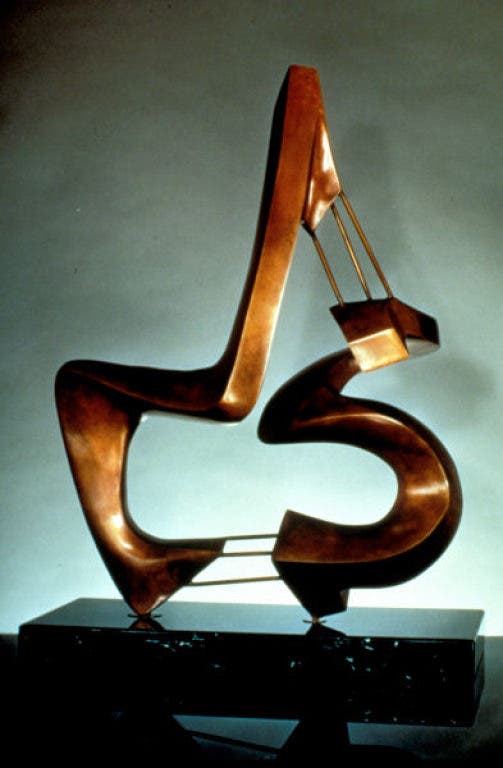


The offspring of art and music lovers, Harvey Shapiro has vivid memories of countless trips to Chicago museums as a child. While his father loved the opera and classical music, his mother was always sketching.
Shapiro's early exposure to the arts prompted him to enroll at the University of Wisconsin at Madison where he earned his Bachelor of Arts. He further honed his skills with more classes at the Art Institute of Chicago.
He was at the University of Chicago completing his master's degree in fine arts when he realized that sculpture was his calling. “I just loved the 3-D quality of sculpture,” said Shapiro, now 65.
Find out what's happening in Calabasasfor free with the latest updates from Patch.
Primary influences
He moved to California in the 1970s, where he started to make a name for himself as a sculptor and established Sculptures by Siro, his gallery on Mulholland Highway in Calabasas.
Find out what's happening in Calabasasfor free with the latest updates from Patch.
He carefully established himself as a “modernist with an occasional touch of realism.”
The Calabasas resident considers David Smith, who has an ongoing exhibit at LACMA till July, one of his earliest influences. “I was attracted to his style 40 years ago when he was starting,” he said. A steelworker by training, Smith was the first American to use industrial methods for creating sculptures.
Aside from Smith, the Romanian-born sculptor, Constantin Brancusi, was also a major influence in Shapiro’s career. “I love his shapes and surfaces,” he said.
His specialty has long been bronze sculptures although he also dabbled in stone, clay and other metals. He also works with stainless steel, which is more durable especially for outdoor pieces. “Bronze is warmer and more engaging but it’s harder to maintain when situated outdoors,” he explained.
Shapiro is all about maintaining his prized pieces, given that a single five-foot piece can take up to three months to complete. “It’s a very involved process and each step along the way is crucial,” he described.
According to Shapiro, ever since the lost wax process was developed, sculptors have leaned towards bronze because it’s structurally stronger, more permanent and corrosion-resistant. Simply put, the pre-Renaissance method, involves the pouring of molten metal into a mold or shell.
Most days, he is in his shop or foundry, working on concurrent projects. He has been working on several “limited editions” lately, with orders from as far as Japan. “At first glance, they look alike but each piece is still unique in its own way,” he clarified.
Sculpture appreciation
Aside from “limited editions,” he also works on a lot of commissions from corporate and private collectors alike. Interior designers and art dealers also seek him out.
Bronze sculptures are more expensive to produce especially with the rising cost of metal these days. “It takes a special person to appreciate sculpture,” he described his special clientele.
“So it’s not for the faint of heart,” he added, noting that most sculptures require proper lighting and a pedestal.
The economic downturn has not been bad for him. “My clients are still collecting art,” he said, noting that they can view his work at the Christopher Anthony Limited Gallery in Palm Springs or by appointment at his Calabasas studio.
Shapiro explained the unusual appeal of bronze sculptures. “More people can relate to a painting because they usually already have a place for it in their mind or in their house,” he said.
An ongoing creative pursuit
Away from his tools and foundry, the sculptor unwinds and finds new inspiration by visiting museums like the Getty Center in Los Angeles. He is also into bird watching, and prefers to enjoy it amidst his tranquil Calabasas surroundings.
Listening to music, watching college football and heading to the gym also keep him recharged. “I can’t work when I’m tense or rushed,” said Shapiro, who sketches everyday as a warm-up before producing a piece.
“It engages me and makes me pursue my inner mind,” he said of his daily prelude to the creative process that is sculpture.
He vows to continue this pursuit for as long as he can, just like Henry Moore, the celebrated English sculptor who produced masterpieces till his last days.