Health & Fitness
Fun inflatable speaks serious message at Kaiser Permanente
"Strollin' Colon" at KP San Jose raises cancer awareness, need for screening


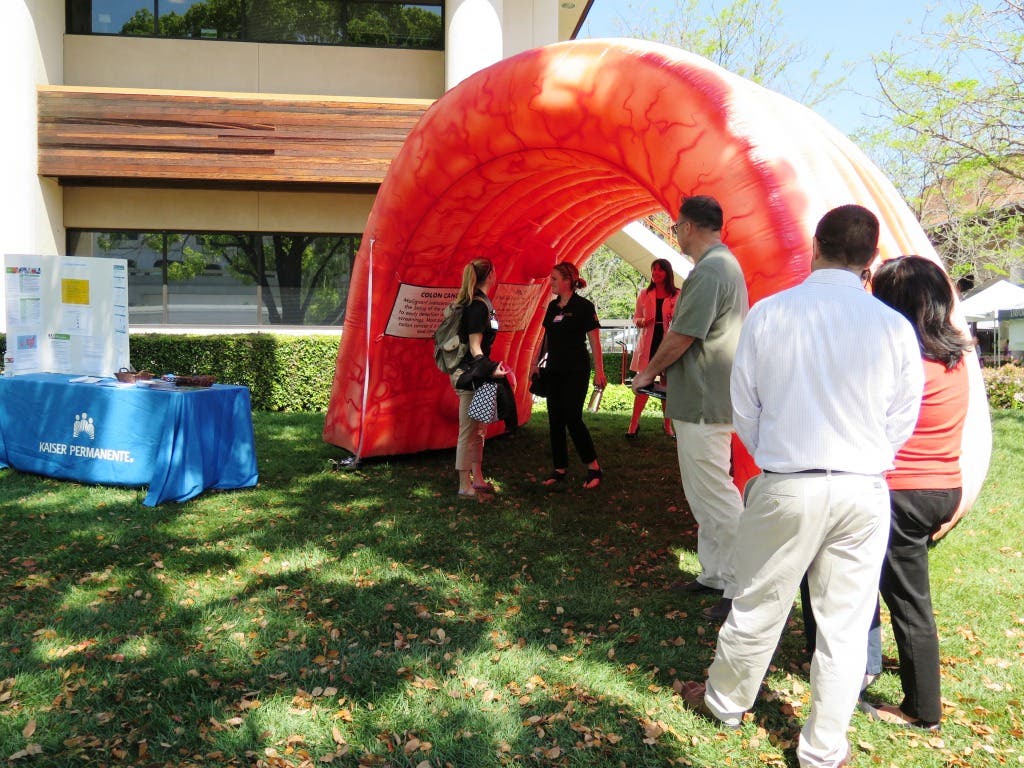
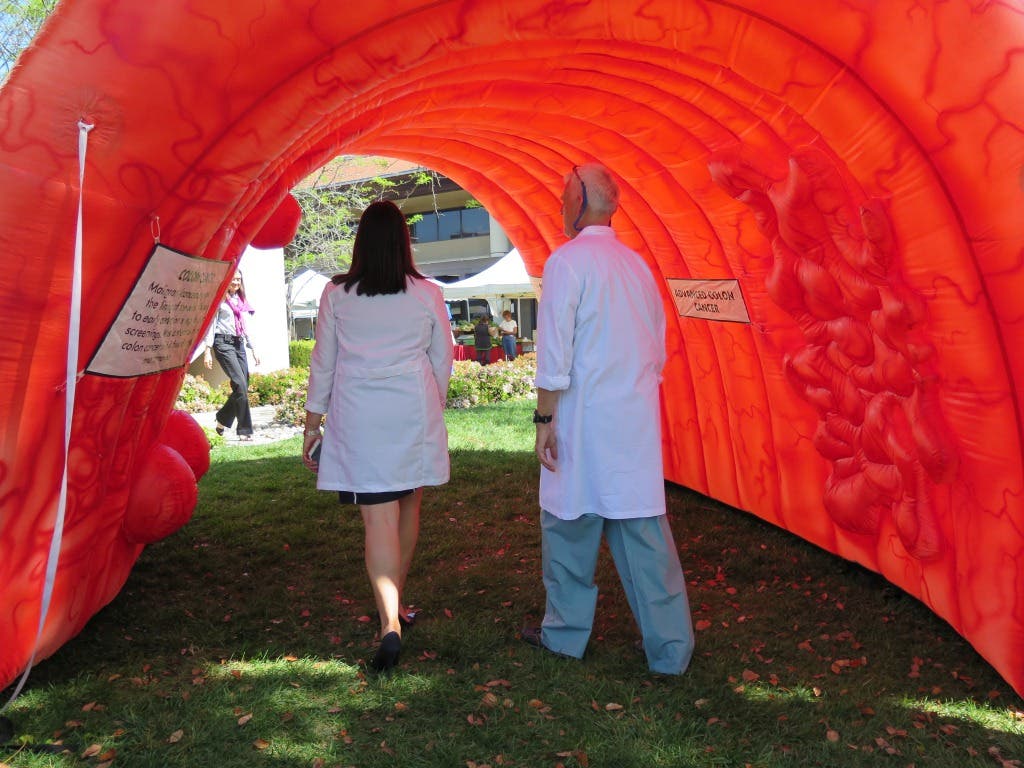
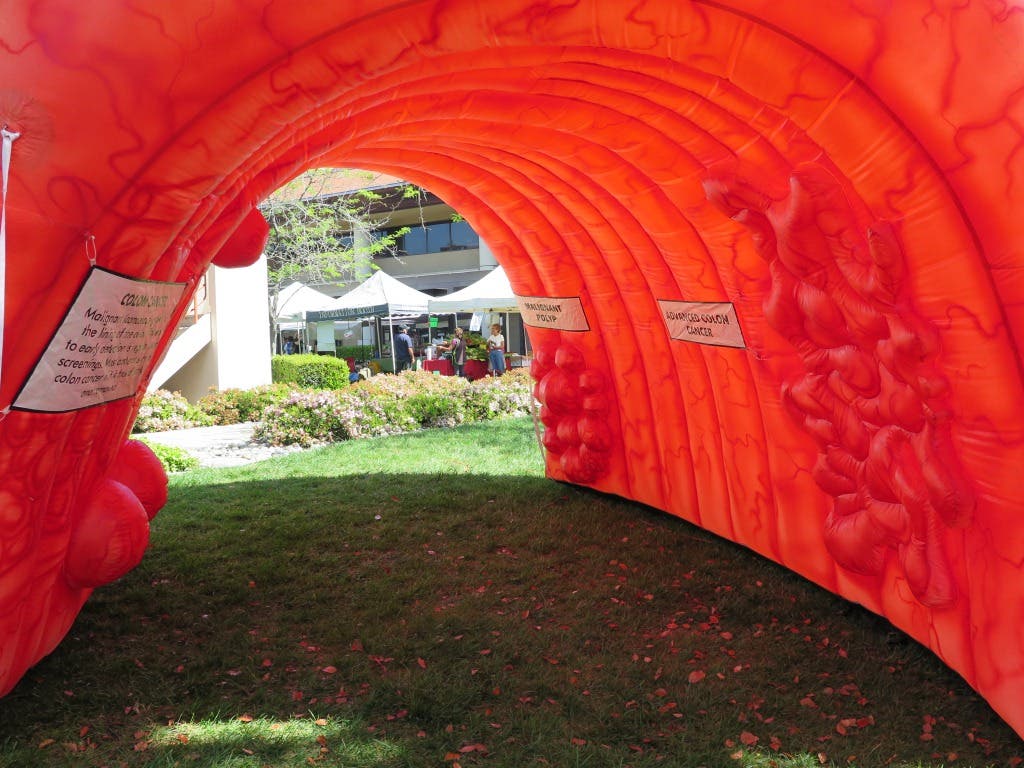
It looks like a giant reddish rubber cave, inflated on the lawn of the Kaiser Permanente San Jose (California) Medical Center, with adults and children walking through the 15-foot-long semi-cylinder, some smiling, some serious.
“We call it our “strollin’ colon,” says Traci Beebe, a nurse and manager of subspecialties at Kaiser Permanente San Jose. “It’s an experiential display for Colon Cancer Awareness Month.”
Beebe was among the nurses and doctors spending their lunch hour recently acting as docents for what is basically a textbook medical image, a vastly enlarged segment of the human colon, which takes walkers on a short trip from normal to cancerous in only as few steps. And hopefully, it starts conversations.
“People don’t talk about colon cancer like they talk about, say, heart disease,” says Beebe. “but walking through the inflatable, a lot of the visitors start talking about relatives, friends who died of colon cancer.”
“Colon cancer can be treated successfully if it’s detected early enough,” says Dr. Gurpreet Rihal, Chief of Gastroenterology at the Kaiser Permanente medical center. “The key is regular screening.”
Walking through the inverted U-shaped inflatable, visitors get to see the normal inside wall of the colon, and then notice a bulb-shaped structure called a polyp. If there’s any villain in colon cancer, it’s the polyp.
“Every colon cancer begins with a polyp,” says Dr. Rihal, “although not every polyp will develop into cancer.”
Strolling further through the tube, visitors get to see how a polyp develops into cancer over a period of time. And it’s that time that can make all the difference.
“We tell people walking through the inflatable that earlier detection of possible cancer leads to a higher survival rate,” says nurse manager Beebe.
The key, used at Kaiser Permanente and some other health organizations is a simple, non-invasive, do-it-yourself-at-home screening called a “FIT” test. FIT stands for foecal immunochemical test, which determines if there is blood in the stool. A positive test should call for a colonoscopy exam, and a possible polyp removal.
Dr. Rihal says “colonoscopy can reduce the risk of death from colorectal cancer through detection of tumors at an earlier, more treatable stage and through removal of precancerous adenomas.”
Kaiser Permanente physicians published a recent study on this
http://www.nejm.org/doi/full/10.1056/NEJMoa1309086 - ref3.
Back at the “strollin’ colon,” though as people walk through the inflatable, they start thinking seriously about screening and early detection, says Nurse Beebe. Hospital staff on duty there often hand out the FIT test packets. Roughly 80% of Kaiser Permanente members over the age of fifty have completed the screening test, which comes to their homes in the mail in small, discreet envelopes.
National statistics show that colon cancer is the nation’s number 2 killer: it’s estimated there’ll be more than 136,000 new cases of cancer this year. March may have been the “month” for colon cancer awareness, but the “strollin’ colon” will be making other appearances through the year.
Dr. Rihal and nurse-manager Beebe both suggest, regardless of the month, get screened now.