Politics & Government
CVSAN TO ENCOURAGE MORE RECYCLING & COMPOSTING WITH NEW "LESS THAN WEEKLY" STUDY
CVSan to start a 7-month Less Than Weekly Garbage Collection Pilot.
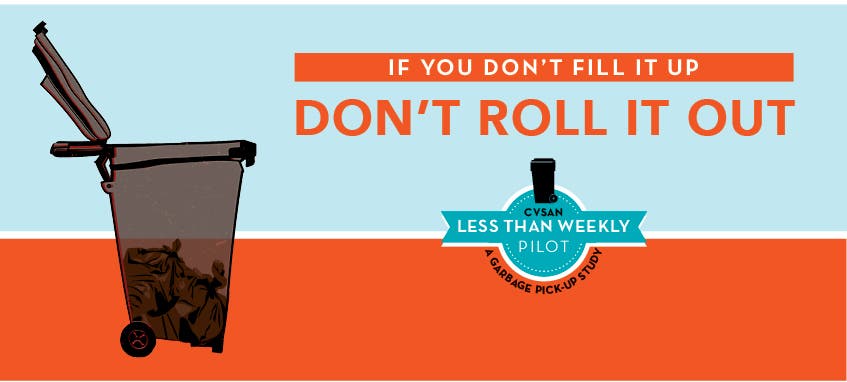
CASTRO VALLEY, CA - In a spirited move to reduce the amount of “good stuff” being sent to area landfills, Castro Valley Sanitary District (CVSan) will start piloting a voluntary 7-month “Less Than Weekly” Garbage Collection Pilot on select routes starting on June 7th. Residents in over 800 homes will be urged to set out their brown garbage carts less often – such as every other week, rather than weekly – in an effort to increase recycling and composting behavior and progress toward the District’s goal of Zero Waste to landfill by 2029. Particularly, residents will be encouraged to compost food scraps and food-soiled paper in the green organics cart every week.
“A recent study found that nearly half the contents of Castro Valley garbage carts could be recycled or composted,” said CVSan Solid Waste Supervisor Naomi Lue. “Recycling and composting these materials into the blue and green carts will allow residents to roll out their brown garbage cart less often,” she said.
Recyclables like bottles, cans, and paper take up valuable space in the landfill, if placed in the garbage. Discarded organics, including food scraps and food-soiled paper, decompose in the landfill and release methane gas, which traps heat in the atmosphere. Similar less than weekly garbage studies conducted in Portland, OR, Everett, WA and currently in Mountain View, CA show that less than weekly garbage pick-ups often increase recycling and composting activity.
Find out what's happening in Castro Valleyfor free with the latest updates from Patch.
CVSan’s Less Than Weekly Garbage Collection Pilot is an optional program for residents living on designated routes. The recycling, organics, and garbage trucks that operate under CVSan’s contract with Waste Management of Alameda County, Inc. will continue to service these routes every week. Residents will still have the option of putting their brown garbage carts out each week. Service levels and rates will remain unchanged during the pilot, but the results will help to analyze potential costs, savings, and participation estimates.
“This pilot is designed to determine if every other week garbage collection is feasible in Castro Valley, and if so, how that might affect future service rates,” said CVSan General Manager Roland Williams. “We are conducting this study so that we have that information leading into the next solid waste collection agreement, scheduled to be in place in 2019. Resident participation will greatly help us in this process.”
Find out what's happening in Castro Valleyfor free with the latest updates from Patch.
CVSan is providing many free tools and resources to support residents living on pilot routes who wish to participate in the study. These include a food scrap pail and compostable liners for kitchen use and green organics cart liners. Additionally, if residents who do not roll their garbage carts out discover that they have extra garbage the next week, they may place a free Extra Service Tag on a garbage bag (up to 30 gallons) and set it curbside by their carts for pick up.
CVSan is also offering an online space for residents to receive tips, provide feedback and request weekly email reminders about when to set out their garbage carts. More information can be found at cvsan.org/LessThanWeekly.
The success of CVSan’s Less Than Weekly Garbage Collection Pilot will be determined by audits that CVSan will conduct throughout the pilot period to measure the amount of recyclable and compostable material that is being disposed of in brown garbage carts along pilot routes. A significant reduction of “good stuff” found in these garbage carts, along with an increase in residents who hold back their brown carts from weekly set outs, will provide valuable information about whether less than weekly garbage collection will work for Castro Valley.
CVSan was the first Bay Area agency to pilot food scrap recycling in 2001 and is known as a regional leader in innovative solid waste management practices. The District is now on the forefront in testing less than weekly garbage collection in order to encourage recycling and composting behaviors. The agency received a $300,000 grant from StopWaste to design and execute the pilot.
+++
About CVSan: Castro Valley Sanitary District (CVSan) is a public agency organized under the Health and Safety Code of the State of California. As a California Special District, CVSan is responsible for the operation and maintenance of the sanitary sewer collection system within the unincorporated community of Castro Valley. The District is also in charge of the administration of a solid waste collection franchise and the implementation and administration of state and local mandated recycling programs, among other duties.
About StopWaste: StopWaste is a public agency responsible for reducing the waste stream in Alameda County. The agency helps local governments, businesses, schools, and residents reduce waste through source reduction and recycling, market development, technical assistance, and public education. StopWaste is jointly governed by three Boards: the Alameda County Waste Management Authority, the Alameda County Source Reduction and Recycling Board, and the Energy Council.