Community Corner
Promise To Freeze Utility Bills And Home Insurance Premiums Puts Becerra To The Test
California's governor-elect's electricity proposals face funding questions, legal hurdles, and scrutiny of utility profits and spending.


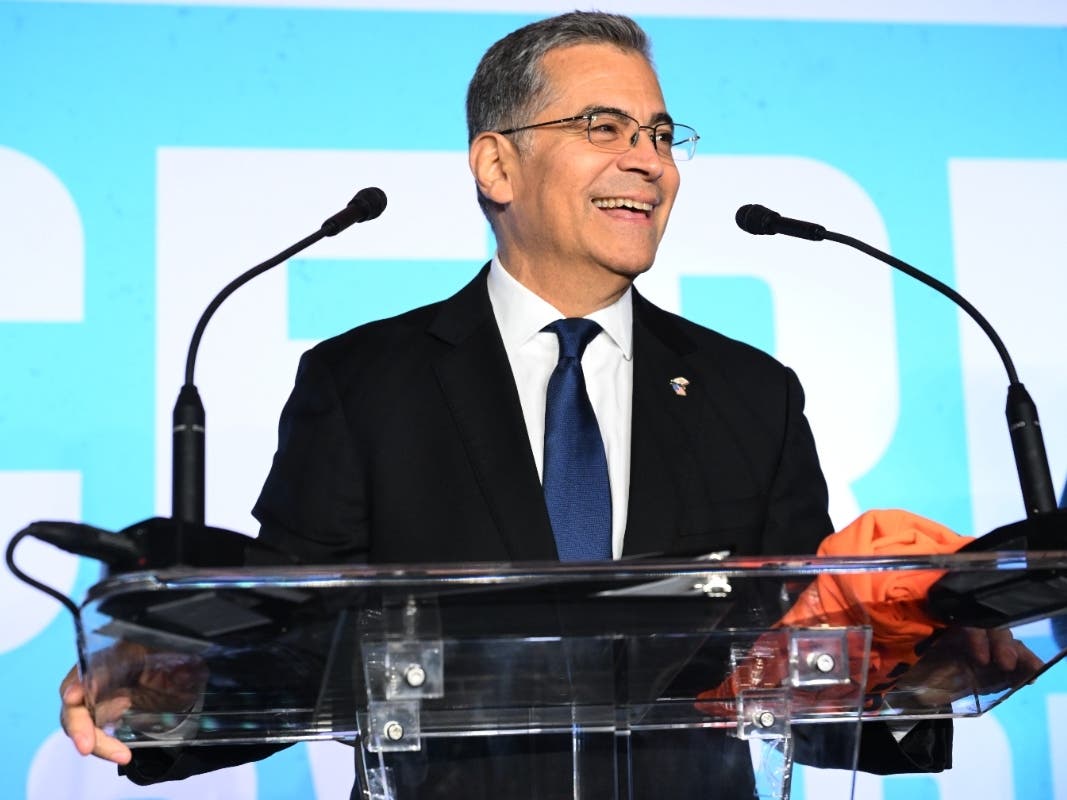
CALIFORNIA — Governor elect Xavier Becerra promised to freeze utility bills and offer some working families two hours of free electricity daily, and freeze home insurance premiums, but he has not explained how he would fund the free power, and PG&E’s spending against his primary rival could complicate his confrontation with utilities.
The proposal faces obstacles.
Becerra introduced his “Power Hour” proposal in August to encourage electricity use during afternoons, when plentiful solar generation lowers production costs.
Find out what's happening in Healdsburgfor free with the latest updates from Patch.
However, California's governor-elect has supplied neither a price tag nor a detailed funding plan.
Neither have Assembly Speaker Robert Rivas and Senate President pro Tempore Monique Limón committed to supporting the plan, ABC7 reported.
Find out what's happening in Healdsburgfor free with the latest updates from Patch.
Energy economist Severin Borenstein estimated that a typical household would be unlikely to save more than $200 annually.
Electricity bills also pay for infrastructure, wildfire expenses, and other costs that cheap afternoon generation does not eliminate.
Borenstein said substantial short-term relief would require shifting some expenses to other revenue sources, most likely the state budget.
Pursuit of profits
Campaign spokesperson Jonathan Underland told the Sacramento Bee that the team was still developing details.
State constitutional expert Chris Micheli said freezes would almost certainly require approval from utility regulators or incoming Insurance Commissioner Jane Kim.
Kim said she had not discussed the proposal with Becerra. Insurance industry representative Seren Taylor warned that a freeze would encourage insurers to leave California.
Consumer advocates argue that lasting savings require tighter control over utility spending and profits.
UC Berkeley energy researcher Travis Ritchie said Becerra’s Power Hour could lower bills and ease pressure on the grid by encouraging target customers to use California’s abundant afternoon solar power before demand peaks around sunset.
Shifting enough electricity use into those cheaper hours could reduce the need to continue the expensive build-out of infrastructure to meet peak demand.
But customers’ ability to shift consumption varies, Ritchie said, and much of their bill pays for fixed costs, including poles, wires and wildfire prevention, that free afternoon power would not eliminate.
“Where you get it from is one of the big questions in how the Power Hour is going to be designed,” Ritchie said. "The difference has to be collected."
Other customers, taxpayers, or utilities could cover the cost, Ritchie said. “But it’s a political choice."
He identified wildfire spending as California’s largest driver of electricity rate increases.
Regulators authorized PG&E, Southern California Edison, and SDG&E to collect $27 billion in wildfire-related costs through rates following catastrophic fires in 2017 and 2018, according to Ritchie. Those expenses now account for as much as 19% of an average residential bill, he said.
Ritchie urged officials to reduce investor returns on wildfire projects, enforce utility budgets, and eliminate most special tracking accounts that allow companies to seek reimbursement outside their regular rate proceedings.
By extension, David Pomerantz, executive director of the watchdog organization Energy and Policy Institute, said a freeze has to come with reforms, including lower profit margins, stronger regulators, and public financing.
The Energy and Policy Institute’s utility profit report found that 110 investor-owned electric utilities collected approximately $186 billion in profits from 2021 through 2024. Preliminary 2025 results from 79 utilities showed an average profit margin of 14.6%. Southern California Edison reported a 26.11% margin in that dataset.
He argued that utilities have favored investments that maximize returns over projects that better serve customers.
An Energy and Policy Institute report described Southern utilities’ efforts to obstruct regional transmission that could bring cheaper renewable power into their territories.
Voter research underscores the pressure to act. Industry groups reported that 84% of voters worried about electricity costs. Respondents blamed rising demand and utilities’ pursuit of profits.
A Consumer Reports survey of 2,000 people documented the household strain behind those concerns.
About one in five said they had reduced grocery spending, switched to cheaper food, or considered those steps to pay electricity bills. About one in four had reduced heating or cooling to uncomfortable levels.
They most often identified utility profits as a factor affecting electricity costs.
Even more said they had little or no trust in state utility regulators to protect their interests. Half said utilities should earn no profit, or less profit than usual, on infrastructure investments that prepare for or recover from natural disasters.
Those findings suggest why Becerra and other candidates made utility bills a campaign issue: households faced financial pressure, and voters distrusted regulators and questioned corporate profits.
Payback
Environmental advocacy groups also saw an electoral opening. In a Sept. 11 memo, Climate Power, the League of Conservation Voters, and the NRDC Action Fund cited polling showing that candidates who combined affordability proposals with support for American-made wind and solar power outperformed candidates who omitted clean energy.
The groups reported that the advantage extended into Republican-leaning districts and urged Democrats to pair criticism of Republicans with specific plans to lower bills.
Becerra takes office in January with promises to lower those costs. His administration still must specify who qualifies for free electricity, who finances it, and how a freeze would stop bills from climbing.
Pomerantz also warned that utilities could use political spending, charitable donations, and lobbyists to blunt newly elected governors’ accountability efforts — despite apparently helping fund Becerra's campaign.
PG&E directed more than $13 million to an independent committee opposing Democrat Tom Steyer, indirectly benefiting Becerra, according to The Sacramento Bee.
The political money extends beyond PG&E’s anti-Steyer contribution.
The San Francisco Standard reported that an anti-Steyer committee received nearly $12 million from a business committee whose donors included PG&E, Sempra Energy, Edison, and Chevron.
Those four companies had collectively supplied roughly $7 million to the business committee. Those figures describe money moving through committees, rather than separate amounts that can simply be added together as donations to Becerra.
Becerra’s earlier campaigns also received utility money. An Energy and Policy Institute review counted $28,500 from PG&E, $70,500 from Southern California Edison, and $69,800 from Sempra/SDG&E across his congressional and attorney general campaigns.
Other utilities and utility trade associations contributed $38,000, bringing those contributions to $206,800. Utility-affiliated labor groups supplied another $42,600.
Becerra was not the only candidate to benefit from the largess. Utility companies spent heavily on candidates on both sides of the aisle leading up to Nov. 3.
An Energy and Policy Institute analysis found that corporate utilities spent record amounts in 2026 on political organizations, including the Republican Governors Association and Democratic Governors Association.
Consumer advocates are watching how that money translates into policy in Sacramento and if proposals like Becerra's "Power Hour" can deliver savings for Californians.
Lasting savings require tighter control over utility spending and profits, analysts argue.
And now that the post-election politics settle in, utilities could still promote rate freezes that weaken oversight, attack tougher regulators, or withhold infrastructure investments to pressure officials.
California utilities have already deferred investments while seeking wildfire liability protections. Those tactics, Pomerantz argued, could push governors to sideline utility reform.
Get more local news delivered straight to your inbox. Sign up for free Patch newsletters and alerts.