Community Corner
Bees Adapting Easily to Farm Life
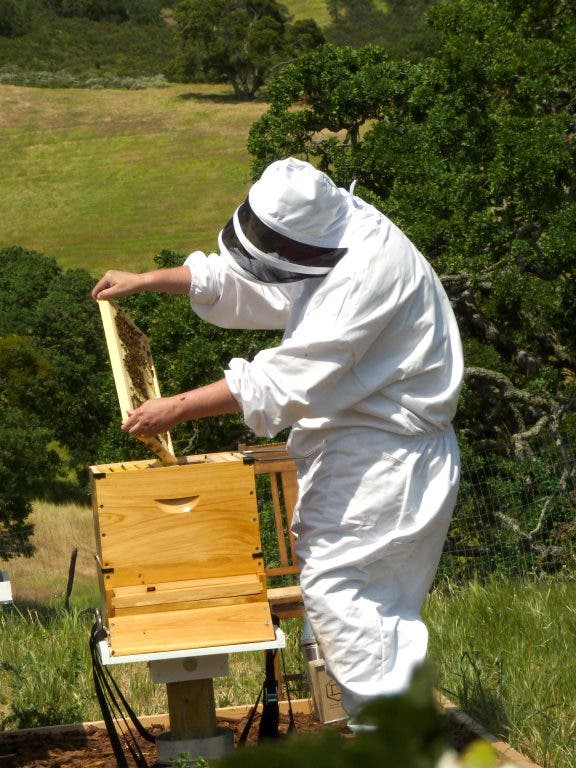
Jorie enjoys learning the habits of the new garden residents.


For a city girl like me, there are always new forms of life to experience on the farm. I am fortunate to be working with people who bring their expertise about the different creatures and plants.
Did I mention the? Soon we began noticing a new sound in the garden during the warm part of the day – buzzing. We often turned to watch the bees hovering around the hive entrances, their legs thick with pollen.
Gerken told me that, at first, each queen was isolated from the rest of the colony in a tiny cage. The workers had to eat through a tunnel of sweet substance in order to release their queen. This process gives the hive time to get acquainted with her. If she were just placed in with the other bees, there is a strong chance that she would be killed.
Find out what's happening in Concordfor free with the latest updates from Patch.
Gerken visits the hives frequently. It is a real advantage that he lives so close to the farm. He wears a white bee suit so that he can investigate their progress closely. He said he had seen one bee coming back to the hive literally covered in pollen. They like the purple wooly vetch growing on the hillside behind their hives. Their taste for different flowers is reflected in the various colors of the stored pollen.
We were at first concerned that the presence of buckeye on the property would be harmful to the bees. The pollen of the buckeye and the oleander are poisonous to bees. However, it seems that bees sense that other flowers are healthier. As a rule, it is only when dry weather has produced a smaller selection of flowers that bees visit the poisonous plants. Nevertheless, Gerken put a pollen pattie in the hives this weekend as a precaution, ensuring that there be plenty of safe pollen available during the buckeye’s flowering season.
Find out what's happening in Concordfor free with the latest updates from Patch.
All went well with the emergence of the queen in each hive, and the life cycle of laying eggs and hatching young bees has begun in earnest. The workers build up the little walls of the honeycomb from a base of wax that Gerken applied. Then each space in the honeycomb becomes filled with pollen or eggs and young bees.
Since the bees already have filled the first box of each hive, a second box has been added. Gerken tells me that the eggs and young bees are within the center of the hive and the honey is being produced in the outer part of the comb – yum!