Schools
Army Ants: Everything You Need To Know At Upcoming UC Davis Seminar
Interested? The session is Wednesday.
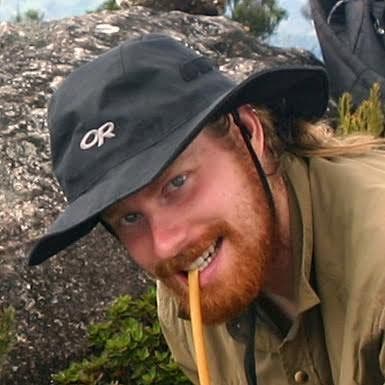
DAVIS, CA –
By Kathy Keatley Garvey:
Marek Borowiec, who received his doctorate in entomology in June from UC Davis, will speak on "Genomic Data and the Tree of Life: Known Knowns, Known Unknowns, and Unknown Unknowns of Army Ant Evolution" from 4:10 to 5 p.m. on Wednesday, Oct. 26 in 122 Briggs.
Find out what's happening in Davisfor free with the latest updates from Patch.
The seminar is sponsored by the UC Davis Department of Entomology and Nematology.
This is his exit seminar. Borowiec received his doctorate in entomology in June, studying with major professor Phil Ward. He is now a postdoc in the lab of evolutionary biologist/ant specialist Christian Rabeling of Rochester, N.Y. The lab will be moving to Tempe, Ariz. in January.
Find out what's happening in Davisfor free with the latest updates from Patch.
"Ants are the world's most successful eusocial organisms," Borowiec says. "Long history, high species diversity, and extreme variety of life histories make them an excellent group in which many evolutionary questions can be addressed."
His research interests include phylogeny, taxonomy, biogeography, and natural history of ants. Before enrolling at UC Davis, Borowiec received his master's degree in 2009 from the Department of Biodiversity and Evolutionary Taxonomy, University of Wroclaw, Poland.
"My focus has been primarily on ant diversity and evolution and in my research I combine field work, morphology, molecular phylogenetics, and comparative methods," Borowiec says. "I am also interested in computing and phylogeny estimation from next-generation sequencing data."
His dissertation research at UC Davis focused on building a taxonomic and phylogenetic framework for the research on army ant evolution.
"Although army ants include very charismatic species, they belong to a larger group, the subfamily Dorylinae," he noted.
In addition to the army ants, dorylines comprise many cryptic ants whose biology and even taxonomy have been neglected. Partly as a result of this, even phylogenetic relationships of the army ants are not well-understood.
The first step to advancing evolutionary research in the group was thus to examine the morphological diversity within this lineage. This resulted in a generic revision of the subfamily, published open-access in ZooKeys.
Expertise gained during this work allowed me to design robust taxon sampling for a phylogeny of the dorylines based on next-generation sequencing data (ultraconserved elements or UCEs), currently in preparation."