Schools
'Astonishing Ant Man' To Speak At UC Davis
If you are fascinated with insects, this talk is for you!


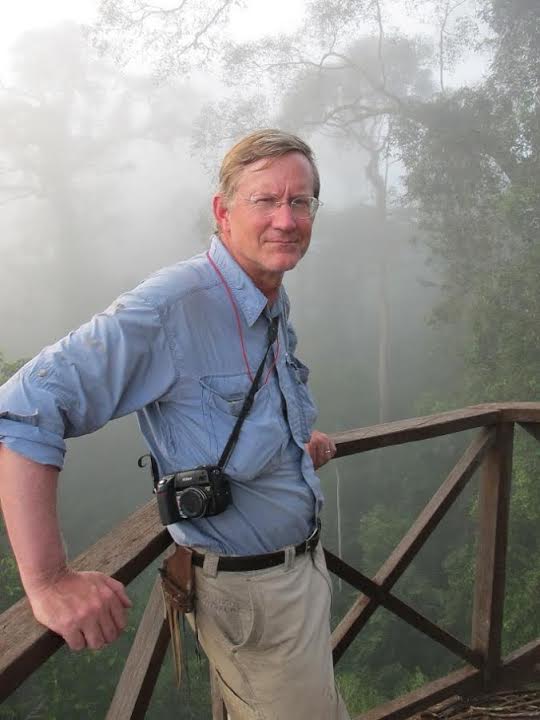
By Kathy Keatley Garvey
A University of Utah professor known by his students as the “Astonishing Ant Man” will speak on Wednesday, May 27at the UC Davis Department of Entomology and Nematology seminar.
John “Jack” Longino, professor and associate chair of biology at the University of Utah, Salt Lake City, and the adjunct curator of entomology, Utah Museum of Natural History, University of Utah, will speak on “Project ADMAC or Ant Diversity of the Mesoamerican Corridor” from 12:10 to 1 p.m. in 122 Briggs Hall.
Find out what's happening in Davisfor free with the latest updates from Patch.
Ant specialist Phil Ward, professor of entomology, UC Davis Department of Entomology and Nematology, will introduce and host him.
“The MesoAmerican corridor is a zone of complex tectonic history, episodic biotic interchange between large continents, and frequent mountain-building,” Longino said. “Ants blanket this landscape, forming a tapestry of fine-scale habitat specialization and geographic replacement. Many taxonomists have contributed to the description of species in the region and this fundamental ‘biodiversity mapping’ continues apace. Project ADMAC (Ant Diversity of the MesoAmerican Corridor) combines morphological analysis with large-scale DNA sequencing (targeted enrichment of Ultra-Conserved Elements) to reveal the evolutionary history and geographic structure of ant species in MesoAmerica.
Find out what's happening in Davisfor free with the latest updates from Patch.
“Ants show very strong patterns of elevational specialization and geographic turnover, and Project ADMAC will address questions of (1) how and when montane species evolve, (2) the effects of differing mountain ages on communities, (3) the impact of lowland barriers on montane ant dispersal, and (4) whether ants experienced a major biotic interchange on the closure of the Panamanian isthmus.”
Longino addressed the Entomological Society of America meeting last November on the topic. He told of plans
1. to build a detailed biodiversity map for an ecologically dominant group of insects (ants) in a biogeographically important region of the world (the MesoAmerican corridor);
2. to develop and apply the latest techniques in genomics and next-generation DNA sequencing to biodiversity science; and
3. to use the results to understand how both geological history and contemporary ecological factors influence the distribution of species on tropical mountains. The project builds on a previous study that sampled insects from southern Mexico to Nicaragua.
Longino’s fascination with insects began in his childhood. His research statement:
“We share the planet with millions of species, and many of them are insects. A childhood fascination with insects led me to an interest in ecology and the desire to explain patterns of diversity, and I settled on ants as an ecologically dominant group of insects worthy of study. As it became clear that I was living during a time of enormous biotic change caused by human activities, I developed a strong conviction that it was important not only to understand patterns of diversity but to document it in detail for this time in history. I divide my time between two research fields: taxonomy and ecology. On the taxonomy side, I have coordinated large-scale inventories of Neotropical insect biodiversity, I discover and describe new species of ants, and I further refine our understanding of species ranges and morphological variability. I make use of advanced imaging technology, specimen-level databases, and Web-dissemination to make biodiversity data available to the widest audiences. On the ecology side, I use quantitative inventory techniques that allow analysis of diversity patterns. I am interested in how species are distributed on tropical mountainsides, what ecological factors explain the elevational range limits of species, and how species might respond to climate change.”
Longino was interviewed in August of 2013 by NPR on his research. He told NPR he started out collecting stamps in his childhood, but that bored him. He decided to “get small.”
“If you’re shopping for a home entertainment system,” he says, “you can’t do better than a good dissecting microscope,” he said. At the time of the NPR interview, Longino had just published two papers describing 33 new species of ants, bringing his personal “new species” total to 131, NPR reported. In the article, Longino described himself as “average” among entomologists, pointing out that some entomologists have described thousands of new species.
Get more local news delivered straight to your inbox. Sign up for free Patch newsletters and alerts.