
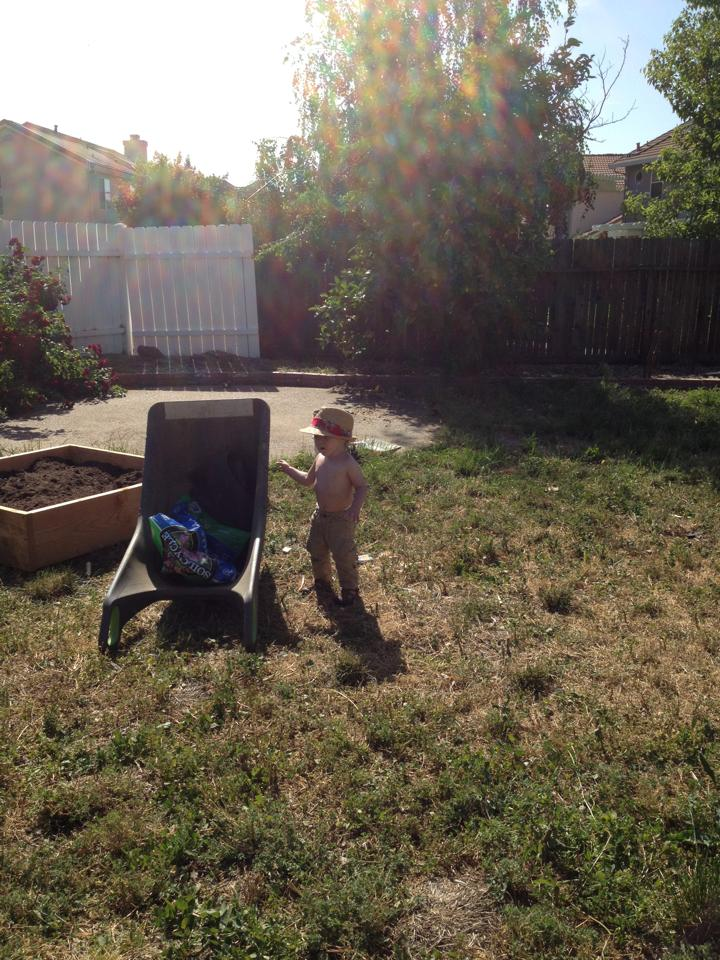


This year, I doubled my gardening space. I really had to, after fall last year. Our tomato plants were still producing into October, and the onions, lavender, and herbs had become unruly teenagers, stretching out of their boxes and reaching across the yard for more real estate.
Thankfully, we are blessed with a large yard. The other reason I wanted to expand the gardening space was for my son. As I’ve mentioned before, I was a picky kid. I hoped that helping in the garden would encourage our baby to be outside, play in the dirt, and enjoy the fruits of his labor.
Find out what's happening in Davisfor free with the latest updates from Patch.
We like raised beds at our house, because the clay soil in Sacramento is so dense. Digging holes certainly works, but I hate digging- and I love the look of raised beds with a gravel path. (I blame my Dad’s decorating magazines!)
Find out what's happening in Davisfor free with the latest updates from Patch.
To build raised beds of your own, there are a few key questions to answer.
1) What size can they be?
Measure where in your yard they will go. Mark it off with construction chalk, string, or spray paint. Make sure that you can easily reach the center of the planter.
2) What will you plant? There are lots of websites (and pins!) dedicated to companion planting. Do you want a three sisters garden? Would you rather have nice neat rows of single plants? Do you want a shifting jumble where you need to forage for everything, and it looks natural and lush? No answer is wrong.
3) Check your materials. We used 12x2 in boards for our planters. Ours are pine, which may not last as long as other woods like cedar or redwood- but we don’t plan on living in this house for 20 years. Other options are cinder blocks, stacked stones, or bricks.
(Beware of using pallets, as some are treated with harmful chemicals that you do not want cradling your food source!)
4) Soil quality. This website:
(http://organicgardening.about.com/od/soil/a/easysoiltests.htm)
has four tests to help you determine the quality, percolation, Ph, and biodiversity of your soil. If you plan on trying to utilize your own soil, these tests make everything so easy. If you're just going to use potting soil...these tests can still help you decide wether or not to mix in some of your own soil to aid in creating the perfect mixture.
5) To compost or not to compost? The question of composting is one that requires a whole other post to answer properly- but with gardening, you will have plant clippings, inedible fruit and veggies (thank-you birds!) and other reusable materials. If you don’t compost, make sure to add those to your yard waste bin, as many municipals do compost clippings now- and even off it for free to residents. (Beware of taking the compost for your edible garden, again- some people get roundup happy and that can compromise not only your soil health, but your entire yield.
Post pictures of your raised beds, and let me know how it works for you!
Like this? Please visit me on:
Facebook (https://www.facebook.com/pages/Hope-Chest-Home/167636666583025)