Community Corner
Contingent from International Dyslexia Conference Visits Del Mar School
Contingent from International Dyslexia Conference Visits Del Mar School
Contingent from International Dyslexia Conference Visits Del Mar School
A contingent of parents, educators and administrators in town for the International Dyslexia Association’s Annual Reading, Literacy & Learning Conference visited The Winston School this week to learn how the school handles reading disabilities. The private Del Mar-based school specializes in teaching solutions that address all kinds of learning differences at both the elementary and high school level.
The delegation of about 60 members toured the 150-student facility looking for ideas they could incorporate back in their local schools. “This particular field of teaching is changing rapidly, thanks to neuroscience and technology, says Julia Neff, president of the San Diego branch of IDA. “Technology alone has opened up so many other ways to learn.”
Find out what's happening in Del Mar-Carmel Valleyfor free with the latest updates from Patch.
The Winston School uses a multi sensory approach to Dyslexia, which is neurological and often genetic and can cause problems with reading, writing, spelling and vocabulary growth.
“Dyslexia is a learning difference that can isolate a child, especially once they start to fall behind in school work. We’ve learned that when we support them in a social setting and give them a chance to develop their innate gifts, they get past their challenges much faster,” says Amy Spitler, admissions director at Winston who also serves on the board of the San Diego branch of IDA.
Find out what's happening in Del Mar-Carmel Valleyfor free with the latest updates from Patch.
Jan Robards, a home school curriculum coordinator from Marion, Iowa, who participated in the tour, says the stigma associated with the disorder is a big hurdle for parents to get past. She marveled at the openness with which she observed that Winston teachers and students deal with Dyslexia. Without help, kids develop self-image issues, she says.
Dyslexia is a lifelong problem that occurs among people of all economic and ethnic backgrounds. According to the National Institute of Child and Human Development as many as 15 percent of Americans have major troubles with reading.
“Winston was founded to help students who were struggling even though they were bright and creative. To understand dyslexia is to understand real abilities and not just disabilities,” says Headmaster Mike Peterson.
“Hope is a huge piece of this program – and that’s the real success story here,” observed Robards as she toured the school.
Warning Signs of Dyslexia in School-Age Children
If you or someone you know displays these signs, it doesn’t necessarily mean you have a learning disability. But if troubles continue over time, consider testing for dyslexia.
· Mastering the rules of spelling
· Remembering facts and numbers
· Handwriting or with gripping a pencil
· Learning and understanding new skills
· Relying on memorization
· Reading and spelling, or moving letters around
· Following a sequence of directions
· Trouble with word problems in math
Source: National Center for Learning Disabilities
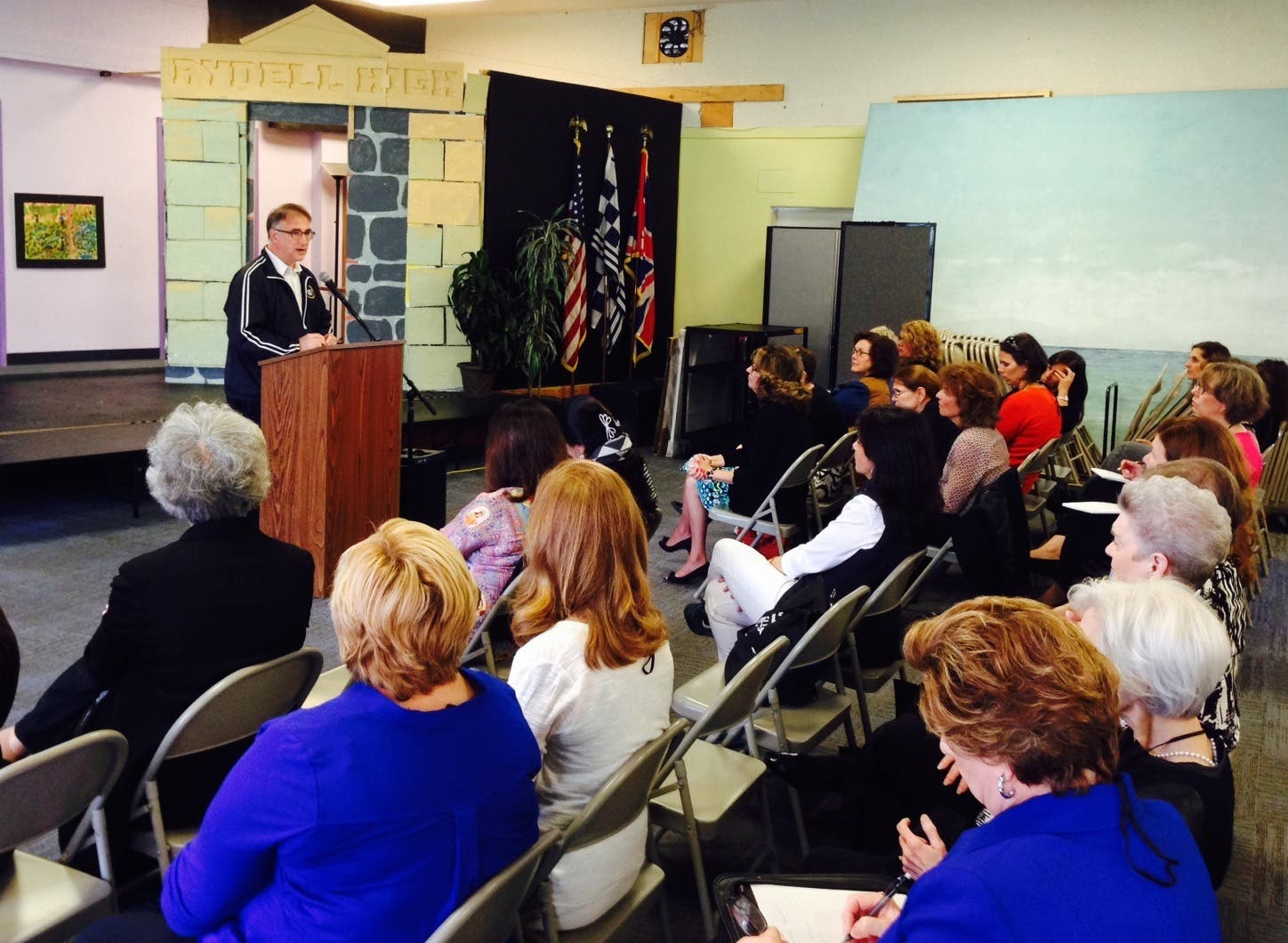
Caption: Winston School Headmaster Mike Petersen welcomes a contingent from the International Dyslexia Association’s annual conference meeting in San Diego this week. The group visited the school to observe how teachers address Dyslexia in the classroom.