Arts & Entertainment
American Civil War comes to life in Dublin
Author and historian Nick K. Adams arrived in Dublin to share his personal family connection to the American Civil War.


A fortuitous series of events brought together a piece of history and an enthusiastic historian and enabled the telling of a sad but heroic tale of one man’s decision to leave his family and answer President Lincoln’s call for reinforcements for the Union’s army.
In her introduction to the presentation by Mr Adams, librarian Diane de Lara thanked the Friends of the Dublin Library for providing the funding that allowed them the privilege of hosting such a renowned author. The event was part of the “First Thursdays” program that is held at Dublin library for adults on the first Thursday of the month and is free and open to the public.
Adams’s great-great-Grandfather, David Brainard Griffin, was a corporal in the Minnesota Regiment of Volunteers in 1861. He wrote one letter a week to his family on the Minnesota prairie over a period of 2 years during his enlistment. Through 100 of these letters the realities of life in the army were revealed in a poignant and enlightening manner.
Find out what's happening in Dublinfor free with the latest updates from Patch.
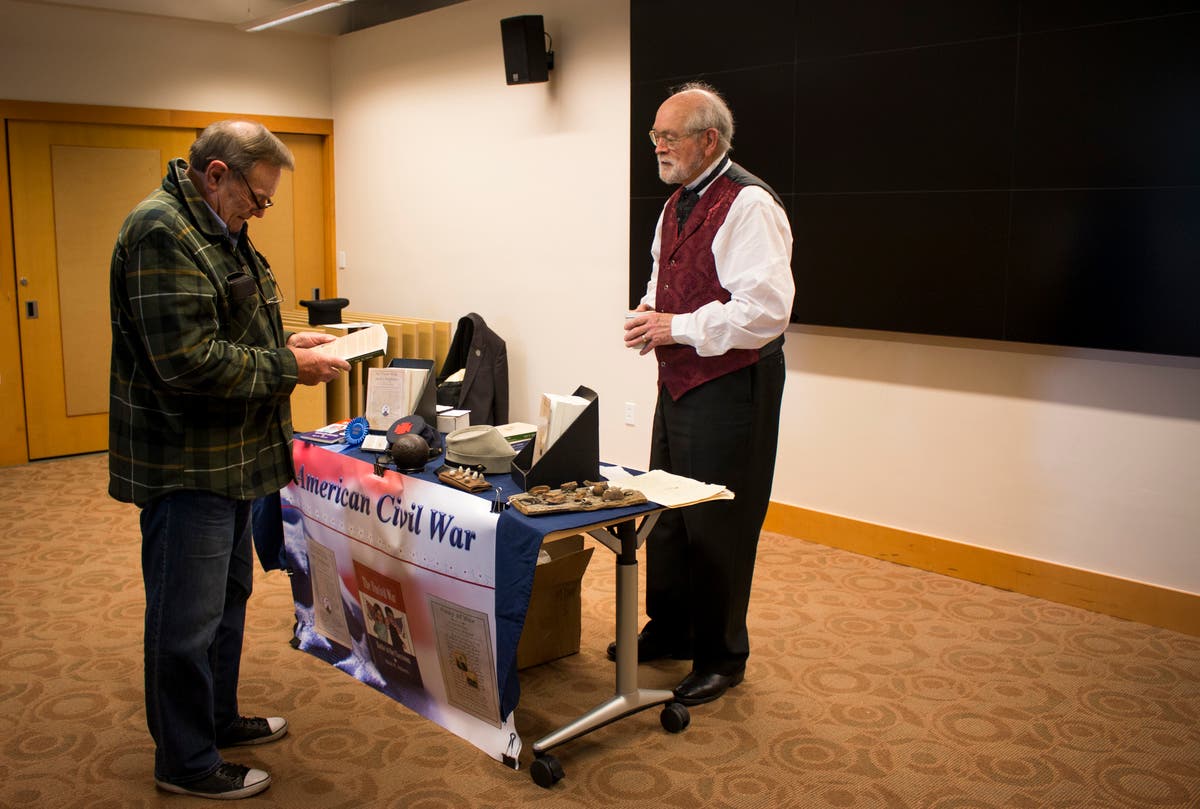
This batch of personal correspondence was brought to vivid life by Adams, dressed in period wear and portraying the character of Governor Alexander Ramsey instrumental in sending his distant grandfather into the struggle to preserve the Union. He read excerpts from the letters and provided an historical backdrop of those times to add context to the emotional struggles of a family wrenched apart by war and a patriotic man driven to fight for the values he held dear.
The reading transported those present to a time where letter writing or ‘talking on a piece of paper’ as described in one letter, was the sole means of communicating from the frontlines with family back home. This was a time long before mobile phones and video calls where the faces of loved ones were etched into memory and there was no means to hear their voices when hearts were filled with longing. “Do not want for anything as long as you can get along without it” was the advice that David wrote home to his wife Philinda Minerva and their three children Alice Jane 7, Ida May 5 and Edgar Lincoln, 9 months.
Find out what's happening in Dublinfor free with the latest updates from Patch.
Adams grew up in Los Angeles County and now resides in Tacoma, Washington, having retired from a career in education at Discovery Elementary. As a 4th grade teacher he shared the letters with his students and introduced a 3-month long program of various activities allowing students to explore life in the 1860s. Students got to draw straws to select characters and then through role play experienced the struggles and the joys of the times.
His own fascination with the American Civil War began when he was in elementary school and learned from his mother that his own great-great-grandfather had sacrificed his life in a pivotal period of American history.
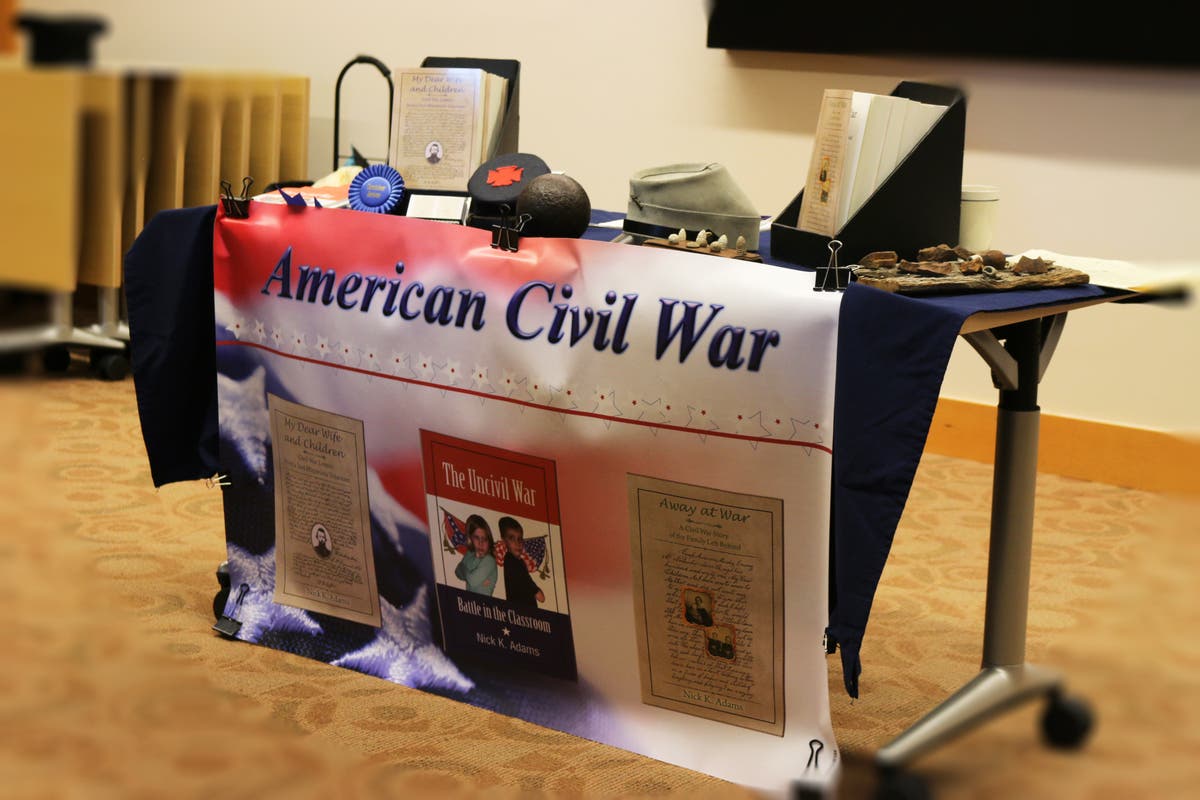
Since the letters were handed to Adams over 40 years ago an incredible journey has unfolded resulting in the publication of three books with an historically accurate recounting of events both through the eyes of a soldier but also through those of his wife who was left to care for the homestead with her young family. The books are 1. “The Uncivil War: Battle in the Classroom,” 2. “My Dear Wife and Children: Civil War Letters from a 2nd Minnesota Volunteer” and 3 his latest work, “Away at War: A Civil War Story of the family left behind.” More about the three books, including sample chapters, may be seen at: www.Civil-War-Letters.com.
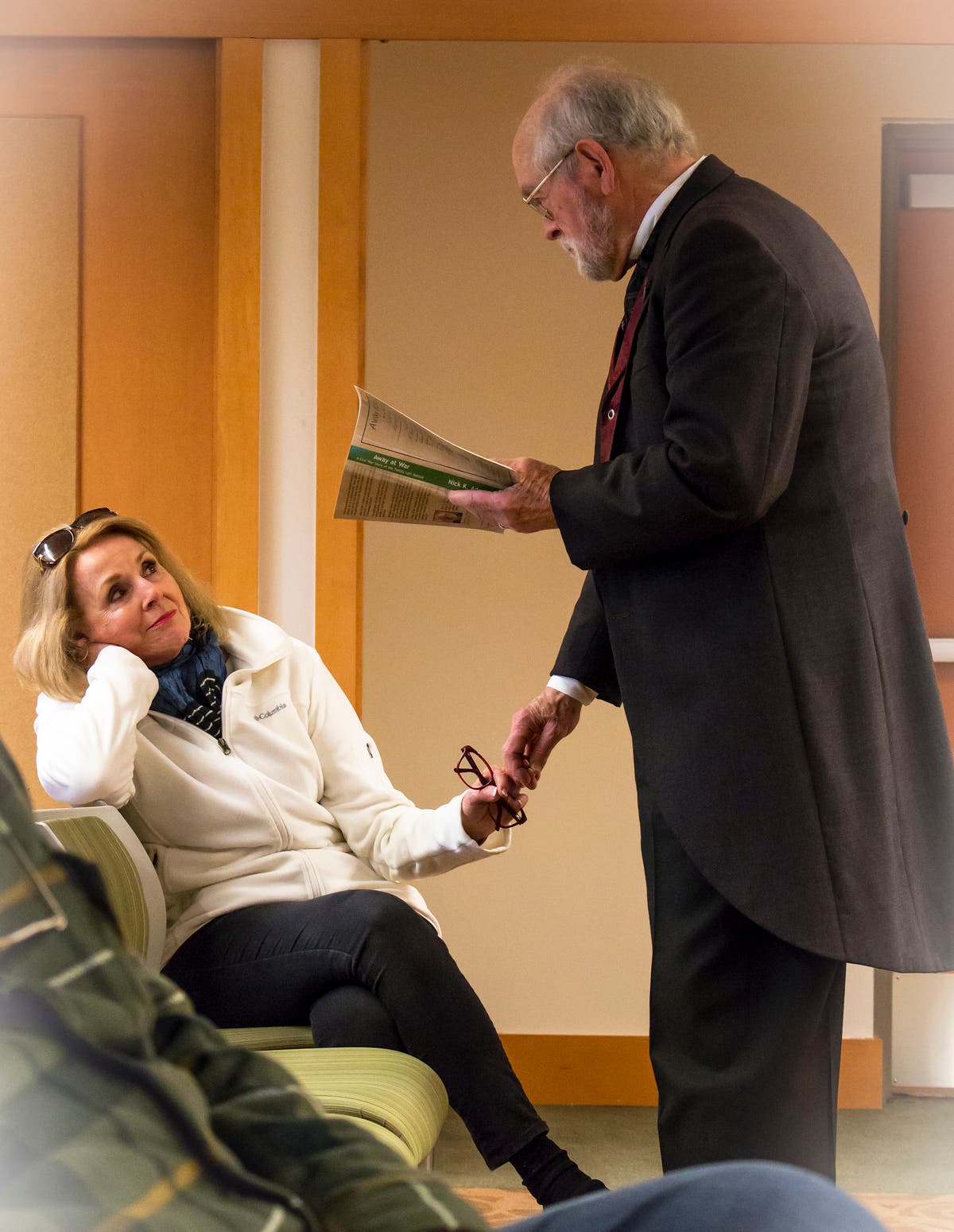
Adams’s wife, Carolyn, accompanied him and jokingly shared that she was the pack horse helping him to move the props for his presentation. Carolyn illustrated the books and created the eye-catching cover art. During his presentation while reading a particularly sentimental letter, Adams endearingly held her hand which was a strong visual reminder of the bonds of love and a stark contrast to the outcome for his great-great-grandparents who never got to see each other again.
The original letters have sadly been lost but thankfully Adams’s mother had been permitted to make a single copy and those copied letters are now being preserved by the Minnesota Historical Society. The letters sent in return from Corporal Griffin’s family were burned as there was no place to carry them on the battlefield and only the most recent was kept on his person. The letters his wife kept were clearly treasured memories of the man she loved and they were passed on through several generations providing us with a unique perspective of Civil War history.
Adams took two years transcribing the letters in order to publish them. He explains that he always read Griffin's last letter to his students before recess, then Captain Loomis's letter after recess by remarking "Oh, I got one more letter!" This letter announces the death of Corporal David Brainard Griffin at the Battle of Chickamauga in Georgia and since his students became so engrossed in the tale, they often shed tears on hearing that he was not able to return to his family.
Time may have marched on but the questions raised in the hearts and minds of the enlisted when they are apart from their families are just as real and heart-wrenching. Today the advances in modern communications technology make it difficult to understand what families experienced more than 150 years ago. The articulate and detailed descriptions provided by the letters give us a first-hand point of view of one of thousands who lost their lives each leaving behind a family to forge ahead without them.
“The reality of war” said Adams “is that not everyone comes back.”