Neighbor News
Take A Step Back in Time at Morgan Territory
Want to get away from it all? Pack a lunch, put on your hiking boots, grab a trail map and explore Morgan Territory!
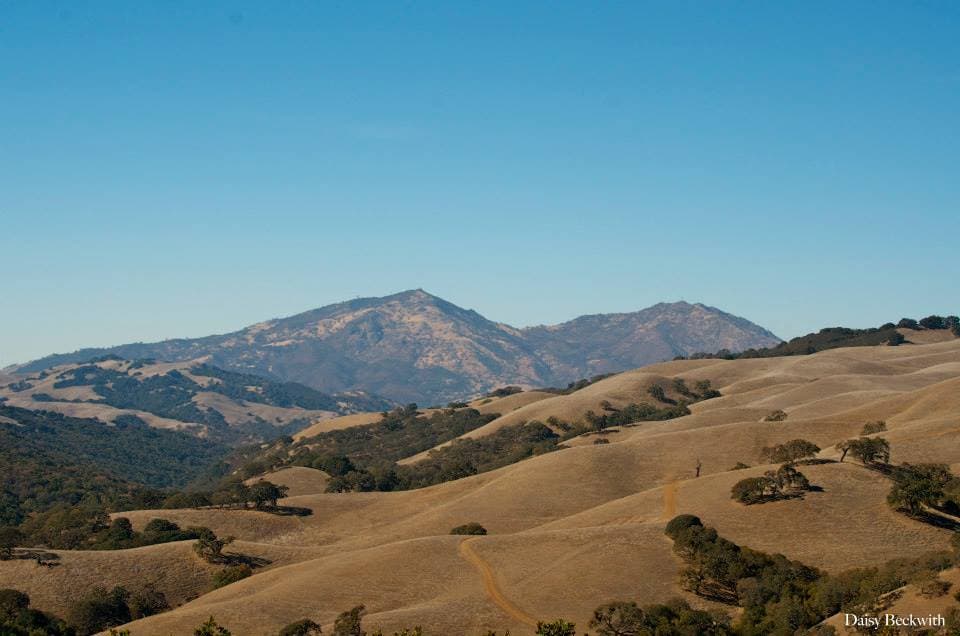
Two thousand feet above Livermore, on the morning (or eastern) side of Mount Diablo, is another crown jewel of the East Bay Regional Parks system, the Morgan Territory Regional Preserve. The area is named for Jeremiah Morgan who established a homestead here in 1856. He chose the area “because the grizzly bear hunting was so good”. The grizzlies are long gone, but when you see it it’s easy to understand why Jeremiah, the grizzlies, and many others thrived here and called it home.
The park is located only 12 miles off I580, but Morgan Territory feels like it is sitting on top of the world. The road to the park is an adventure in and of itself; single lane at times with scenic overlooks at every curve. Wild turkeys and deer often greet visitors on the drive in along the top of the ridge. Pulling into the parking lot feels like you’ve stepped back in time. Among other things, Morgan Territory is a vestige to the area’s ranching past. A living museum of sorts. Free ranging cattle roam the hills. Ranching equipment and cattle corrals greet you, and the scene seems right out of a Western movie. You can almost imagine a cowboy vaquero riding the golden hills on horseback rounding up cattle. Golden eagles and turkey vultures circle overhead. Hundreds of ground squirrels are scurrying about gathering nuts trying to escape swooping talons: real or perceived. The sound of the wind blowing and the birds chirping is almost hypnotic. The park is huge with adventures at every turn, but most of the amazing views require a little exploration.
An elaborate trail system awaits radiating out from these park headquarters. The Volvon, Blue Oak and Miwok trails extend along the Eastern edge of the park offering up scenic overlooks of the Los Vaqueros Reservoir making it well worth the trip. Views of Mount Diablo (or Tuyshtak as the local Native Americans called it) are equally impressive and majestic. If you get drawn in and want to see more, grab a trail map and explore the side trails that lead to the reservoir itself and the adjacent Round Valley Regional Preserve. If your legs support your desire to see beautiful things, the view from the junction of the Volvon Loop and Valley View trails on the eastern side of Bob Walker Ridge is a must - overlooking the San Joaquin River delta with the hills below covered with thousands of windmills. If you aren’t really a “hiker”, just bring a lunch, water and a camera – your camera will pull you.
Find out what's happening in Dublinfor free with the latest updates from Patch.
Another “must see” awaits at the bottom of the Coyote trail. From the parking lot, the Coyote trail descends down a fairly steep slope to an awe inspiring valley with the headwaters of Marsh Creek on your left, a high rocky ridge on the right and majestic ancient oaks all around. On the hillsides around the valley, ghostly carcasses of ancient oaks remain; their denuded trunks and limbs riddled with holes and stuffed with thousands of acorns - the handiwork of the acorn woodpeckers busy storing their food for the winter. The abundant acorns and buckeyes were also the staple foods of the local Native Americans (the Volvons), and this valley holds physical reminders of their existence.
The Volvons were a Bay Miwok tribe that thrived in this valley for thousands of years. When the Spanish arrived and built their missions in San Francisco, Santa Clara and Fremont/San Jose in the late 1700s, the Volvons were amongst the last of the SF Bay Native Americans to give up their way of life and move to the missions. Some went willingly, but the Volvons and their neighbors (the Luechas- living along Arroyo Mocho in present day Livermore) resisted. Many Volvons fled the missions and tried to revert to life as they knew it in these hills. But in 1806 the Spanish military raided, removed the remaining Volvons to the missions, leaving their villages abandoned and their history largely untold.
Find out what's happening in Dublinfor free with the latest updates from Patch.
But the Volvons left their footprints on the land. Amongst the boulders under the giant oaks and along Marsh Creek are hundreds of bedrock grinding mortars. Like pans in a pantry, they vary in shape and depth. Some are a few inches deep, narrow and bullet-shaped; others are more bowl shaped. Most agree that the Volvons used the majority to grind acorns into flour, but some are still stained red; possibly from grinding cinnabar (a red colored pigment) for face and body decoration. Next to the grinding stones is what anthropologists believe to be a ceremonial boulder with dozens of cupules carved into it. Cupules are a form of rock art believed to be the work of the SF area’s earliest inhabitants. The cupules are round indentations carved 1-2 centimeters deep and 2-4 centimeters wide, and are thought to pre-date the bedrock mortars by thousands of years. Some anthropologists suspect they are related to fertility rituals. The truth is, no one really knows for certain what functions these all serve, but the beauty isn’t always in knowing absolutes. When you visit a place like Volvon Territory, it is best to just take it all in, think, wonder, hypothesize and pay homage to those who came before you. Just remember to be respectful, take only pictures and memories, and leave only footprints.
PS. This enchanted valley can also be reached via a much shorter walk by passing the main parking lot and driving another 5-10 minutes down the north side of Morgan Territory Road. Park at the Highland Trail entrance, and the trail is on the right side of the road. A 10-20 minute walk will lead to a gate. The mortars are just beyond the gate.
For more reading:
“A Time of Little Choice” by Randall Milliken
“The Lost City in the East Bay Hills” by Robert Bardell
http://www.eastbayhillpeople.com/Articles/A_Lost_City.pdf
“Native American Indian Sites in the East Bay Hills” by James Benney
“The Morning Side of Mount Diablo” by Anne Marshall Homan