Politics & Government
Huizar Calls For Ban on Medical Marijuana Dispensaries
Council member introduces legislation to repeal City's medical marijuana ordinance and ban dispensaries, following recent appeals court ruling that empowers cities to shut down pot shops.


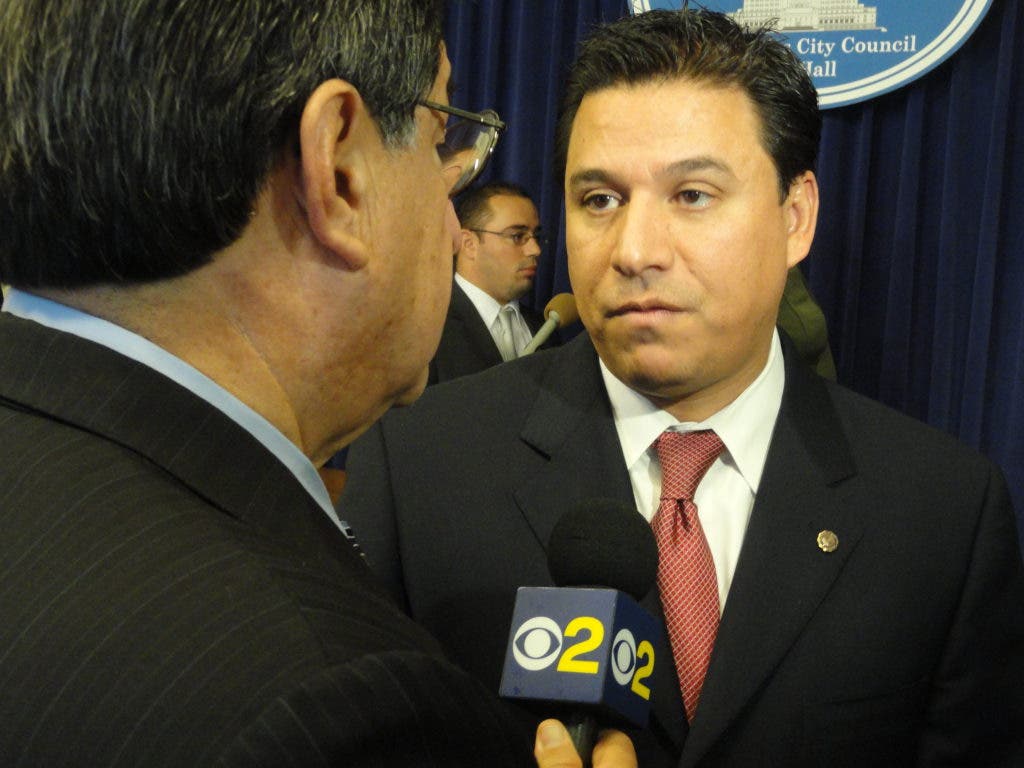


introduced legislation Wednesday to repeal the City of Los Angeles’ medical marijuana ordinance and ban marijuana dispensaries whose proliferation adversely affects the quality of life in communities.
Shortly before Huizar introduced his motion in the City Council, which was seconded by CD 12 Council member Mitch Englander, he announced the legislation at a packed news conference in City Hall.
“We adopted an ordinance that we thought struck a balance between a patient’s need for medical marijuana and community needs, so that when we’d allow these dispensaries they would not disrupt local communities and would not affect our churches, our schools and quality of life,” Huizar said.
Find out what's happening in Eagle Rockfor free with the latest updates from Patch.
L.A.’s Ineffective Ordinance
As it happened, in a ruling in October, the California Court of Appeal for the Second District deemed as invalid a medical marijuana ordinance by the City of Long Beach, which, said Huizar, is very similar to the Los Angeles ordinance introduced in 2010.
Find out what's happening in Eagle Rockfor free with the latest updates from Patch.
The ruling, in response to a lawsuit (“Pack vs. City of Long Beach”) by a marijuana dispensary against the City of Long Beach, allows cities to ban, restrict and limit the actions of medical marijuana collectives but not to authorize, advance or permit them.
As a result, the City of Los Angeles can neither hold a lottery to determine how many marijuana dispensaries can remain open—something it tried unsuccessfully to do earlier this year by capping the total number of dispensaries at 100—nor can it control how far the shops can be from each other.
Ordinance is Valid—But …
Superior Court Judge Anthony Mohr ruled on October 14 that L.A.’s marijuana ordinance is valid and that its enforcement cannot be challenged by as many as 29 dispensaries that had sued the City over the issue. But Mohr also advised the City to revisit the ordinance to determine whether it can withstand a preemptory challenge in light of the Pack vs. Long Beach ruling and the fact that the L.A. ordinance has a provision for a lottery for dispensaries and other regulatory mechanisms.
“Given that we were advised by our City Attorney that we currently have an unenforceable ordinance, we are in a place where we were before we had an ordinance [when] we had a proliferation of dispensaries throughout the city, and with that proliferation came an impact on the quality of life in local communities,” Huizar said.
Fears of Proliferation
His concern, added Huizar, is that Los Angeles will again see a proliferation of medical marijuana dispensaries—as it did before there was an ordinance, when Los Angeles had about 800 facilities. According to the City Attorney’s office, there are currently around 300 dispensaries, Huizar said, noting that the city does not wish to return to the pre-Ordinance days when there were 800 marijuana shops.
“If we do nothing and the law of the land is that the Long Beach ordinance is invalid—and the Los Angeles ordinance is unenforceable—we will see a proliferation of dispensaries through the city, and that’s something that we do not want,” Huizar said. “We cannot afford it as a city to put our heads in the sand and do nothing.”
Revoking the ordinance and banning marijuana dispensaries is “a very tough decision to make but I think it’s one that is needed,” Huizar said, adding: “I personally believe that patients should have access to medical marijuana.”
The City of Long Beach is expected to appeal the Pack ruling in the California Supreme Court. If that happens, “we can come back at that time to better find a balance and decide how to move forward,” Huizar said. The California Supreme Court is likely to take anywhere from six months to two years to decide the matter, he added.
If L.A.’s ordinance is revoked and a ban enforced, medical marijuana stores would be given time to close down in a phased manner. “It will not happen overnight,” said Huizar, adding: “I’m sure there will be a challenge.”
Huizar’s proposed legislation is expected to go before the City’s Public Safety Committee as well as the Planning and Land Use Management Committee for review before it is voted on in the City Council. Huizar said he expects a Council vote in a month or two.
Asked why he was introducing the legislation at this particular point in time, Huizar said that dispensaries are “popping up everywhere and they’re suing us like crazy.” As a result, “we have to do this in an expedited manner,” he added.
How the Ban Would Affect Legitimate Patients
Asked what he would say to legitimate patients who cannot grow their own marijuana—as they are entitled to under Proposition 215, the 1996 California ballot that legalized medical marijuana—Huizar said patients who are physically incapable of producing their own marijuana could procure it from their caregivers, as intended by state law.
'Kibbutz' Method Far Removed From 'Starbucks' Model
California law envisions a “kibbutz method” of growing medical marijuana, Chief Deputy City Attorney William Carter told reporters after Huizar’s news conference. The idea is to “grow your own marijuana and share it among the [a given] unit,” he explained, adding: “Unfortunately we got into the drive-in model where people drive to a dispensary and buy marijuana.”
The dispensaries evidently exploited a loophole within the law. “People who wanted to sell marijuana would call themselves collectives—they would say, ‘we’re a collection of patients or primary caregivers that got together to distribute medical marijuana,’” Carter said.
“There’s nothing in the law that allows that—what they eventually set up is a Starbucks for medical marijuana,” Carter added. “The concept of a storefront pot shop is so far from what the [Prop. 215] voters approved.”
Neighborhood Councils Weigh In
Huizar invited several community representatives, including President Michael Larsen, to the news conference, to make their views about medical marijuana dispensaries known.
“It’s easier to open a pot shop and sell marijuana than it is to open a frozen yogurt shop or grocery store in Los Angeles,” Larsen said in a speech that, he pointed out, neither endorses nor dismisses Huizar’s proposed legislation because the ERNC has not discussed the issue. “The powerful pot lobby has thrown everything it has got against regulation, especially in Los Angeles, where its lawsuits have blocked the ordinance.”
‘Alice in Wonderland Reality’
Eagle Rock, Larsen noted, had 24 marijuana shops within a 1.2-mile radius before June 2010. The number decreased to 10 after the City ordinance was introduced—and “we are now back up to 15 storefront shops that sell recreational marijuana,” he said, adding: “That’s unacceptable—we don’t want 15 Starbucks, we don’t want 15 McDonalds, and we certainly don’t want 15 illegal shops selling pot.”
Larsen compared L.A.’s medical marijuana landscape to an “Alice in Wonderland reality” of storefronts ostensibly meant to provide medicine to the seriously ill. “Obscene drug profits—to the tune of more than $1 billion this year alone—has been the aim of this industry at the expense of our neighborhoods and those seriously ill Californians whom they exploit and mock.”
Get more local news delivered straight to your inbox. Sign up for free Patch newsletters and alerts.