Health & Fitness
Interview with Eve Ma
Eve Ma is an international filmmaker who produces documentaries, narratives and experimentals. In this interview Eve shares the history, joys and difficulties of filmmaking.
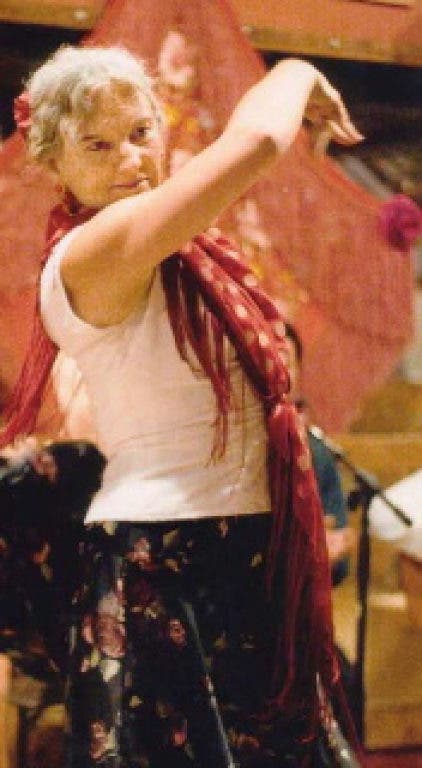

Eve Ma is an international filmmaker residing here in El Cerrito and half the year in Spain. Her films include documentaries, narratives and experimentals. Her subjects are music and dance, ethnic diversity and other work with cultural content.
On Friday, January 20, 2012 there will be a Release Party for the screening of the documentary, A Zest for Life: Afro-Peruvian Rhythms, a source of Latin Jazz.
Eve Ma interview:
Find out what's happening in El Cerritofor free with the latest updates from Patch.
Can you give us a brief background pre filmmaking?
Brief background: I started off as an historian. I got an MA in U.S. history and a PhD in modern (post 1368) Chinese history, then worked first as a historical consultant (clients included Golden Gate National Recreation Area, U.S. Army Corps of Engineers, various private clients and some museums), next as a history professor (Cal. State Hayward and then Mills College, where I taught both graduate and undergraduate courses). After “doing history” for 20 or so years, I decided on a career change and a friend recommended law school. I attended Hastings, planning to go into public international law (treaty writing, etc.), but a week after I received notice that I’d passed the bar, there was a family emergency which made it impossible for me to travel and work long hours, so I had to give up my goal and instead, opened a little one-woman office. I maintained that office for a few years but found “normal” law to be boring, and so started a non-profit cultural organization which I ran for 6 years, bringing its budget from $3,000 to $75,000. But administration is not for me; it gives me nightmares, so I turned the organization over to someone else. One of the programs of the non-profit had been to interview people on television, and I found that extremely interesting, so when I left the non-profit, I moved into producing and hosting my own television series and from there, into filmmaking.
Find out what's happening in El Cerritofor free with the latest updates from Patch.
1.You started filmmaking later in life. Can you tell us what motivated you to go into filmmaking?
(See above.) In addition, I’m very visually orientated, I enjoy working with a crew, and I enjoy editing. It’s kind of like molding something with your hands, like clay. NOTE that I didn’t start out doing my own editing. I had an editor, but she walked out on me in the middle of editing one of my programs and I had to pick up the pieces, so was forced to learn.
2. How do you generate new ideas for films?
My problem isn’t how to generate ideas; it’s how to keep the number of ideas down to a reasonable, “doable” level. For documentaries, I love ethnic and cultural diversity as well as the arts (especially music and dance), and there are an infinite number of possibilities out there. For narrative, if you take a relatively simple story idea and try to imagine what you’d need to do in order to get it to resonate with others, there are also an infinite number of possibilities, especially when you add in the elements of dialogue and exactly how you’d create the appropriate images. After I’ve finished principal photography and edited a rough cut, I try to listen to my audience and find ways around any problems they point out, without being too specific and heavy handed in the process. I’d rather have people think and feel, instead of getting everything handed to them on a plate. This means that for the time being, I prefer endings that leave an open, unanswered question.
3. What do you consider the most difficult part of filmmaking?
The technical part, which breaks down into capacity and funding, is the hardest part for me. In terms of capacity, since I am essentially self-taught, I have made LOTS and LOTS of mistakes. I have tried hard to learn from these mistakes and believe I’m starting to see the light so that the technical quality of my current work is adequate and often, a lot better than adequate. In terms of funding, well, to put it mildly, there is not much funding out there. And if you don’t have enough funding, it’s really hard to get good, clean sound. It’s hard to get the image you want not only because of problematical lighting but also because your camera person or your actors may not have gotten it right the first time, or you as a director may have left out an important element, and you need to go back and do it again but might not have the money.
4. What do you consider the most enjoyable in filmmaking?
I like imagining how a scene should look and solving the many problems related to that. This is a challenge you’ll find in documentary as well as in narratives or experimental work. I also like working with actors. I do like working with the interview subjects for documentaries, but working with actors and creating the story is even more fun for me. I like most of the production part and the editing part (with the partial exception of putting the film into the computer, which can be time consuming and for me, pretty boring). What I don’t like – but as an independent, underfunded filmmaker, must do – is publicity and especially, marketing.
5. How do you sustain/maintain your creativity?
Again, I have more of a problem picking and choosing from my ideas than generating them. That said, sometimes I have a rather vague idea, but to make it concrete enough to turn it into something that will communicate is another and sometimes very large step. I have to discipline myself and just force myself to do it.
6. When filmmaking, what strategies do you do use to break though frustration, overcome stress and become more productive?
Mostly, I just tell myself it’s got to be done. Another strategy I use is to go for a long walk, or go out for a glass of wine, or go to a movie – get away from the problem(s). Every once in a while, I try to write down a list of things I need to do with the idea that I will then prioritize, but the lists grow so fast as to be totally unmanageable. When that happens, I try to approach the matter from a different angle. My latest idea is that I’ll try to set aside specific days in which I’ll tackle specific tasks. The problem is especially acute with respect to marketing, which I don’t like, find to be unending, and tiresome.
7. What are your plans for the future?
My immediate plans are a) to do right by my soon-to-be-released documentary, A Zest for Life: Afro-Peruvian Rhythms, a Source of Latin Jazz (I want to do right not only by the DVD but also by the CD of the musical track), b) to complete and then get out to the public my dramatic narrative Domino: Caught in the Crisis, c) to finish production on the flamenco CD I’m co-producing with a company in Spain and d) to decide which of my half-finished projects I should work on completing next. Funding will be a key element in the decision.
8. Do you have any advice for new filmmakers?
Go to a good film school, if you can. You’ll learn a lot of things the easy way (instead of the hard way, like I did), and you’ll develop contacts that will serve you well (contacts that I am only just starting to develop).
For more information on Eve Ma’s Production Company and to view images and links related to her films go to: Fingado Art Gallery
Fingado Art Gallery, Pam Fingado © 2012 All rights reserved