Community Corner
Osprey Chicks Hatch Atop WWII Crane
Rosie and Richmond picked an historic World War II maritime crane as their nesting spot in Richmond.
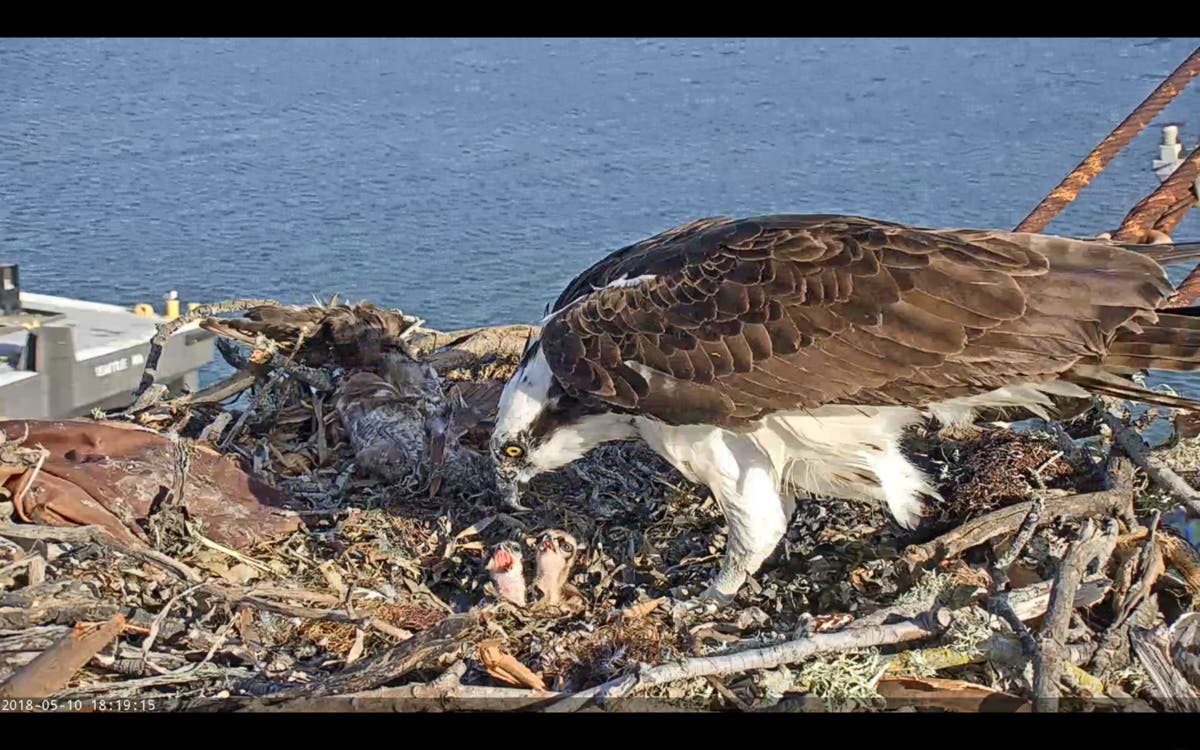
RICHMOND, CA — Richmond's arguably most famous parents, a pair of ospreys nesting high atop a crane at the city's shoreline, have welcomed two new additions to the family - on live video, no less.
Rosie and Richmond, the two ospreys, now have two hatchlings, plus one unhatched egg, in their nest on a historic World War II maritime crane at the shore. Ospreys are also known as sea hawks.
The latest chick emerged Thursday night, and another chick hatched Wednesday. Both events were captured by the two 24-hour high-definition cameras that livestream every move the osprey family makes. Golden Gate
Audubon set up the cameras last March.
Find out what's happening in El Cerritofor free with the latest updates from Patch.
"The premise of the whole project is that if people can see the birds the way we do, and love them the way we do, when we ask people to protect the area for the birds, they will understand why we are doing that," said Cindy Margulis, the organization's executive director.
Rosie and Richmond made their debut last March, and about 70,000 people watched as they courted, laid eggs, fed the resulting family and taught them to fly, Margulis said. The season runs from March to July.
Find out what's happening in El Cerritofor free with the latest updates from Patch.
Now, the two are back for another season.
Either Rosie or Richmond is usually in the nest.
Inspired by Rosie and Richmond, the city made the osprey its first-ever official bird on April 17. Mayor Tom Butt introduced the resolution at a City Council meeting. "This has been great for building Richmond's reputation," the mayor said via email.
Ospreys are majestic creatures whose wingspans can reach five or six feet, Margulis said. Infrared cameras make it possible for the public to observe them via the webcam even at night.
>>Also See: Please Don't Help My Kids
"You can watch them feed, they literally almost grow before your eyes. In eight weeks you go from this tiny thing hiding in an egg to a raptor with a 70-inch wingspan," Margulis said.
Keeping the shoreline free of toxic debris protects the ospreys, according to Golden Gate Audubon.
>>Also See: The 100 Best Places To Live In California Ranked 2018
The organization leads public habitat restoration activities around the Bay, cleaning up the shoreline, removing non-native vegetation and re-planting with native species that support local wildlife.
— Bay City News; Image via Golden Gate Audubon