Community Corner
Natural vs. Medicated Birth: What’s Best for Baby?
When it comes to having kids, is there a right way?
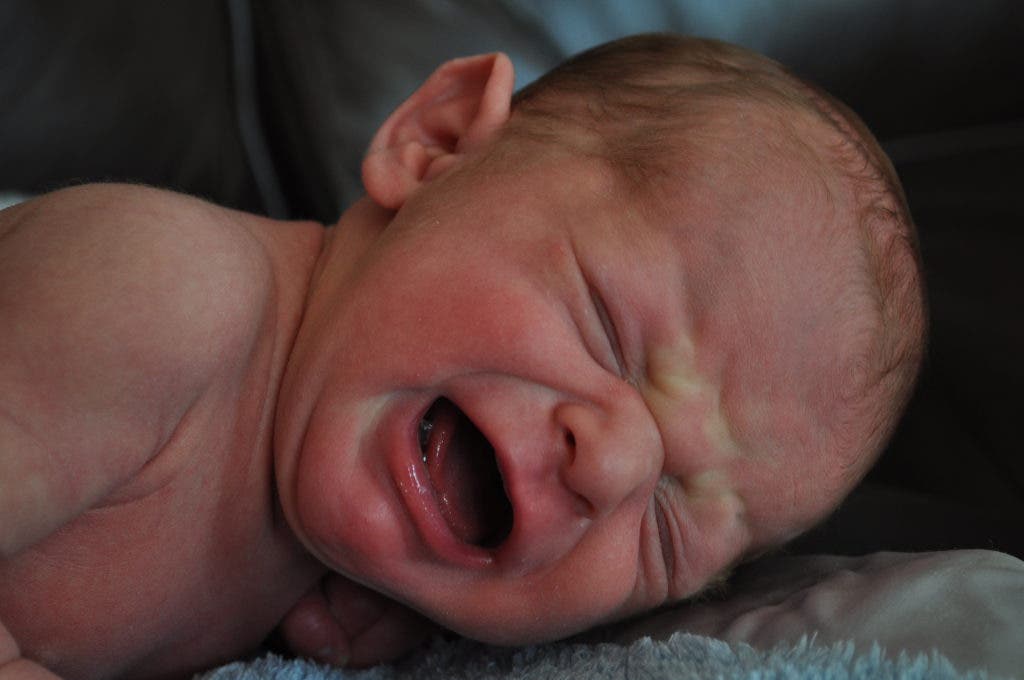
It may be the most beautiful thing in the world, but any mom can tell you that the business of birthing a baby can get ugly quick.
The debate over natural birth has been around forever, often creating a great divide between medical professionals and expectant families as everyone tries to determine what’s best for baby.
Are medical interventions like Pitocin helpful or harmful? Is having a hospital birth safer than birthing a baby at home? What are the risks?
Find out what's happening in Encinitasfor free with the latest updates from Patch.
In the end, when it comes to having kids, is there a right way?
Our local Moms Council weighs in.
Find out what's happening in Encinitasfor free with the latest updates from Patch.
Genevieve Suzuki: I think it's every mom's right to draft her own birth plan. My plan was originally to try for a natural birth. I thought it would be a great feat. Unfortunately, my plan was derailed when I actually felt my first real contractions. Once I was able to receive an epidural, I said, "Yes, please." I don't regret it. Because my reaction to the pain was to hold my breath, it was much better for my baby for me to relax.
That said, my medical team pulled the plug on the epidural toward the end. They wanted me to feel the contractions so I knew when to push. That made me feel a little better about being such a wimp.
As for Pitocin, I'm not a fan, but I'm also not a doctor. When I was induced, I was initially at zero-zero. That means I wasn't in labor at all. But I was a week late and because of the risks to our baby, the doctor recommended induction.
As I said above, a birth plan should be a woman's personal choice. If she doesn't want medication or painkillers, more power to her. Nevertheless, I think it's a good idea to remain flexible so that a case like mine doesn't break your heart.
Jennifer Zeglen: I believe studies have clearly shown that Pitocin points to a higher risk of needing other interventions, many of which can lead to complications. That said, I didn't have a natural birth with either child. Both of my pregnancies were high-risk for two separate reasons, so I was very happy to be in the hospital.
Though I support home births, I truly can't imagine wanting to have a baby in my own home. I think I would be too focused on the housework that needed to be done! I am encouraged that birthing areas in many hospitals are becoming less “hospital-like.” I do think large hospitals fall short in after-birth support, such as lactation consultants.
Ray Pearson: Natural birth was my wife's decision, which I supported. We both wanted our baby to have the least amount of stress possible as well as the least amount of risk for my wife. During the birthing process, we were open to medical interventions if they were able to assist my wife and not harm our baby. Watching my wife in pain, I became very open to medical intervention. Pitocin was in our birth plan as was a pain reliever. With our youngest son, however, my wife was too far along for the interventions—thank goodness the delivery was only three hours.
Anastacia Grenda: I have friends who have given birth at home, friends who have had natural births, friends who have had Caesareans, and friends who have had epidurals and/or Pitocin, so I don’t feel the need to advocate for one method over another as I believe it’s a personal choice for each family. I had epidurals for both of my births, although I felt I was more knowledgeable in how I managed my labor for the second birth, simply because I had already done it before and knew what to expect.
Meet our moms (and dad):
Genevieve Suzuki has one 2-year-old daughter. In addition to having her own law practice, she writes feature stories for Encinitas Patch. She is also the author of "The Original Poi Cats on O'ahu," a children's book published in Hawaii.
Anastacia Grenda is mom to a 7-year-old son and 4-year-old daughter who never fail to make her laugh every day. She is a longtime writer and editor.
Jennifer Zeglen is a mom to two imaginative girls, ages 4 and 6. She is also a local naturopathic doctor with a family medicine practice.
Ray Pearson is the father of three children, ages 26, 23 and 17. He lives with his wife in Carlsbad and devotes most of his nonwork time to young people and the Rotary Club.
Judy Adams Halter and Edie High Sanchez are certified Redirecting Children’s Behavior (RCB) instructors with a combined 50 years of parenting experience. Halter is the mother of four children, ages 21, 19, 17 and 14. Sanchez has two grown daughters and three grandchildren; two girls, ages 1 and 5, and a boy, age 7. Both women live in La Jolla.
Do you have questions for our Moms Council? Email them to the editor at Jennifer.Reed@patch.com.