Politics & Government
Santoro Banks on Experience, Education
City council candidate Joe Santoro discusses his career, the Rio Hondo College investigation and why he belongs in one of three open seats for city council.


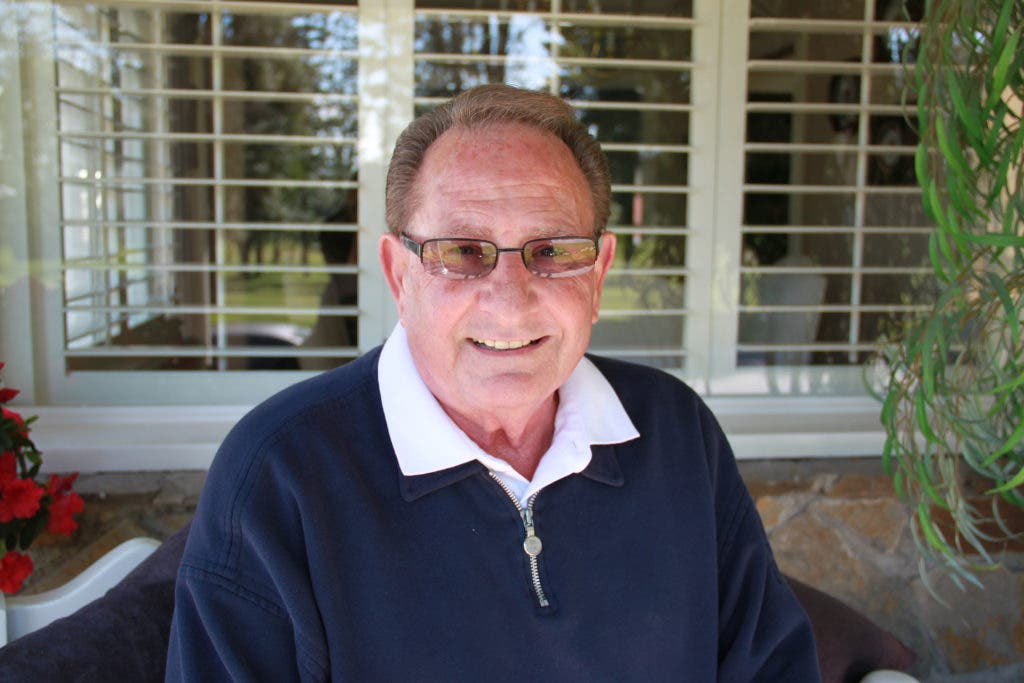
Ask Joe Santoro what makes him a prime candidate to take one of the three open seats for Glendora city council and he’ll simply point to his expansive resume and education – 40 years of experience that began, of all places, in a barber shop.
Joe Santoro’s life seems like your classic American Dream story. Growing up in an Italian/Irish-American family, he began working at nine years old shining shoes in his father’s barber shop. He’s been working non-stop ever since.
At 17, Santoro followed in his father’s footsteps and became a barber, and at 20, he opened his own barber shop in his home town of Monterey Park.
Find out what's happening in Glendorafor free with the latest updates from Patch.
But one day, a customer in his shop offered to take Santoro on a police ride along. Santoro accepted, and that decision would take him from a barber with just a high school education to the police academy at age 30.
Santoro became a patrolman and rose through the ranks to captain in his 26-year career with the Monterey Park police department. In 1989, he joined the Monrovia Police Department as the chief of police, later also serving as the city’s deputy city manager.
Find out what's happening in Glendorafor free with the latest updates from Patch.
In 2002, Santoro retired as police chief, but soon ventured into a career in academia. He joined staff at Rio Hondo College, later serving as academic dean at the school’s department of public safety. In Dec. 2010, Santoro went on personal leave from his position at Rio Hondo College in the wake of speculation regarding a probe into a breach in the department’s testing security.
Now, the 17-year Glendora resident is setting his sights on a career in local government as a member of city council.
Santoro talks to GlendoraPatch about his career, controversy surrounding the Rio Hondo College investigation, and his position on critical issues facing the city.
You went on personal leave as academic dean at Rio Hondo College in December of last year amid an investigation within the public safety department. Much has been speculated about the investigation and why you left. What happened and why did you decide to retire?
It was simply time to move on. When I took the position I had originally planned to be there for 5 years, I had been there for 7 and a half years.
There have been a couple articles in the Tribune and there’s a fellow in the Examiner who writes this information. They’re absolutely totally inaccurate and untrue. I’ve never been disciplined at Rio Hondo College, I’ve never been terminated or investigated for anything.
I’m well respected there. What the investigation was about was that a faculty member discovered an unauthorized study guide during the time when I was the dean.
A faculty member saw a study guide from one of the cadets that had come from the Internet. The cadets thought it was a legitimate study guide, and it looked like a legitimate study guide. It was done beautifully, it was very nice, but it had sample questions that were similar or identical to those on the state test. We did an investigation as soon as we saw it. We talked to the cadets, faculty and the state commission. We did not cover anything up.
Some say it was cheating scandal. It was never a cheating scandal, no one cheated. The Peace Officer Standards and Training (POST) commission's report found that no one did anything wrong.
We’re still trying to figure out how some of those questions ended up on the study guide. All we know is Rio Hondo College didn’t do it.
This study guide has been around for over 10 years. My feeling is that somewhere along the line some people remembered some of the questions and put them on the Internet or someone hacked the state system.
I’m proud of what we did at Rio Hondo and I think it’s a better place from when I got there to now.
What made you decide to run for city council?
In 2006, I led the fight as chairman of the Citizens Committee to Protect Glendora - Vote No on Measure A Campaign against a well-financed out of state developer with plans to tear up and destroy our foothills and historic country club golf course. Together, we defeated Measure A with resounding 92 percent no vote. I believe we can do it again to come together to develop a plan to address the economic issues facing our community.
I’m not becoming a part of city council to take on the city management responsibilities of the city, I’m here to be the advocate for the citizens of this city and I think my background has allowed me to be that. I know how to do the job and I know how to do it well.
As a graduate from the FBI executive development program, I learned how to effect change in a smooth way without destroying everything. There’s a way to do it right and a way to do it wrong. The way you do it right is to include people in the decision-making, you use their knowledge and their skills. I’m talking about the people in the community who live here and the employees who work here, and in order to be an effective change agent, you need to get feedback from the line. They know what can be done better because they do it everyday
One of the critical issues in the recent city employee survey was communication. In the survey, some of the major issues were, “We don’t think you communicate with us. We don’t think you appreciate us. You don’t ask us for our opinion.” Those are all critical points when you’re trying to effect change. We need to work on that.
Throughout my career, I've managed large budgets, I've implemented large projects from beginning to end, and I've negotiated numerous contracts. I've also worked closely with city councils and department heads for numerous years. My experience and my education has prepared me for this role.
What do you think is the most pressing issue facing the city and how would you address it as a member of city council?
Without a doubt it’s going to be about the budget and everything that goes with that. I think the city has done a very good job so far. When we see what’s happening with our sales tax and our revenue, and the state pushing their responsibilities to us without any proper funding, it’s going to require us to not only look at our current operation of what we do, but also how we can do it better, as well as how we can get more businesses in town so we can generate tax base to deal with it.
Through the course of my career, I’ve seen good times and bad times and I think we’re going to see some difficult times with the budget.
I think redevelopment is a huge issue with this community, especially when the state wants to do away with it. It’s going to have a huge impact on us. It’s going to compound the problems that we’re going to be facing. I believe coalitions with other cities and other advocacy groups is critical in trying to stop some of the stuff they want to do, and I think I’m very familiar with that process.
Many have said that pension reforms must also include changes in police pension benefits. As a former police officer with decades of service in the police department, does your affiliation affect potential changes of policies with the police unions?
It’s going to come down to some really basic stuff. It’s going to come down to how much money we have. How are we going to spend it and what’s in the best interest of the community. That’s how I’m going to look at it.
I think, personally, that it’s going to be impossible for the city to sustain the retirement systems that we have. I think there’s going to be significant change, whether it’s a second tier or it’s going to be having our employees pay their own retirement. I think it’s important to note that none of this stuff happened overnight. There’s a history of labor management relations that goes back thirty years, there’s multiple city councils, employees and groups involved in that process.
But by law, we have to stay within budget, and the hard and real facts is that if there’s no money, there’s no money. We’re going to have to work with our employees to make that a better bargaining process.
The current system of the city paying their portion is probably going to be impacted.
There are three open seats available on a five-seat city council. With just one incumbent running among seven candidates, city voters could possibly put in a new majority on the council. The three new candidates will make a critical impact to the makeup of the city council. If you were elected, who, among the seven candidates, do you believe should join you?
I know Doug Tessitor. I’ve seen him work and what he’s done for this community. I think it’s important that he remain on the city council. I think the other city council members have done a good job as well.
When I look at the other candidates for city council, I didn’t know them before the campaign. I think they’re all good people and I think they have good ideas and they have a variety of good qualifications. So I’m not going to prejudge them.
If you have experience, you can come in and hit the ground running. If you don’t have any experience, you are going to have to learn a great deal and it’s going to take quite a bit of time. All I know is that I have the past experience and qualifications it takes to do this job and to do it well.
Editor's Note: This feature is the first in a seven-part candidate series. Each one-on-one interview will focus on an individual candidate for Glendora City Council in the March 8 election. Future articles in this series will run Feb. 25, Feb. 28, March 1, 2, 3, 4 and 5. The order of candidate profiles will run in the order of the final ballot.
Get more local news delivered straight to your inbox. Sign up for free Patch newsletters and alerts.


