Community Corner
Stiff Opposition, Few Obstacles Met By Gallaher 'Hudson Street' Development
Residents challenged a senior housing plan's height, affordability, traffic, noise, and neighborhood impacts Tuesday night.


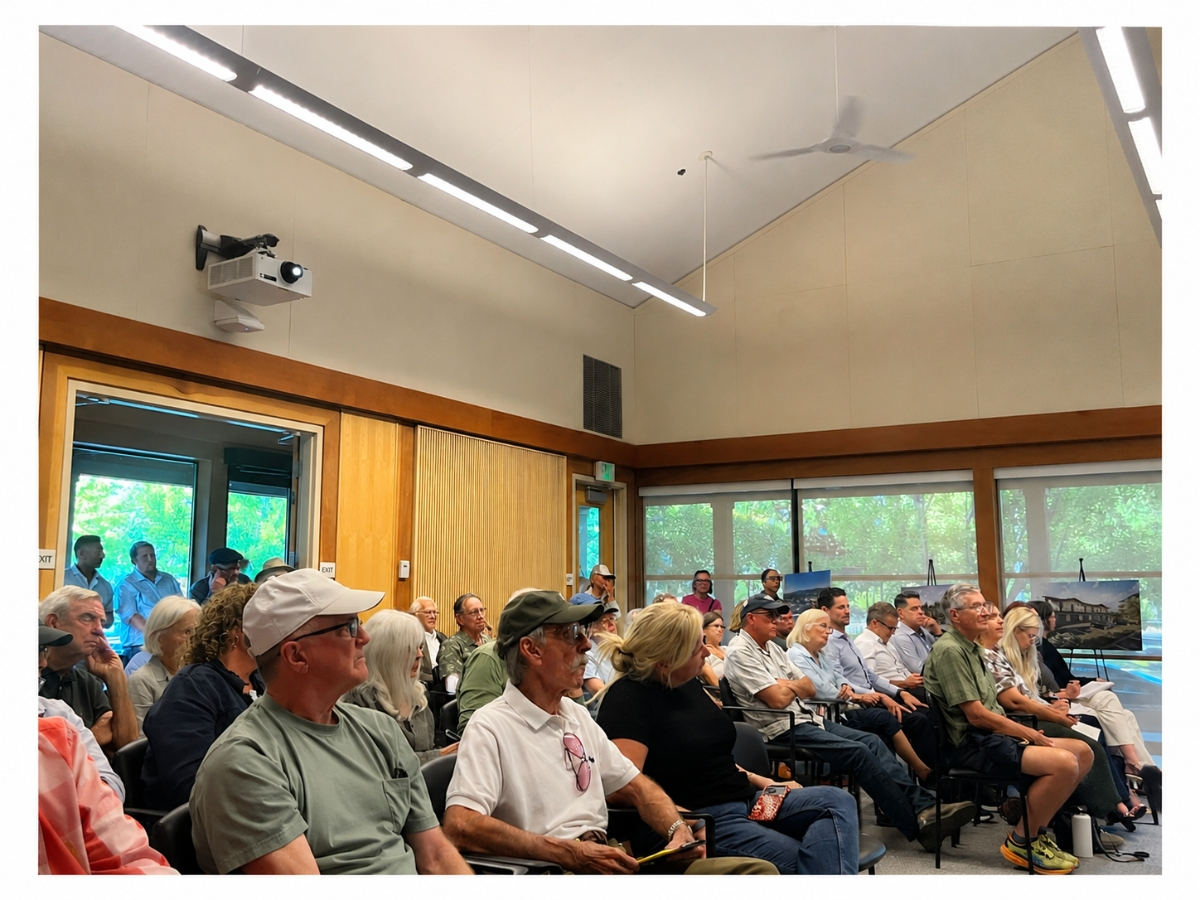
HEALDSBURG, CA — A proposed four-story senior housing development near Healdsburg’s future SMART station drew sharp scrutiny as residents attacked its size, affordability, traffic impacts, and fit with the surrounding neighborhood during the Tuesday Healdsburg Planning Commission meeting.
The Hudson development would combine senior housing with 10 affordable units and six memory-care rooms on a roughly 3.6-acre property near Hudson, Mason, and Harmon streets.
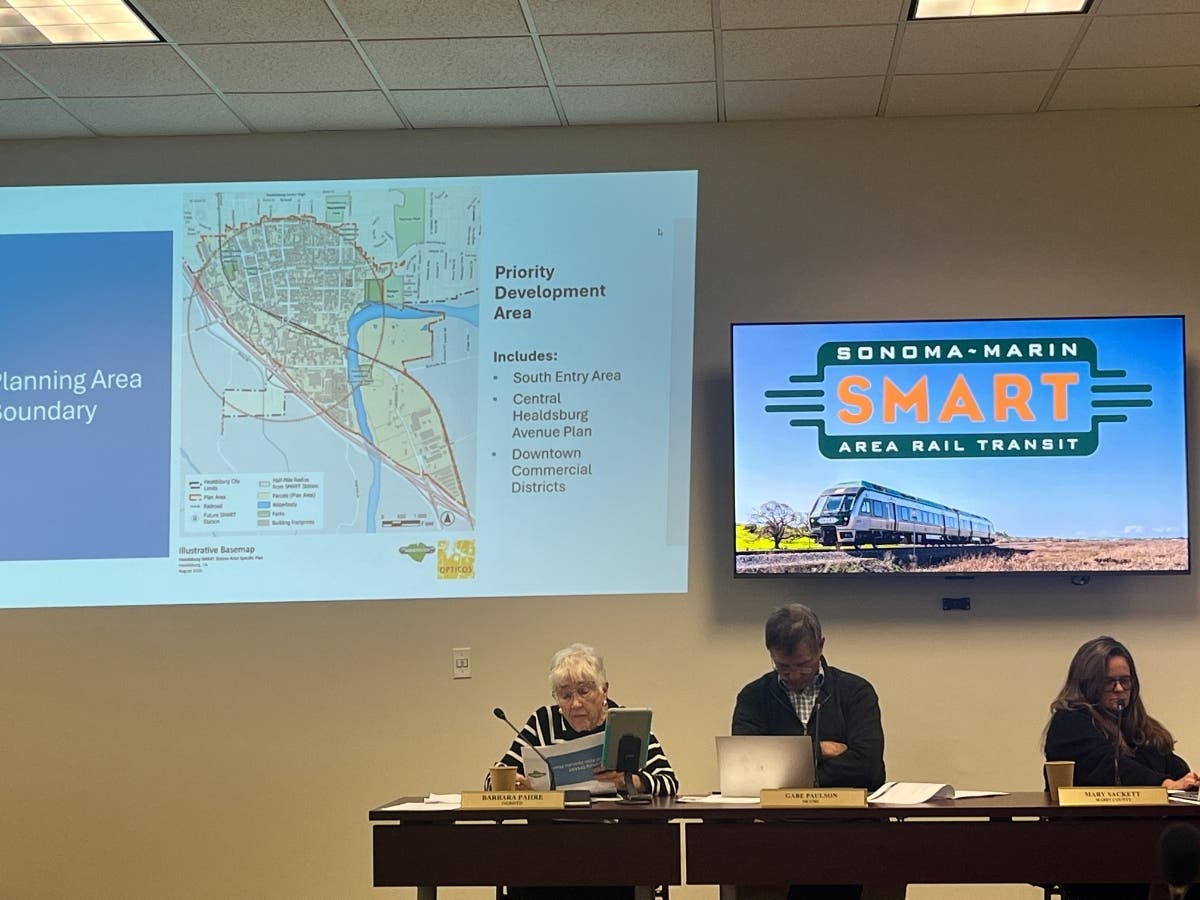
The proposed site is across from where the SMART stop is planned.
Find out what's happening in Healdsburgfor free with the latest updates from Patch.
Gallaher Signature Living wants to build a continuing-care community where residents could move in while living independently and receive additional assistance.
But much of Tuesday’s hearing centered on what neighbors and planning commissioners said the project would bring with it: a building approaching 60 feet in height, hundreds of new residents and visitors, additional traffic, overly-small studios, and amenities that include a pickleball court.
Find out what's happening in Healdsburgfor free with the latest updates from Patch.
Residents repeatedly argued that the project’s scale clashes with nearby one-story homes.
Anthony Baldas, who said he owns property next to the site, told commissioners his house would sit in the shadow of a building he had initially understood would stand about 40 feet tall.
Buck Nielsen, a Harmon Street resident, raised concerns about traffic and the curve where Hudson and Harmon streets meet, saying vehicles have repeatedly crashed into or damaged his property. He also called the project’s scale “phenomenally out of hand.”
Commissioners also zeroed in on the proposed building height. Affordable housing became another flashpoint.
The project proposes 10 affordable units, and residents criticized both their size and configuration.
Exceptions
Gallaher Signature Living is seeking substantially more than the 51 housing units normally allowed at 359 Hudson St. Under California's Density Bonus Law, the company proposes 77 units — 67 senior residences and 10 deed-restricted affordable workforce apartments — adding 26 market-rate units through a 50% density bonus. A separate memory-care building would have six treatment rooms and a manager's unit that are not counted among the 77 units.
Healdsburg's Inclusionary Housing Ordinance requires 20% of the 51 base units to be affordable, which city staff calculates as 10 units. Gallaher proposes exactly 10: eight for very-low-income households and two for low-to-moderate-income households.
Those same affordable units also qualify Gallaher for the state density bonus. To receive the 50% bonus, at least 15% of the base units must be very-low-income.
Gallaher's eight very-low-income units amount to 15.7%, clearing that threshold and allowing the additional 26 market-rate units. The bonus units themselves are exempt from Healdsburg's inclusionary requirement.
Gallaher is also seeking three concessions and nine listed waivers from city standards, although some of the waivers overlap between the senior and affordable parcels.
One concession would allow Gallaher's affordable apartments to be substantially smaller than the senior units. The 67 senior residences would range from 1,075 to 2,017 square feet, compared with just 372 to 385 square feet for the 10 affordable apartments.
Healdsburg normally requires affordable units to be comparable in size, finishes and amenities, and city staff said it encouraged Gallaher to provide larger affordable units and a broader range of bedroom sizes.
The other concessions would allow Gallaher to avoid providing affordable residents access to the senior development's common recreational amenities — which Gallaher says is prohibited by state licensing requirements — and eliminate a city requirement that 10% of the affordable units be three-bedroom apartments.
The requested waivers would make several other significant changes to normal city standards. For the senior development, Gallaher seeks permission to use ground-floor space for housing rather than commercial uses; eliminate a planned Hudson-to-Mason street; increase the floor-area ratio from 1.0 to 1.31; increase the maximum building height from 35 feet to 58 feet, 8 inches; and reduce a 20-foot setback to 10.52 feet at the memory-care building.
For the affordable parcel, Gallaher seeks to reduce a 10-foot rear setback to 9 feet; eliminate the planned street connection; waive several Central Healdsburg Avenue Plan frontage and design standards; and waive the city's requirement for 200 square feet of usable open space per dwelling unit.
Under state Density Bonus Law, Healdsburg has limited grounds for denying qualifying waivers. City planning staff is recommending approval of all of Gallaher's requested waivers.
In short, Gallaher is providing the 10 affordable units Healdsburg requires, including the eight very-low-income units needed to qualify for the state benefit.
In return, the project would gain 26 additional market-rate units, along with three concessions and a series of waivers from the city's normal height, setback, open-space, design and inclusionary-housing standards.
Pickleball and CA law
For residents who spent much of Tuesday urging the city to demand a different project, however, the larger question remained whether Healdsburg has enough authority under state housing law to force changes.
Commissioners repeatedly acknowledged that tension while still pressing Gallaher for concessions — including a shorter building, changes to the affordable apartments, screening for electrical equipment, and a different location or operating plan for the pickleball court.
Another issue involved the size of affordable apartments units that rely primarily on studios of less than 400 square feet.
One man contrasted those apartments with market-rate units he said average about 1,681 square feet.
Gallaher project development manager, Brooke Ross, said the smaller size was adequate. Ross, who identifies herself as a development and site acquisition specialist, cited twice having lived comfortably in a similar sized studio along with her friends in the service industry.
Other speakers argued the affordable component does too little to offset a project they characterized as luxury senior housing.
Commissioners, however, said they faced significant legal limits on how far they could push the developer on this and other issues. Jonathan Pearlman said residents should blame California lawmakers for making it impossible for Healdsburg commissioners to force changes demanded by residents on projects like Gallaher's.
City Attorney Leila Moshref-Danesh told commissioners that state density bonus law and court decisions sharply restrict local governments from forcing redesigns or eliminating project amenities when requested waivers or incentives meet state requirements.
The attorney said grounds for denying projects such as The Hudson are largely limited to health and safety problems supported by substantial evidence, impacts to historic resources, or conflicts with state or federal law.
Asked whether she knew of cases in which a city successfully defended denial of such a project based on health and safety concerns, Moshref-Danesh said she did not, calling it “a pretty difficult standard.”
The scope of those laws have not yet been independently verified by Patch or how Healdsburg's own Inclusionary Housing Ordinance restricts lawmakers' options.
However, commissioners did cite noise ordinances that collide directly with plans for a pickleball court — one of the most persistent complaints voiced during the meeting.
Residents argued that a proposed court near existing homes would create excessive noise. One neighbor told commissioners he had raised the issue at three meetings and cited decibel measurements that he said would exceed local limits.
City representatives said the project would still have to comply with Healdsburg’s noise ordinance.
A commissioner suggested moving the pickleball court into the project’s interior courtyard, potentially replacing or reducing another amenity there, so the development would effectively buffer its own noise.
Gallaher representatives said they were willing to work with the city on pickleball issues. They said similar communities limit court hours, do not light courts for nighttime play, and can use quieter surfaces, paddles, and other noise-reduction measures.
Get more local news delivered straight to your inbox. Sign up for free Patch newsletters and alerts.